Butt frame and panel
frames.butt_frame_and_panel
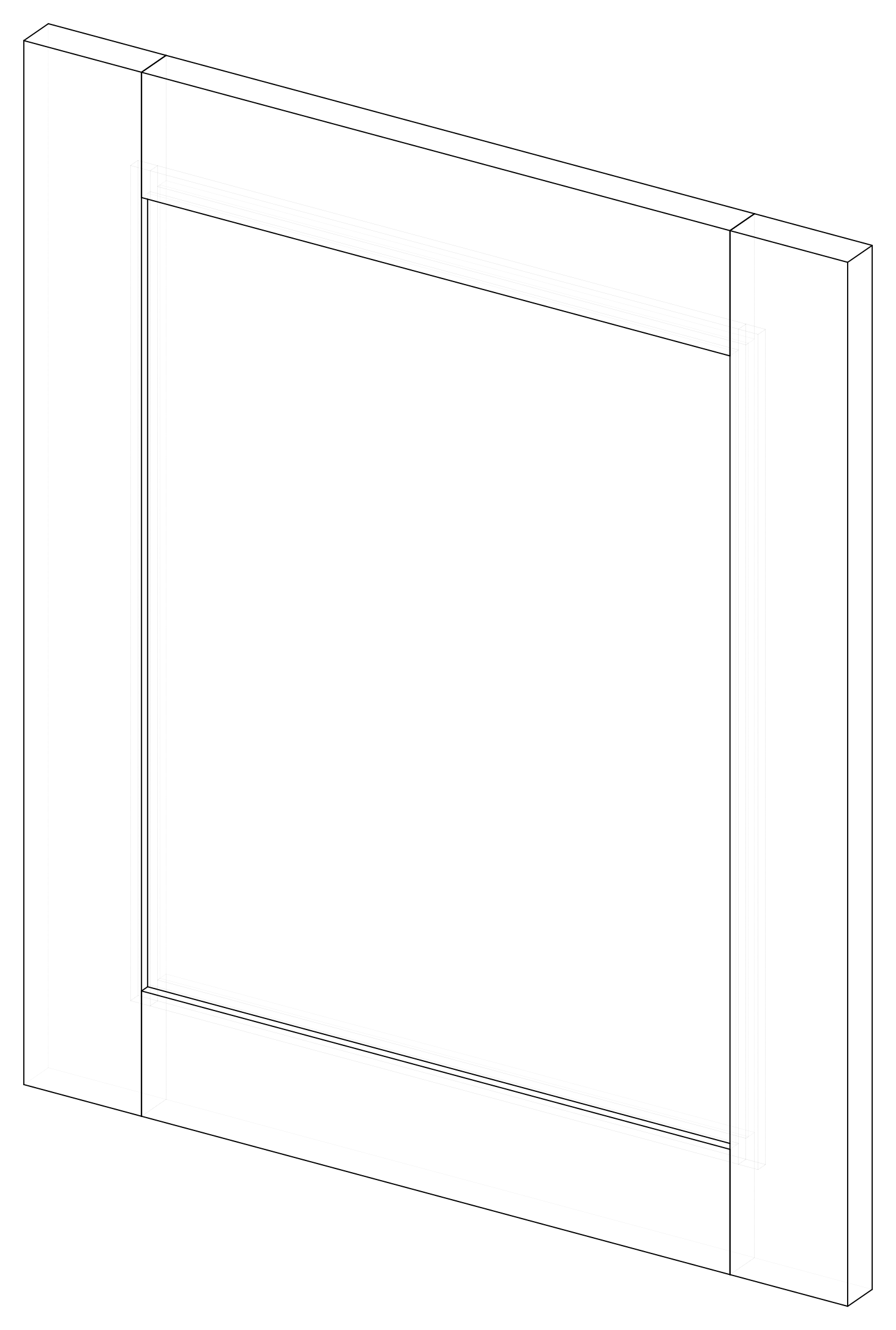
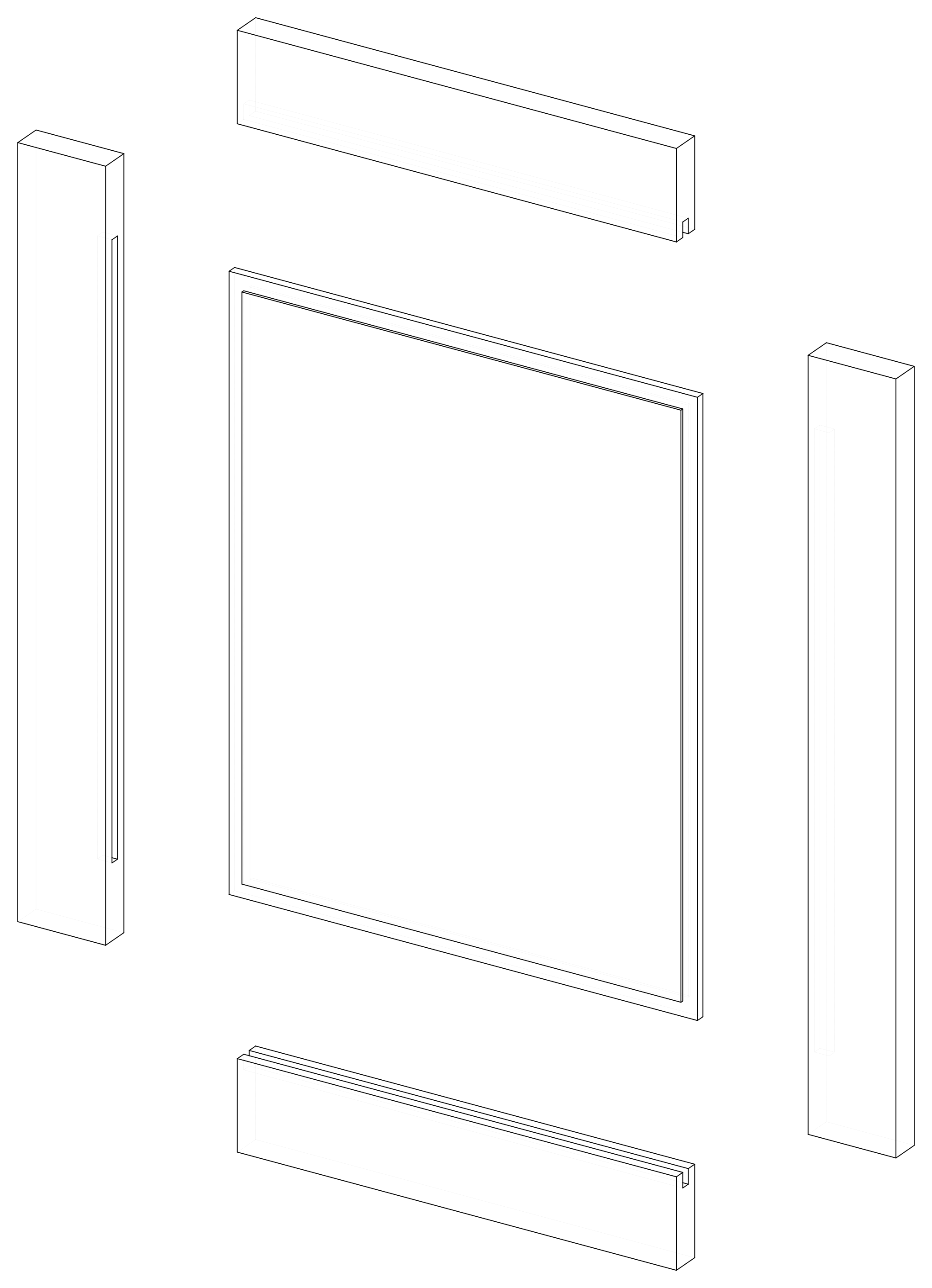
A frame butt-joined at the corners, a panel tongued on all four edges into grooves along its inside edges.
The panel's design size is the opening of the frame, the tongues add to it; it is centered in the frame's thickness. The grooves in the rails run through, into those in the stiles, which are stopped where the rails' grooves meet them, so that they don't show at the stiles' ends. The glued corners hold little (end grain on long grain): a frame for a light panel, or one to be screwed or dowelled (not modelled).
Parameters
| Parameter | Default |
|---|---|
stile_length |
500 |
rail_length |
300 |
width |
60 |
tongue_length |
10 |
stock |
20 mm board, oak |
panel_stock |
10 mm board, oak |
Change them in a design file (see Change an example):
Drawings
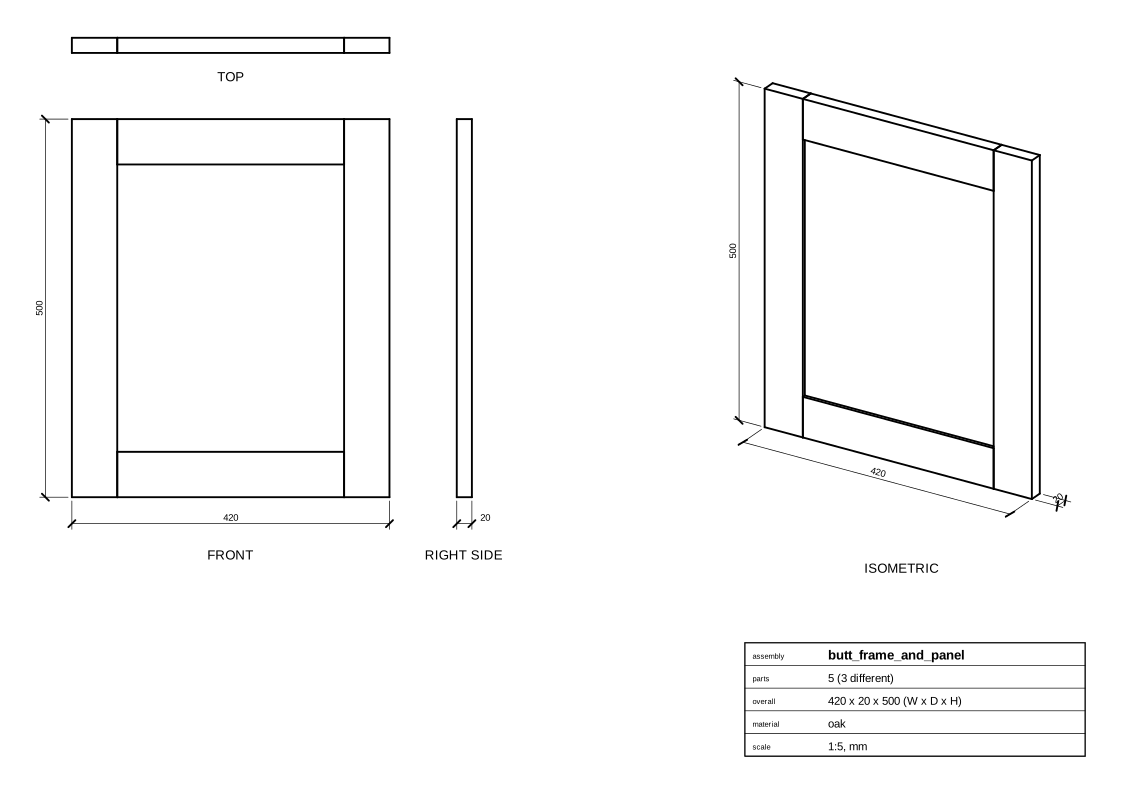
The plans in one PDF: plans.pdf.
Assembly
Parts
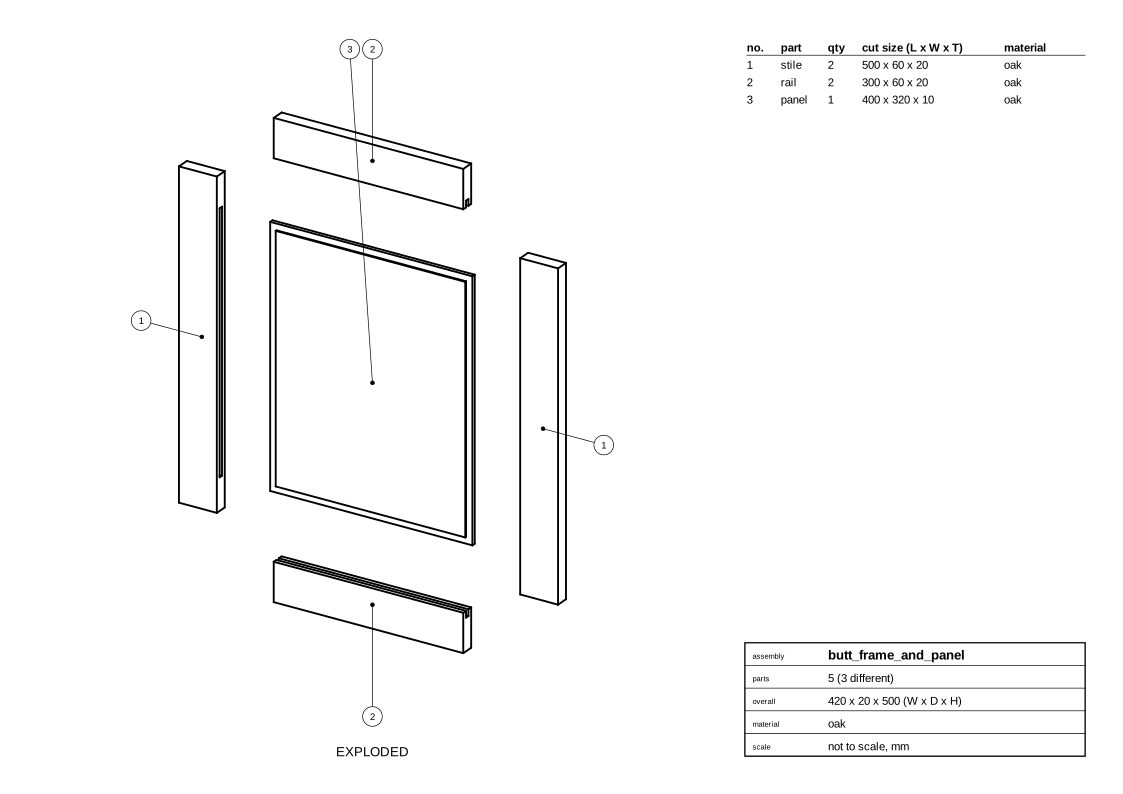
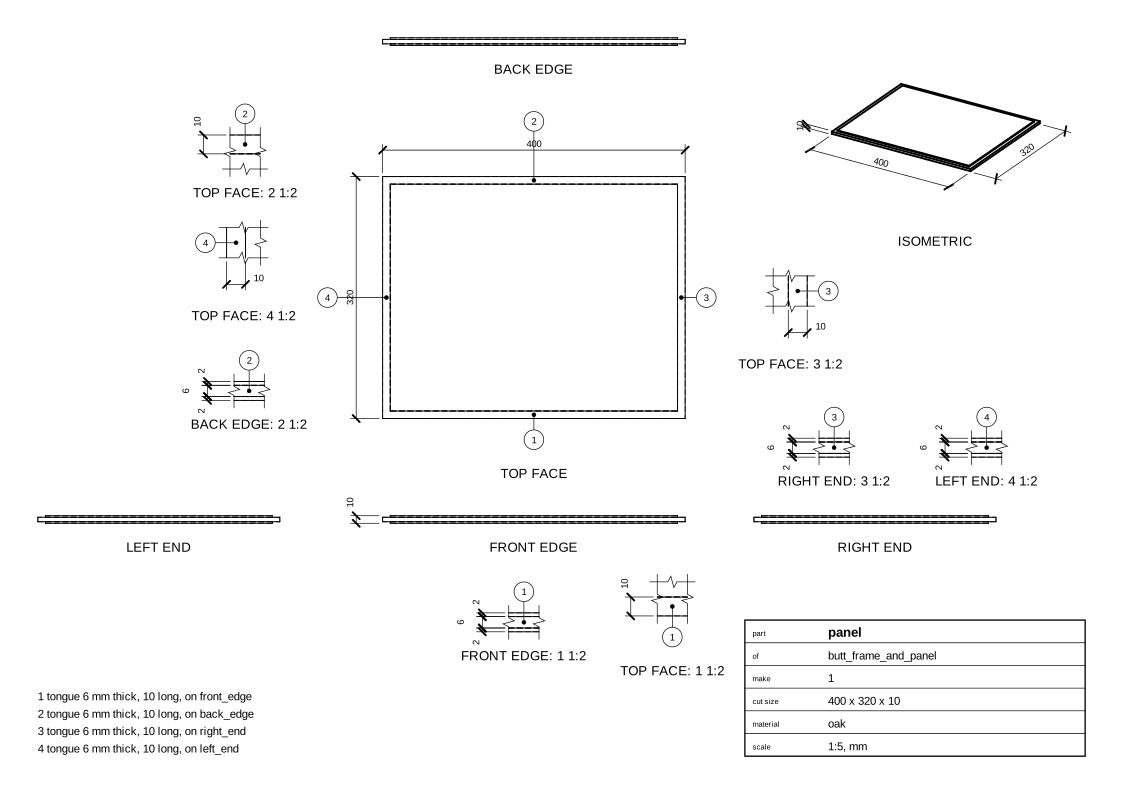
Panel
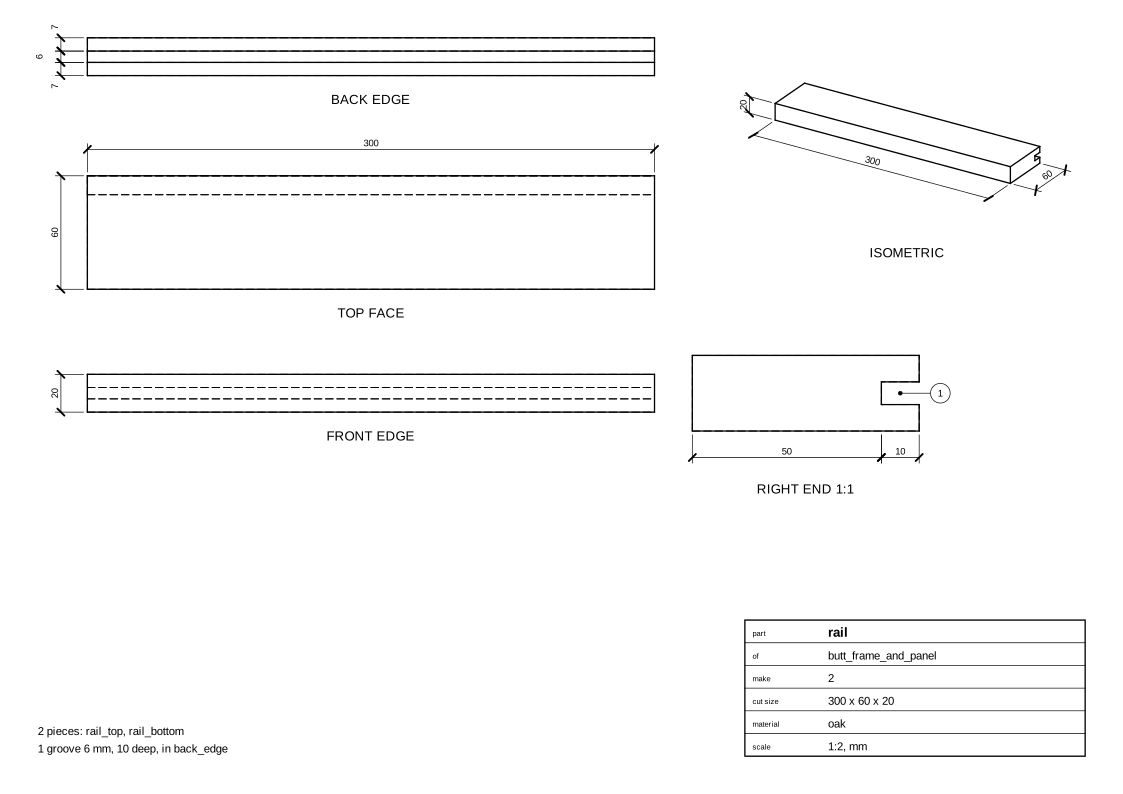
Rail
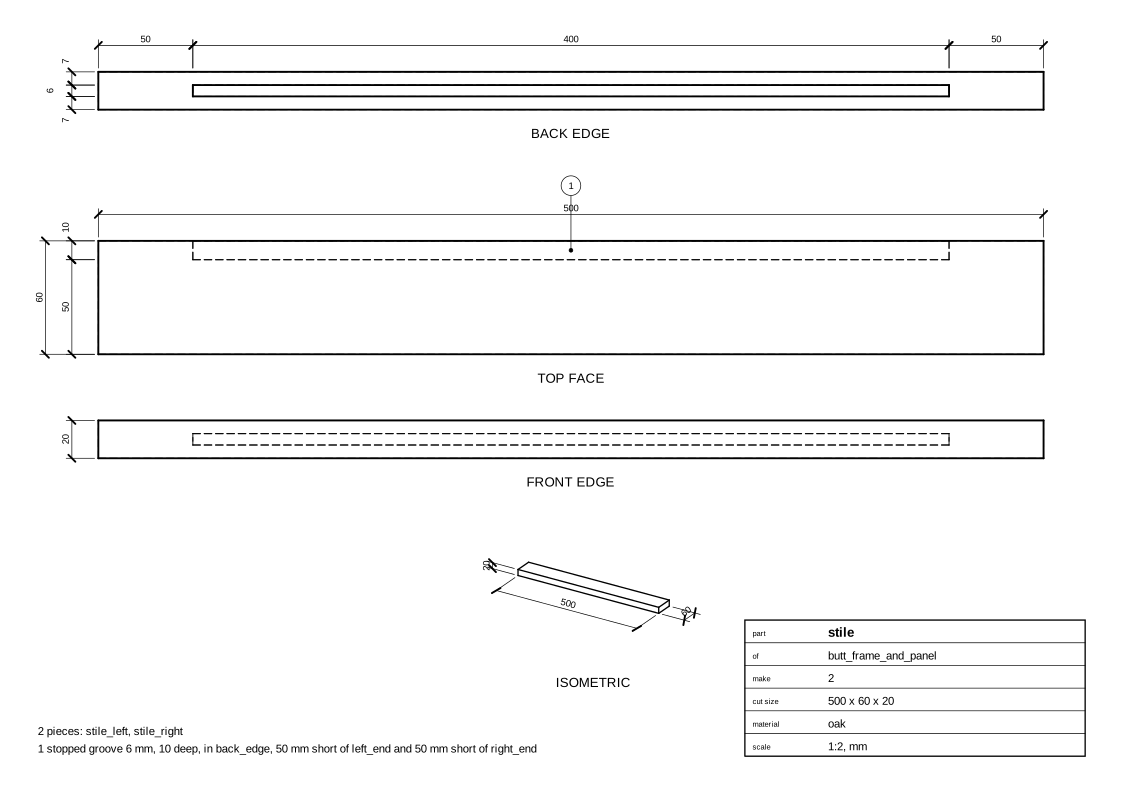
Stile
Cut list
stile  500 x 60 x 20 mm  oak, 2 pieces: stile_left, stile_right
       - stopped groove 6 mm, 10 deep, in back_edge, 50 mm short of left_end and 50 mm short of right_end
rail   300 x 60 x 20 mm  oak, 2 pieces: rail_top, rail_bottom
       - groove 6 mm, 10 deep, in back_edge
panel  400 x 320 x 10 mm  oak
       - tongue 6 mm thick, 10 long, on front_edge
       - tongue 6 mm thick, 10 long, on back_edge
       - tongue 6 mm thick, 10 long, on right_end
       - tongue 6 mm thick, 10 long, on left_end
Code
From woodwright/examples/frames.py, which imports the names it uses (see From an example to your own design):
def butt_frame_and_panel(
    stile_length: float = 500,
    rail_length: float = 300,
    width: float = 60,
    tongue_length: float = 10,
    stock: Stock = OAK,
    panel_stock: Stock = THIN_OAK,
) -> Assembly:
    """A frame butt-joined at the corners, a panel tongued on all four edges
    into grooves along its inside edges.

    The panel's design size is the opening of the frame, the tongues add to
    it; it is centered in the frame's thickness. The grooves in the rails
    run through, into those in the stiles, which are stopped where the
    rails' grooves meet them, so that they don't show at the stiles' ends.
    The glued corners hold little (end grain on long grain): a frame for a
    light panel, or one to be screwed or dowelled (not modelled).
    """

    def corner(rail_end: SideRef, stile_edge: SideRef, position: Position, outer: SideRef) -> Joint:
        return Butt(stile_edge, rail_end, position=position)

    asm, (stile_left, stile_right, rail_top, rail_bottom) = _frame(
        "butt_frame_and_panel", corner, stile_length, rail_length, width, stock
    )
    panel = asm.add(Board("panel", panel_stock, length=stile_length - 2 * width, width=rail_length))
    stop = width - tongue_length  # where the rails' grooves end
    for groove, edge, stopped in [
        (
            stile_left.back_edge,
            panel.front_edge,
            {stile_left.left_end: stop, stile_left.right_end: stop},
        ),
        (
            stile_right.front_edge,
            panel.back_edge,
            {stile_right.left_end: stop, stile_right.right_end: stop},
        ),
        (rail_top.back_edge, panel.right_end, None),
        (rail_bottom.front_edge, panel.left_end, None),
    ]:
        asm.join(
            TongueAndGroove(
                tongue=edge,
                groove=groove,
                tongue_length=tongue_length,
                across=CENTERED,
                stopped=stopped,
            )
        )
    return asm
Exported with woodwright 0.9.0 on 2026-10-25.