Examples
144 examples, from single cuts and joints to whole projects. Each is a function in woodwright.examples with its sizes as parameters; its page has its pictures, drawings, cut list and code. Find them by joint or cut in the tags.
Cuts
Cuts on a single part: a board, or a rod of round stock.
-
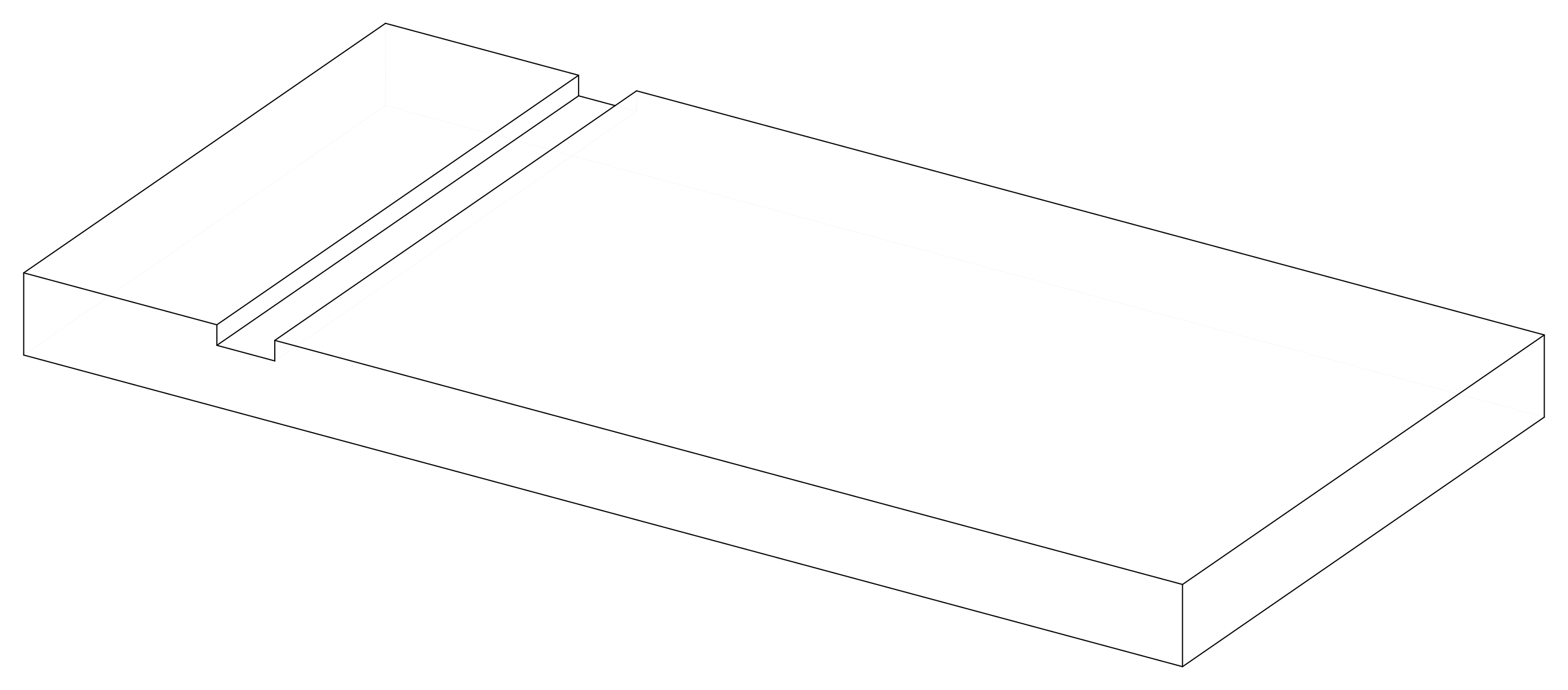
A dado: a groove across the grain, from edge to edge.
-
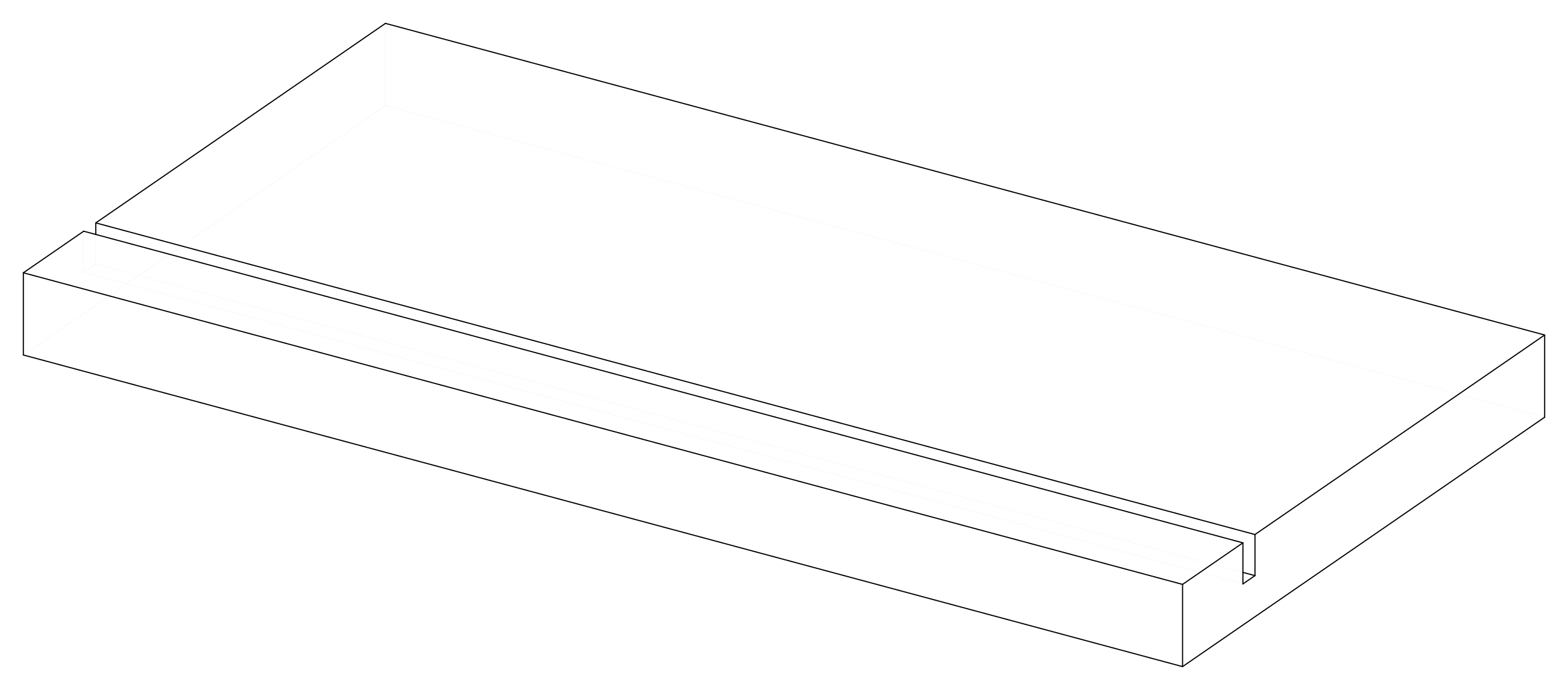
A groove along the grain, from end to end.
-
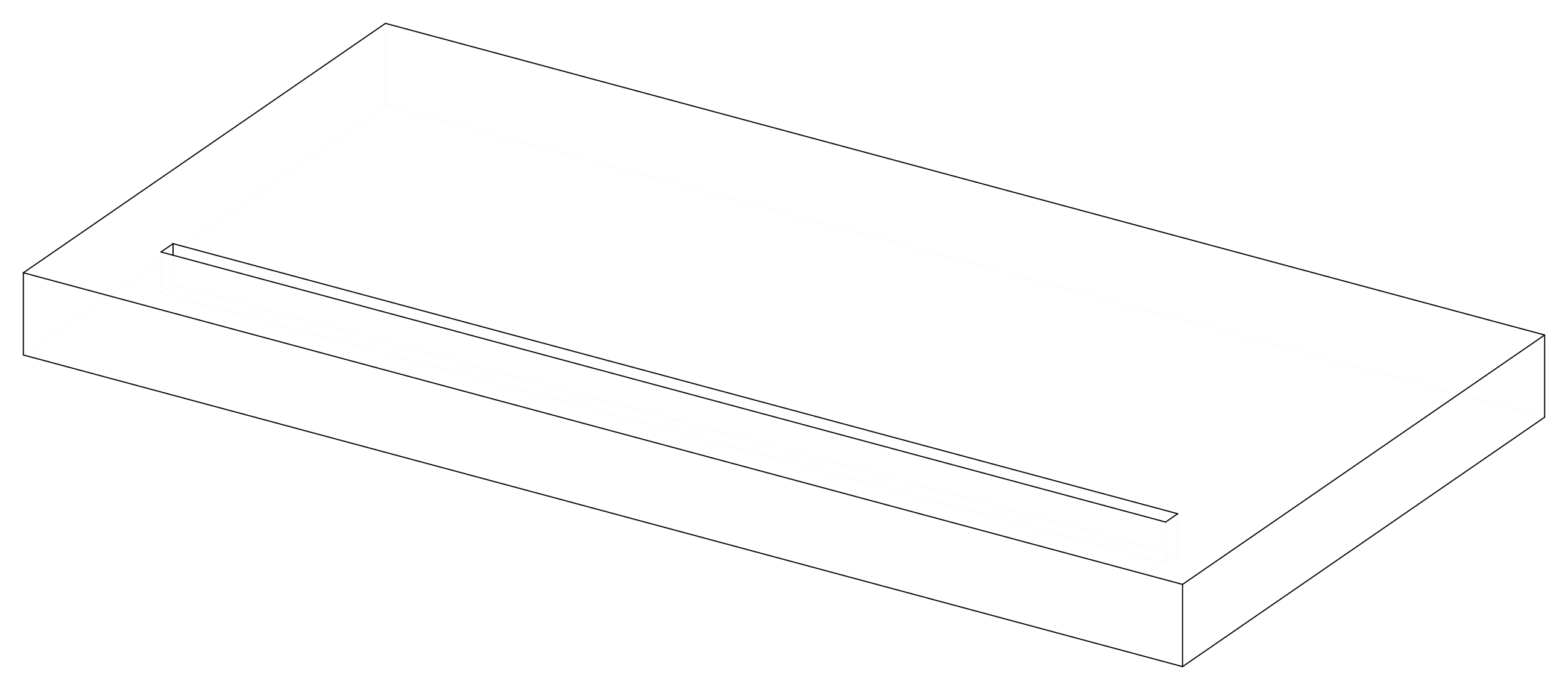
A groove stopped
stopshort of both ends, so it shows at neither. -
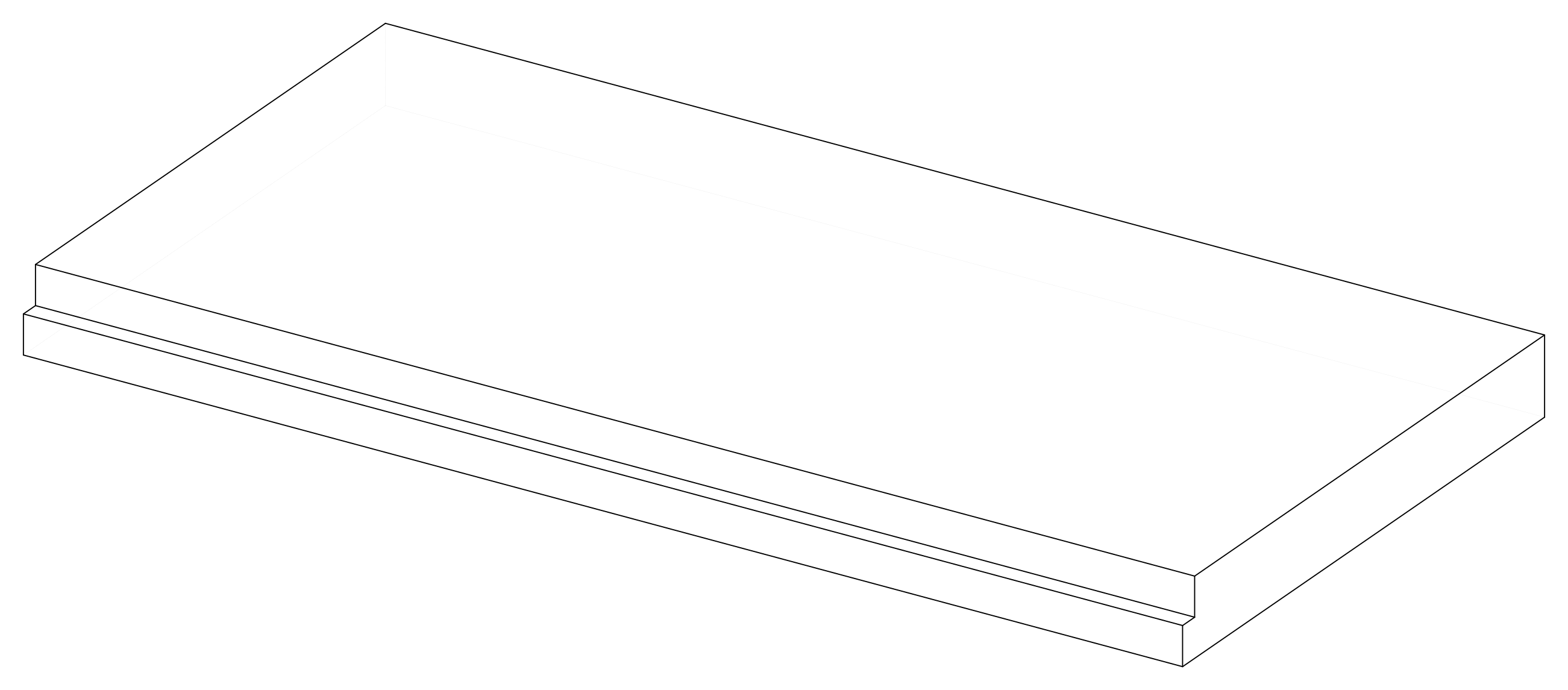
A rabbet along an edge: a groove open to the edge.
-
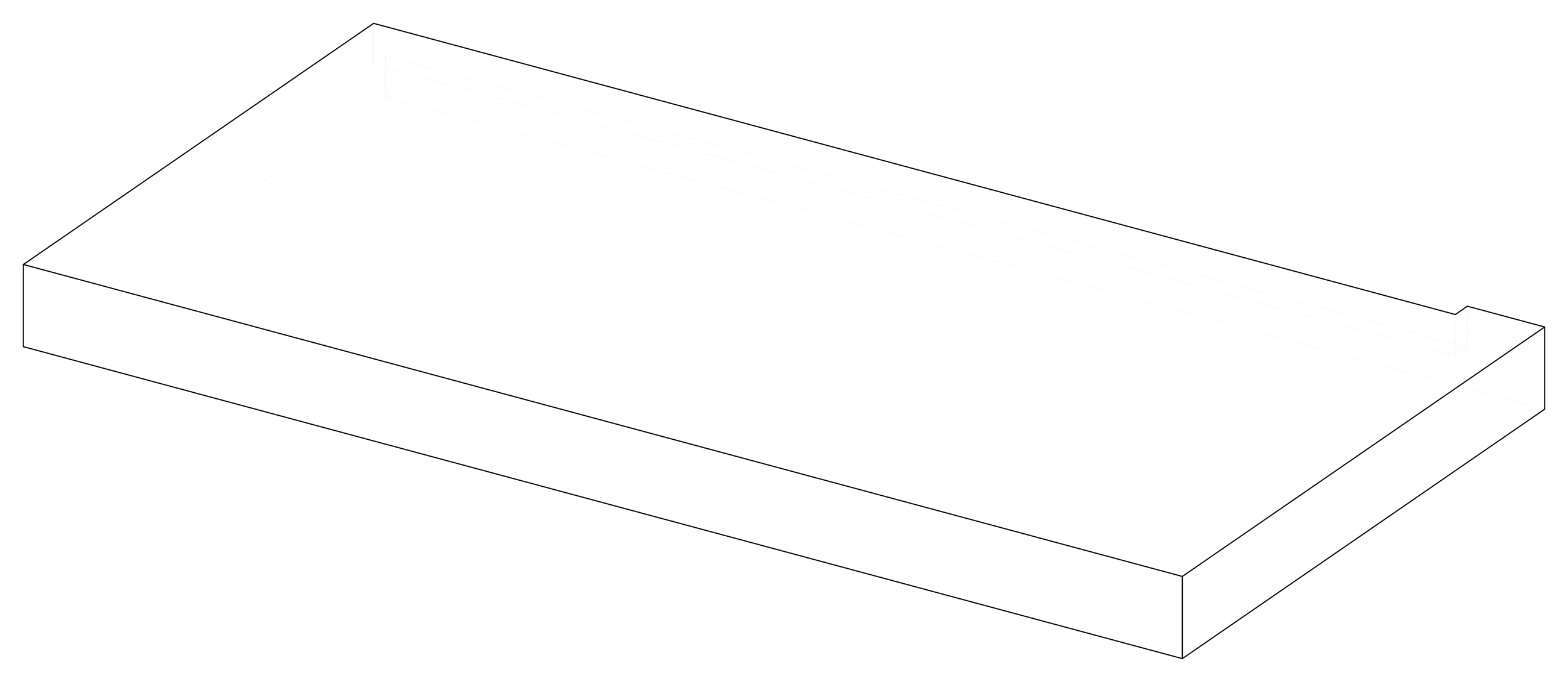
A rabbet along the back edge stopped short of the right end, e.g. in the side of a case for a back that stops below the top.
-
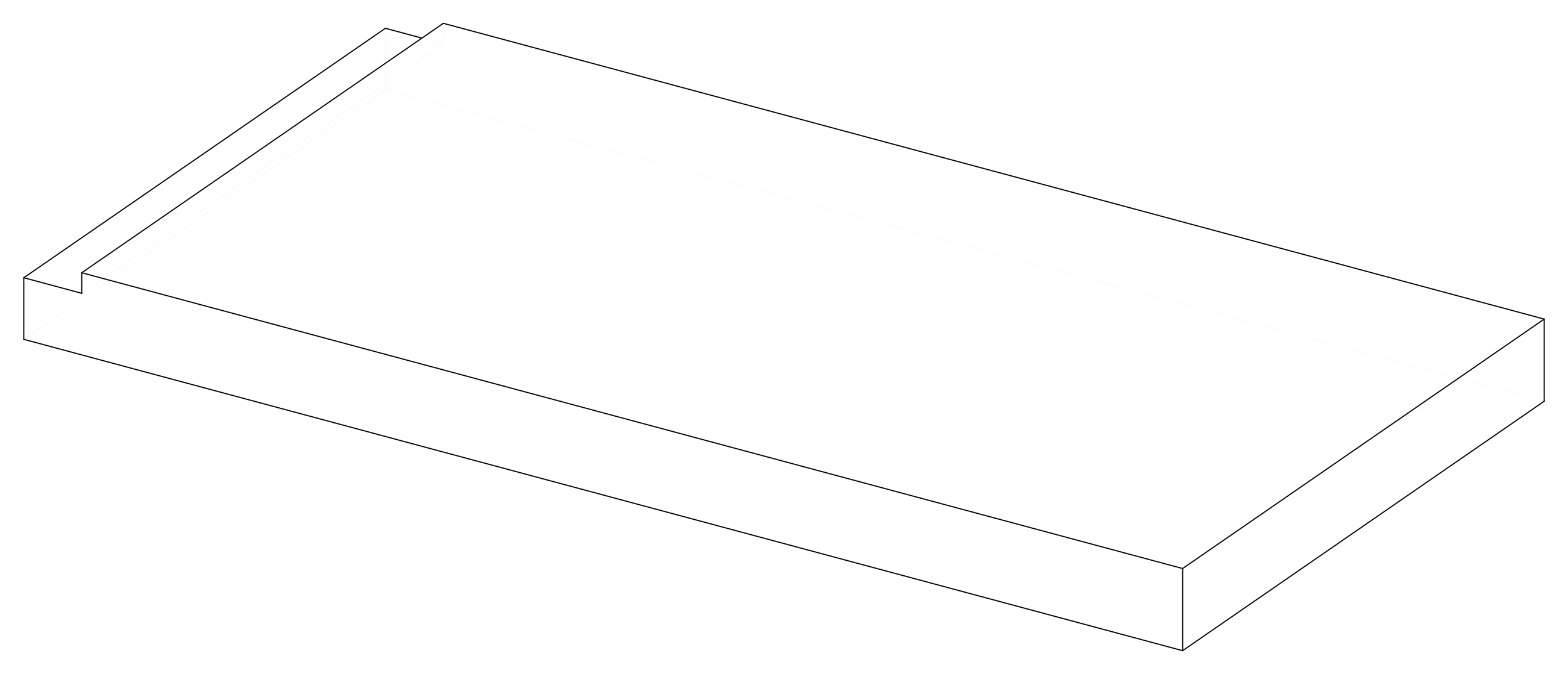
A rabbet at an end: a dado open to the end grain.
-
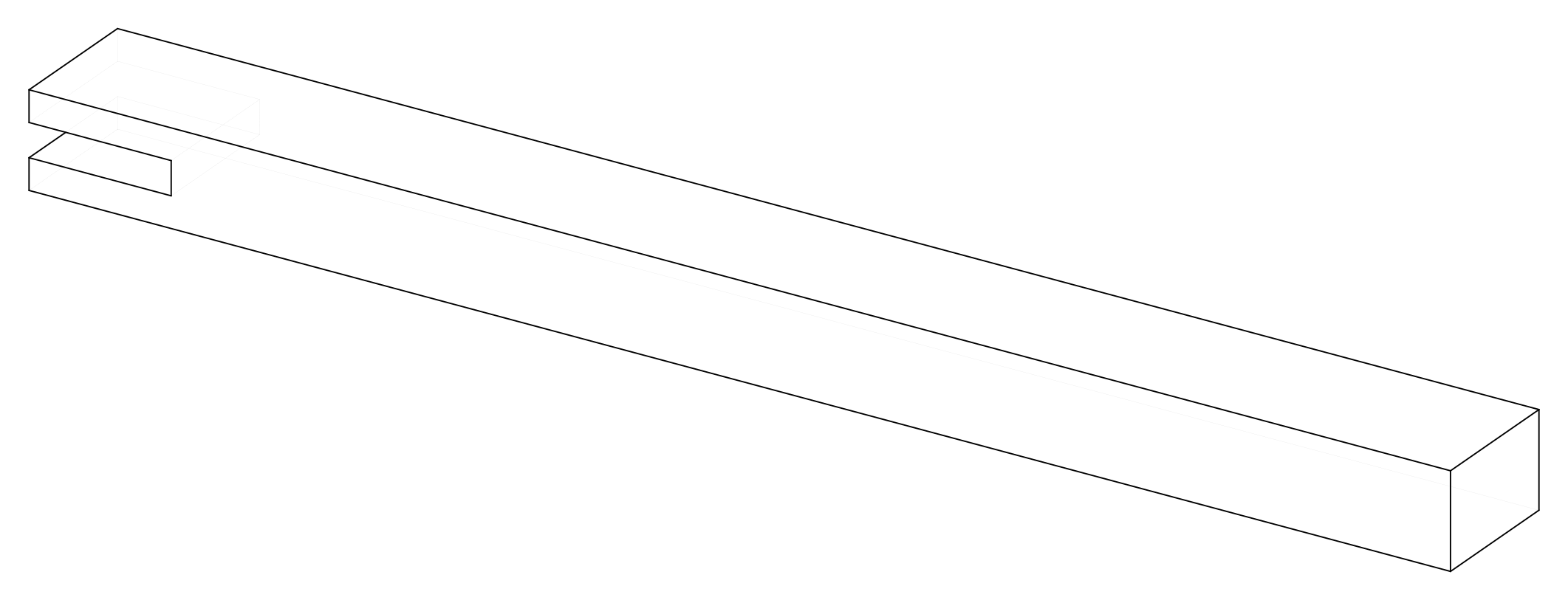
A slot in an end, through the width, centered in the thickness (for a bridle).
-
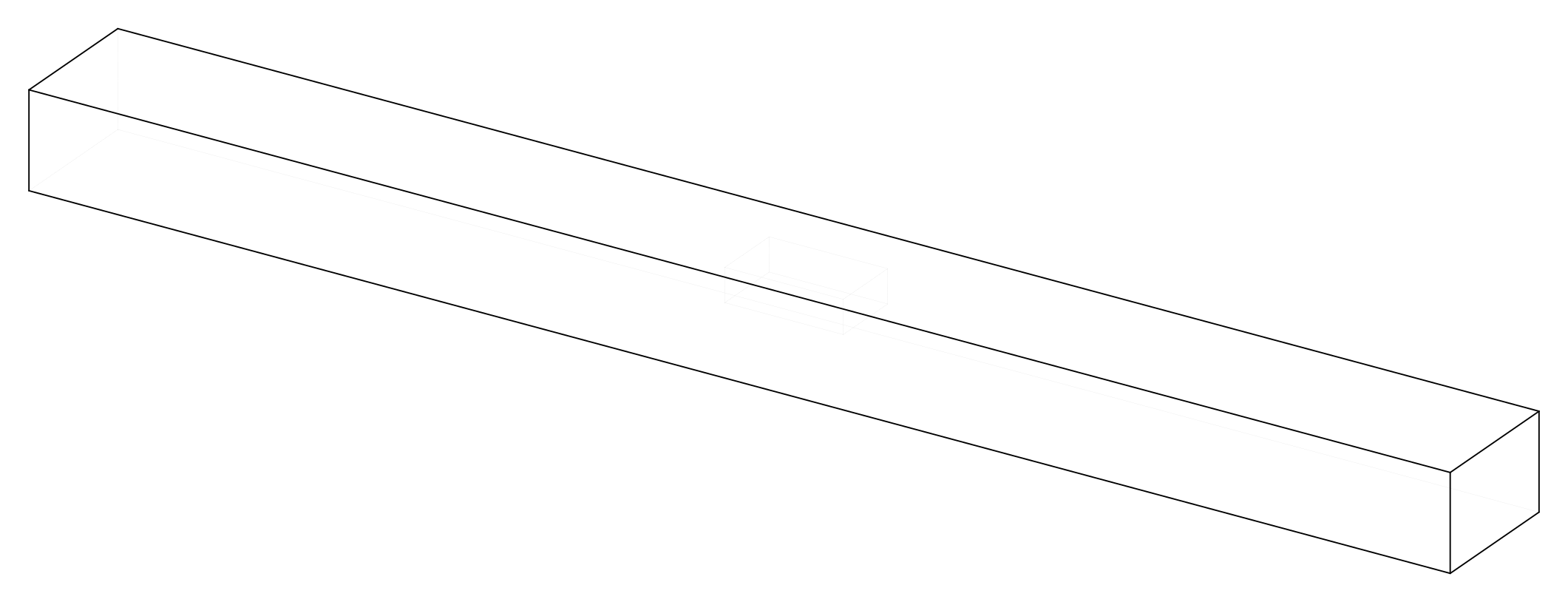
A blind mortise in an edge (a through one when as deep as the board is wide).
-
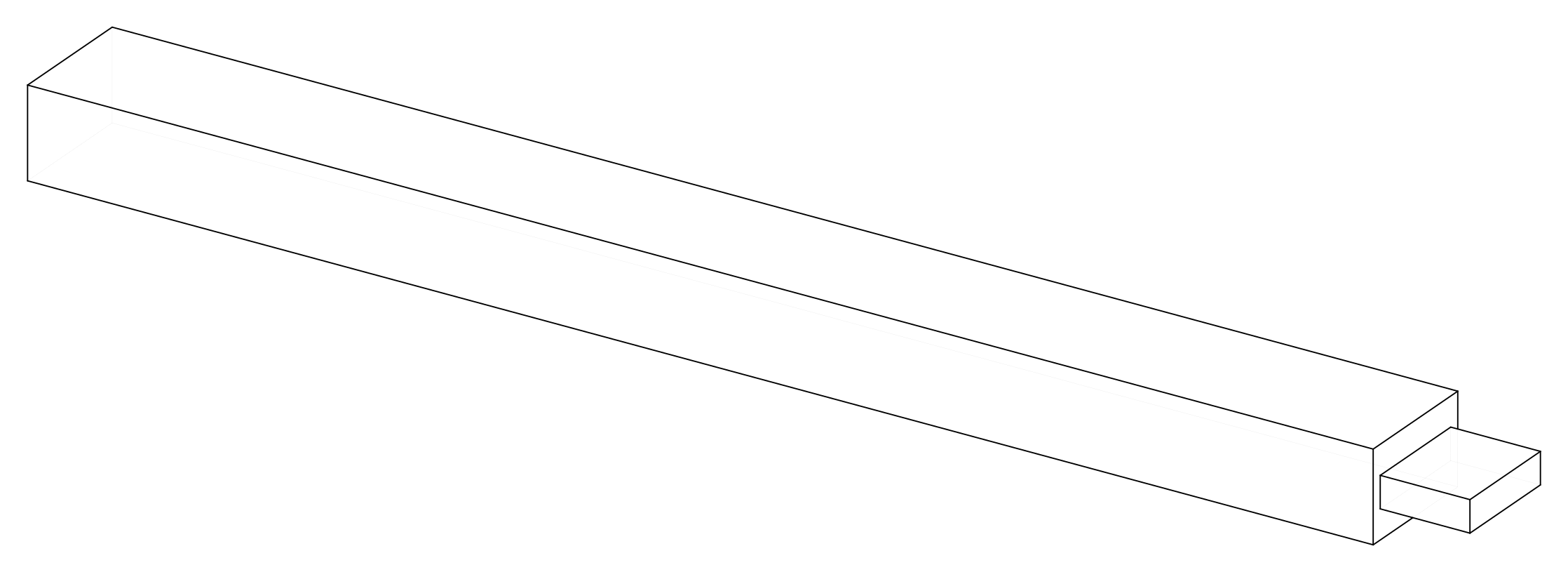
A tenon on an end, with shoulders and cheeks; the board grows by its length.
-
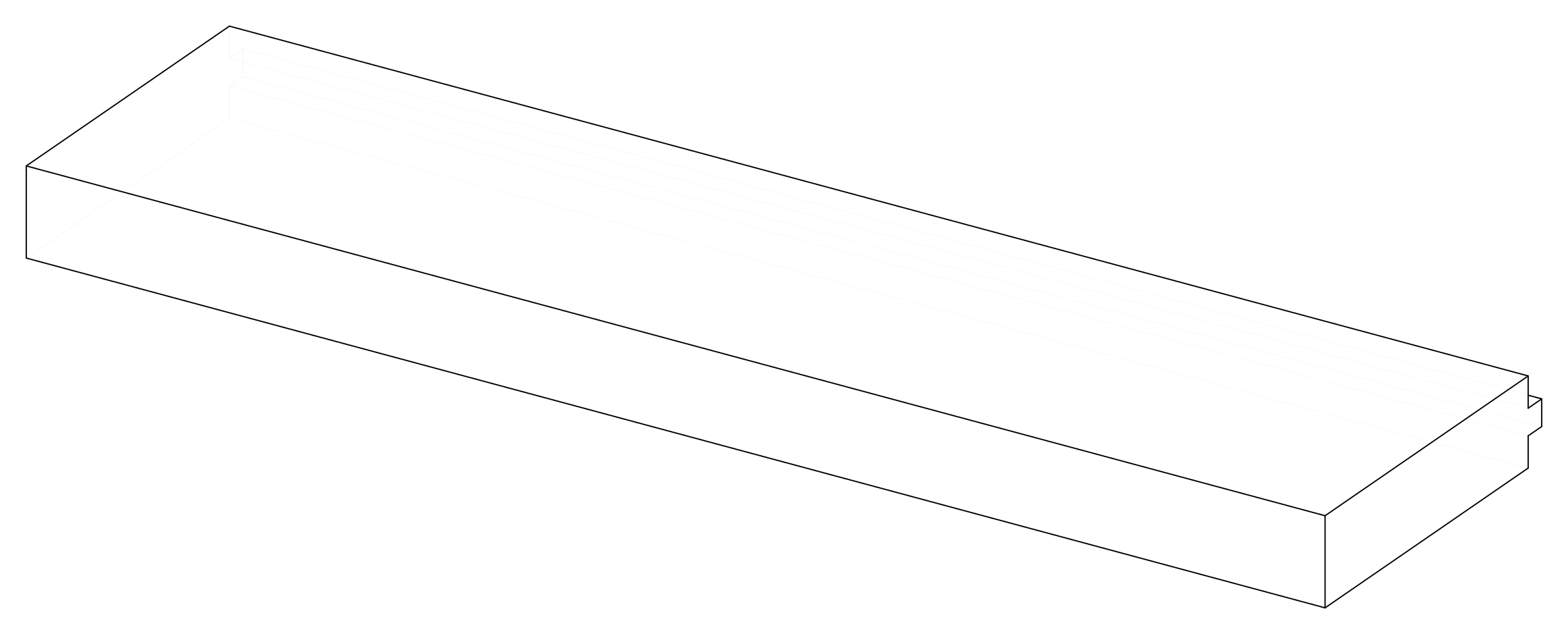
A tongue along an edge; the board grows by its length.
-
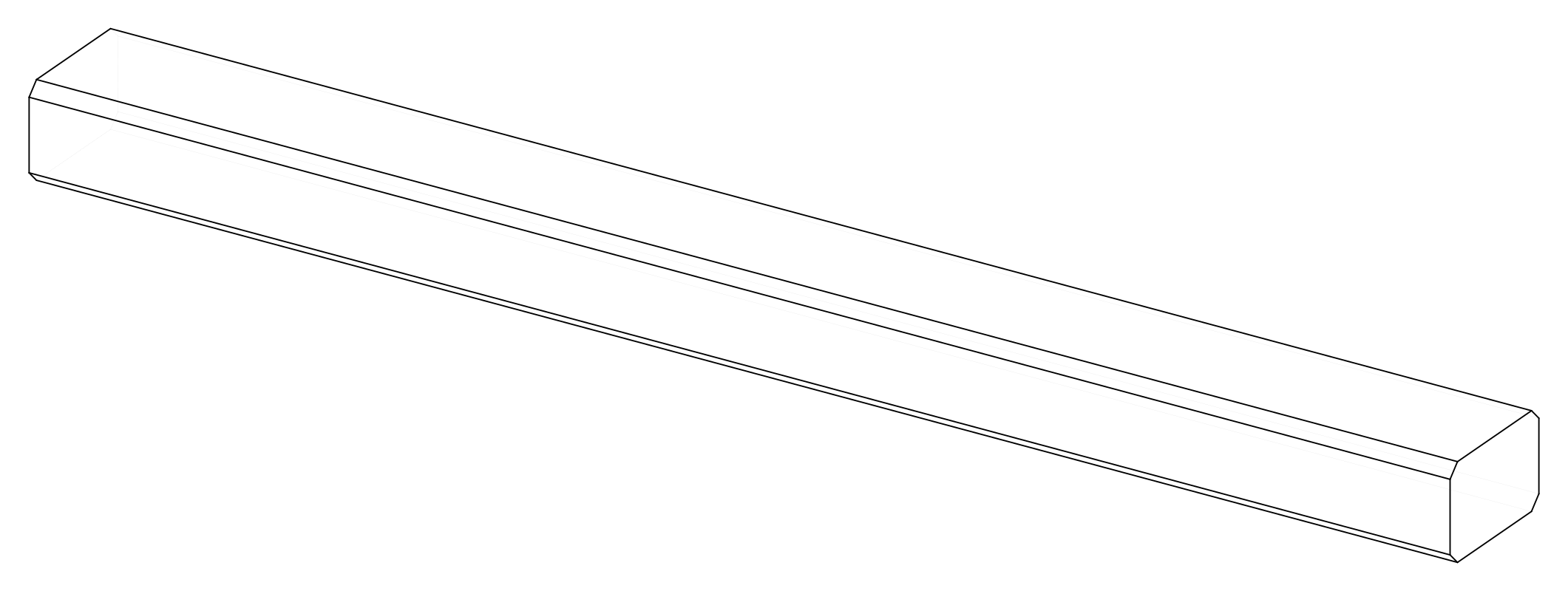
Chamfers on the four arrises along the grain.
-
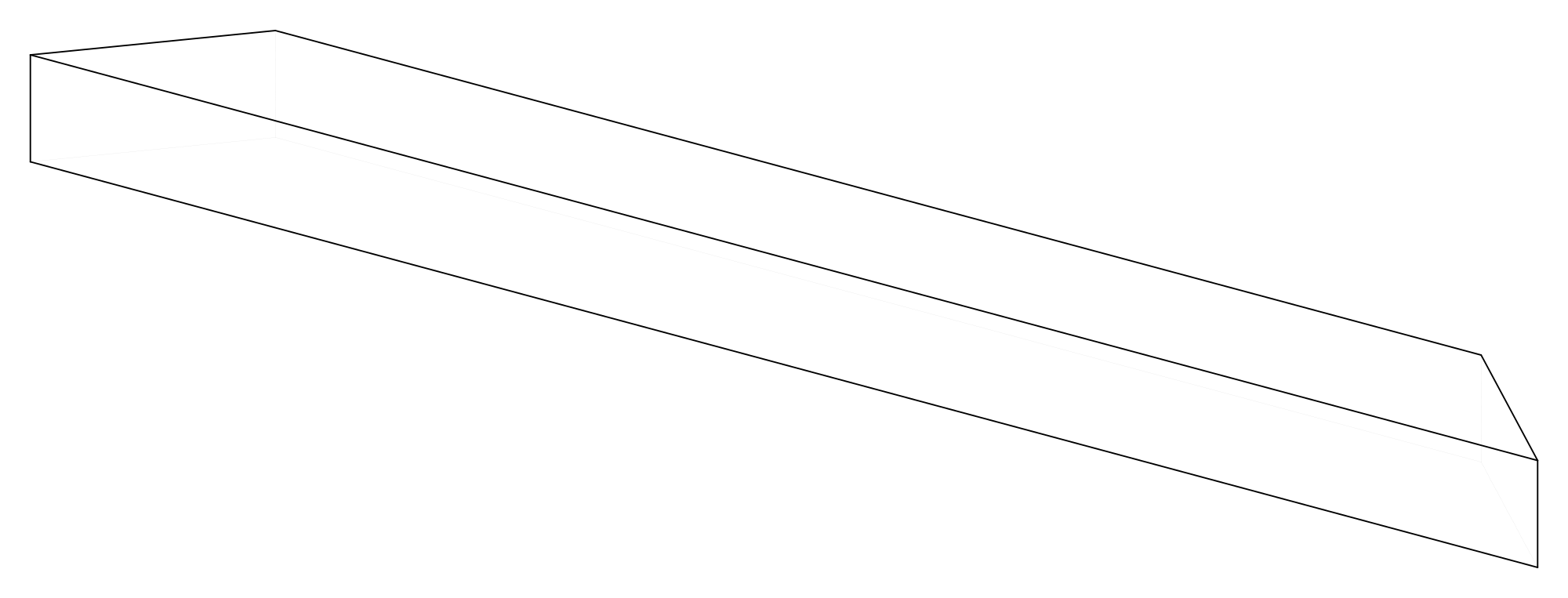
Both ends mitred across the face, as a picture frame member; back edge inside.
-
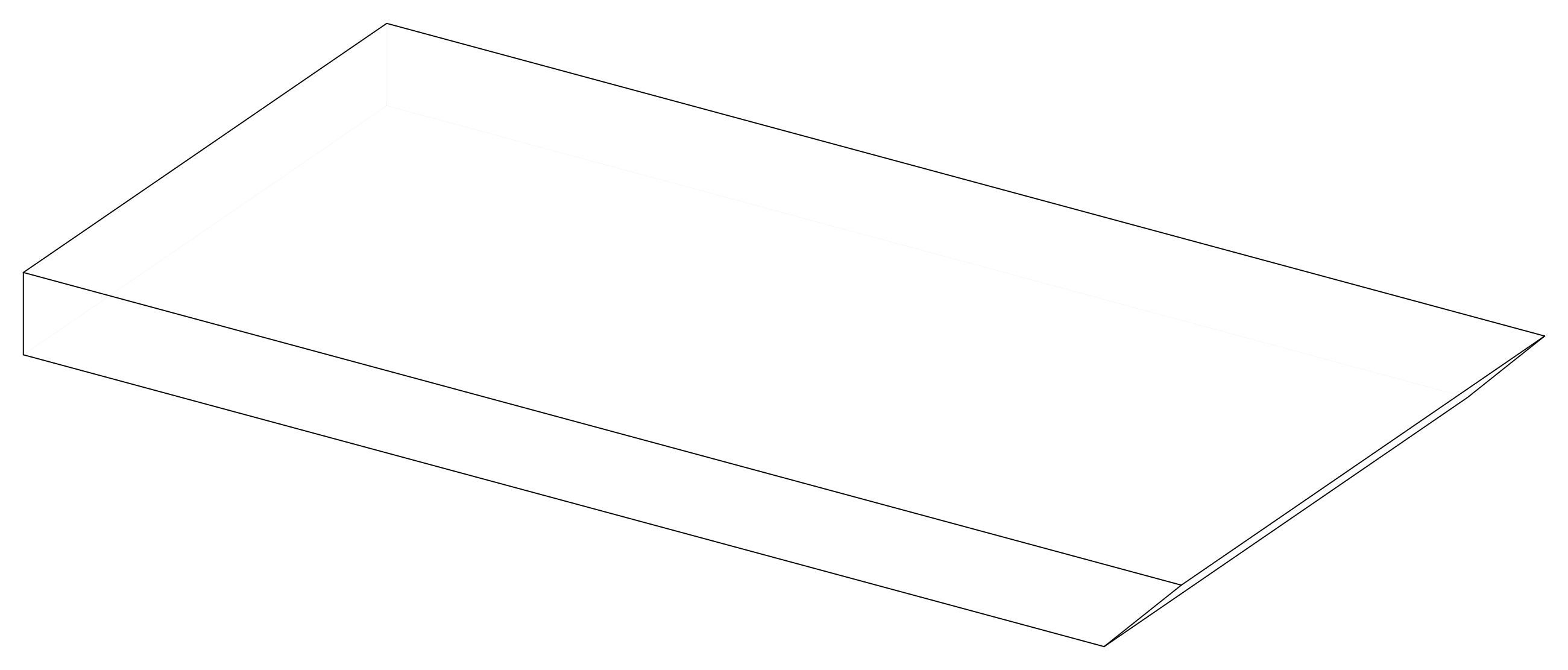
An end mitred across the edge, as for a carcase corner; bottom face inside.
-
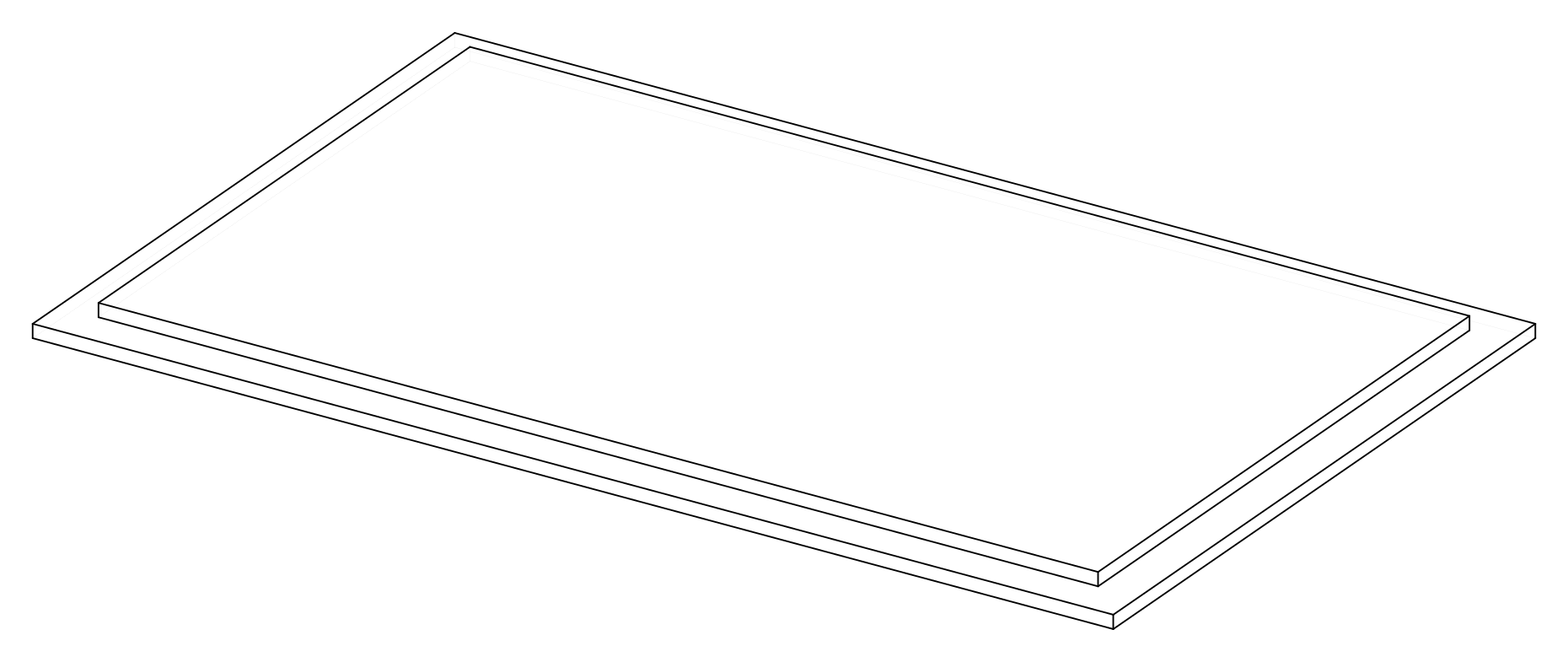
A thin panel rabbeted on all four sides, to fit a groove in a frame or a drawer.
-
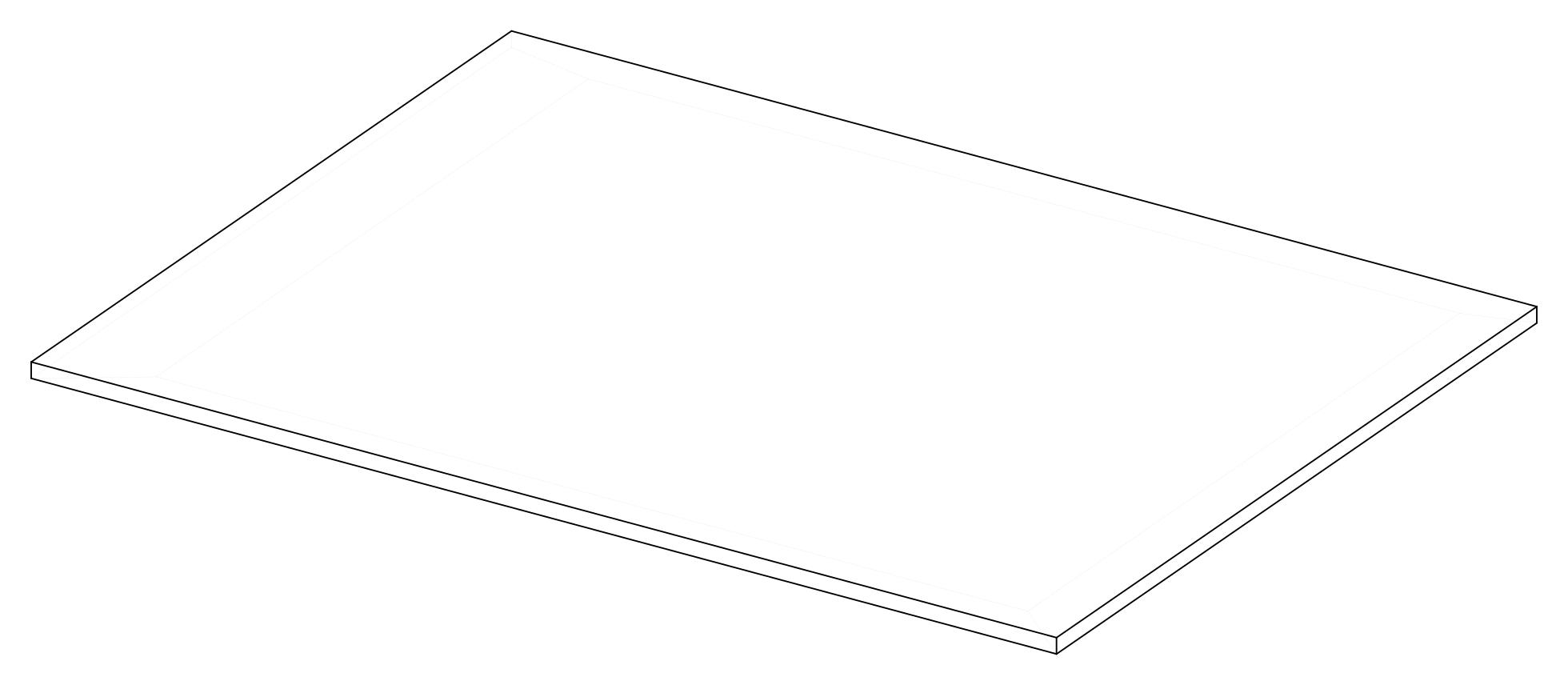
A drawer bottom with three edges tapered on the underside to fit grooves.
-
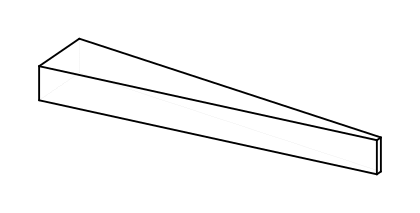
A wedge, e.g. for a wedged tenon: both edges tapered towards the right end.
-
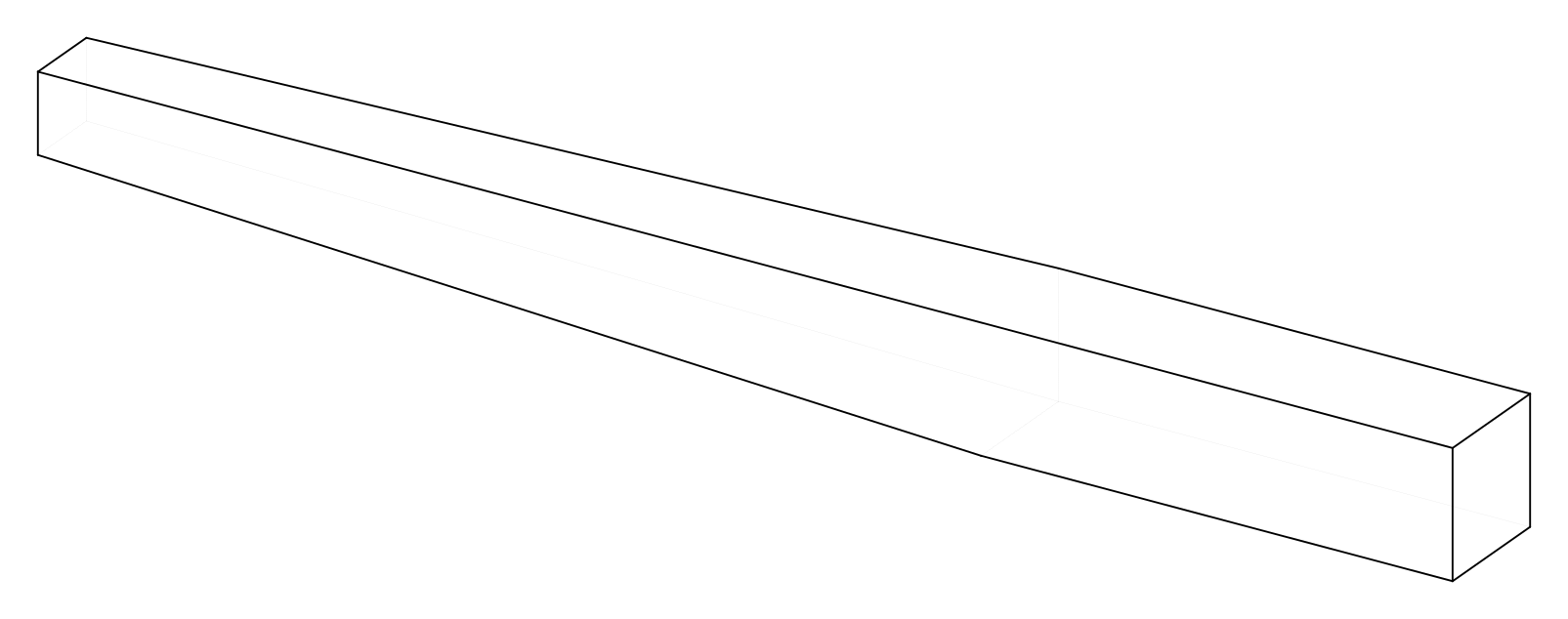
A leg tapered on its two inside sides over the lower part of its length.
-
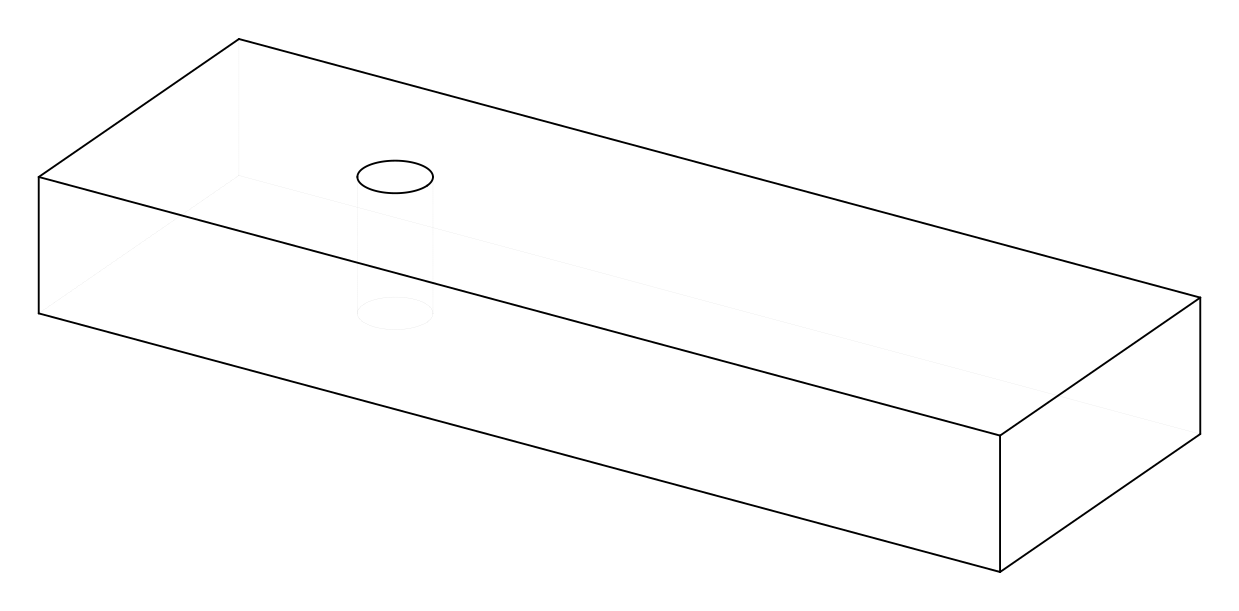
A hole through a board, 80 from its left end, centered across it.
-
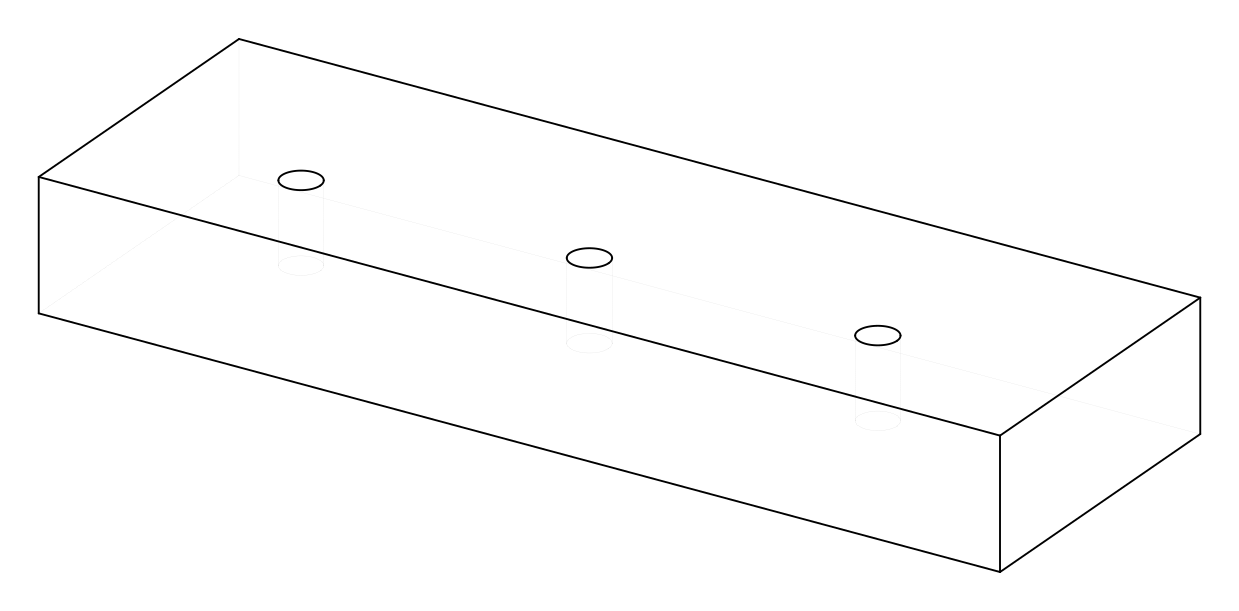
Blind holes, flat-bottomed (Forstner, auger) or with
point, the angle of a twist drill's tip, a conical point belowdepth. -
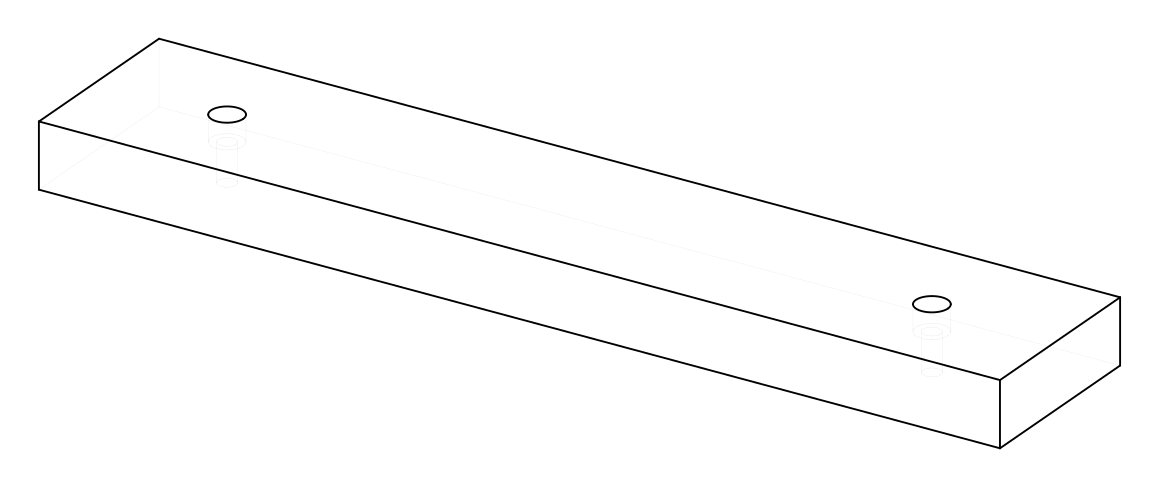
A clearance hole for a 5 mm screw, counterbored for its head and a 10 mm plug over it, e.g. in a batten screwed to a door.
-
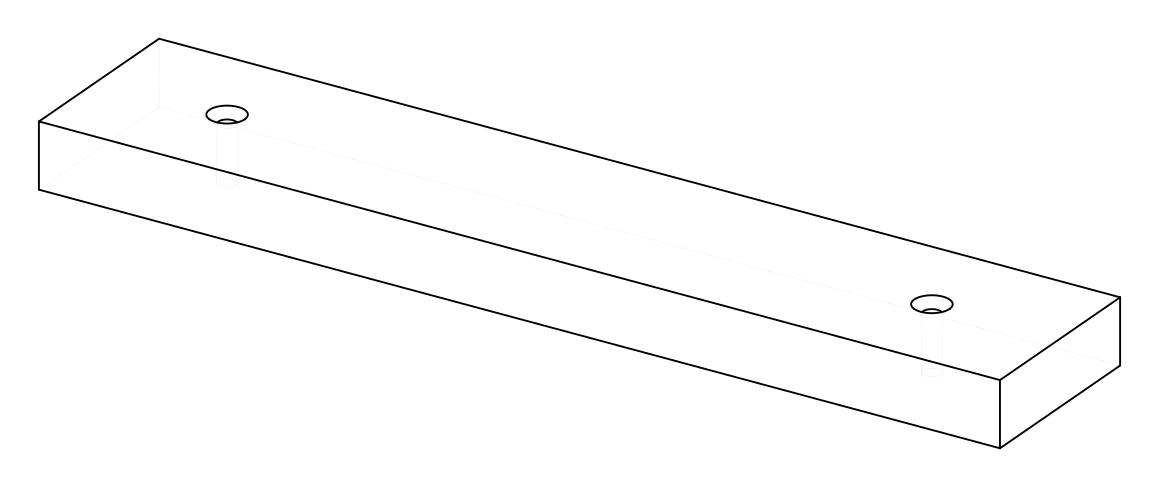
Clearance holes for 5 mm screws, countersunk for their heads (90 degrees).
-
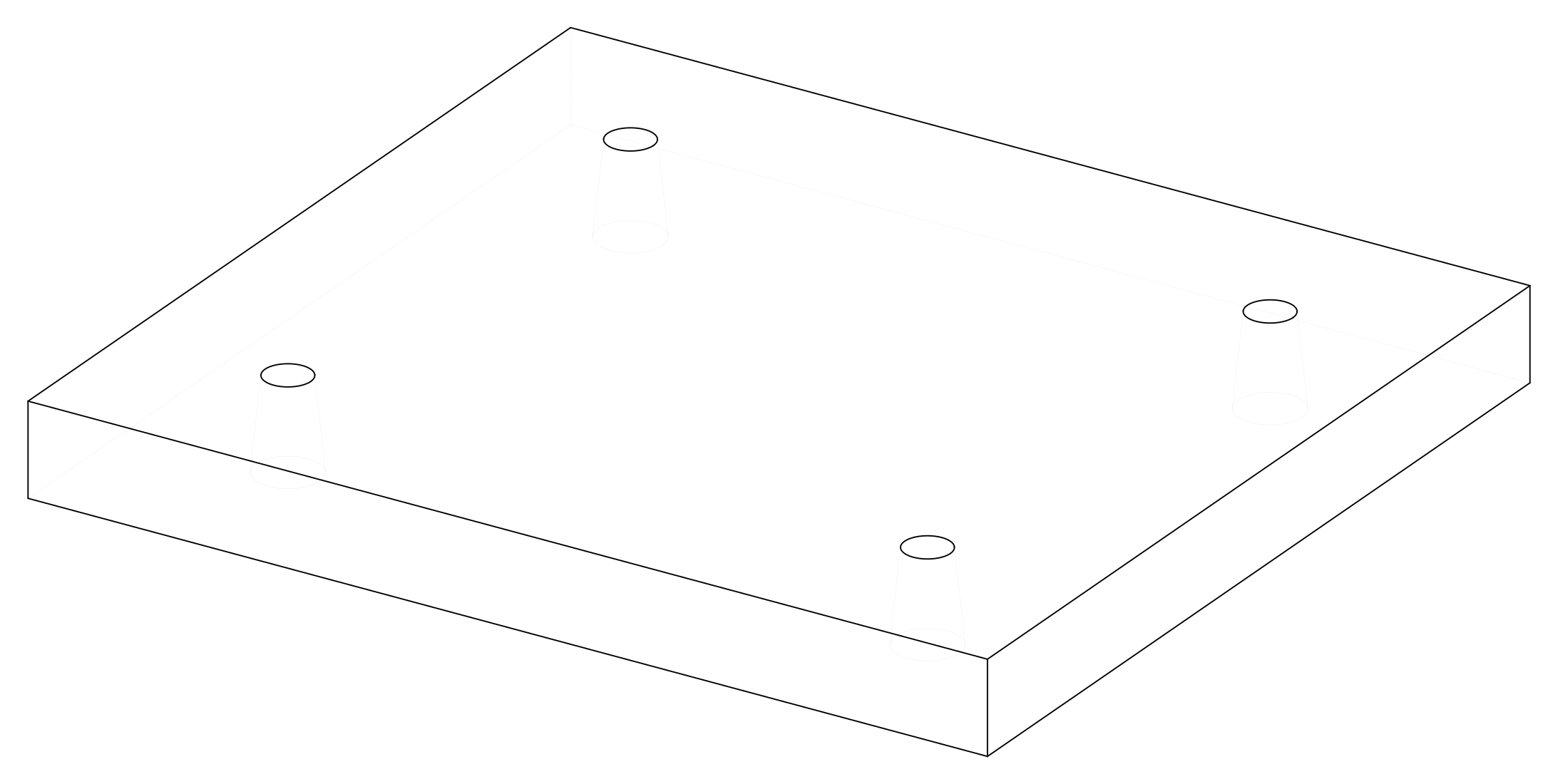
Reamed, tapered holes through a Windsor seat for the legs, wider below.
-
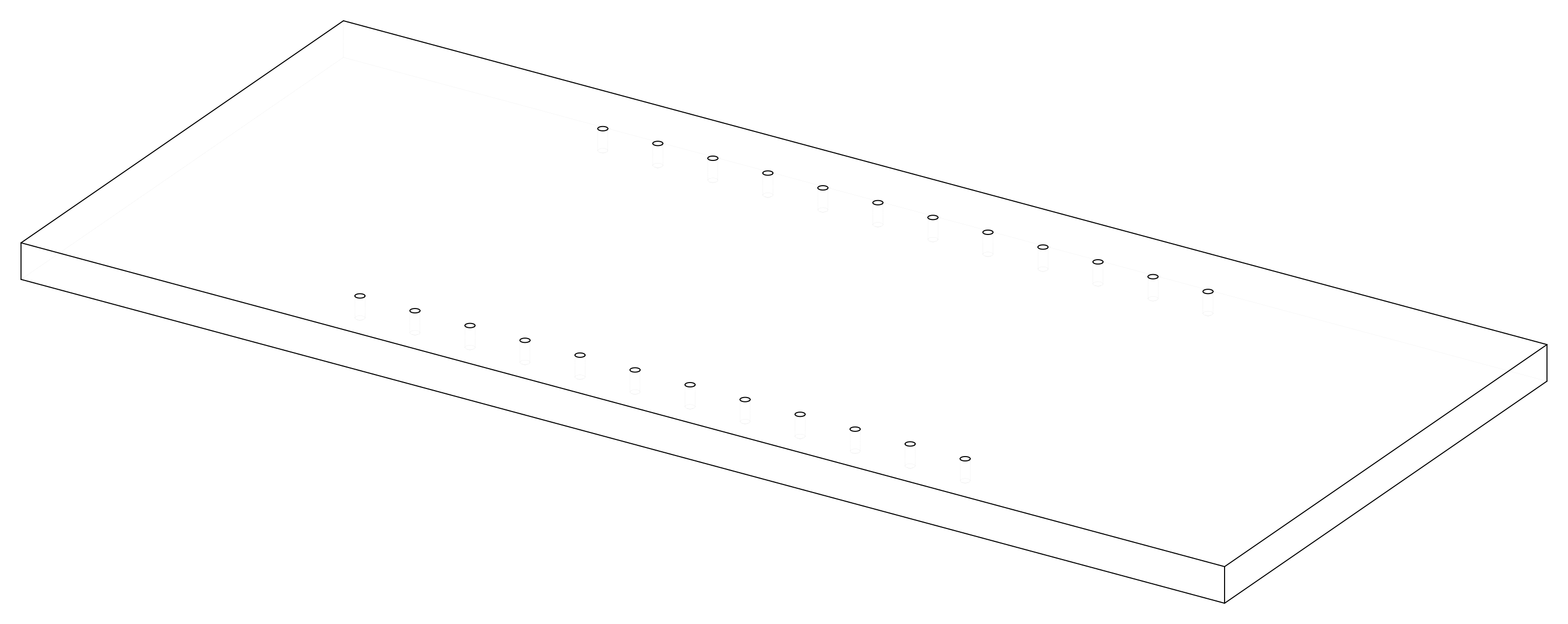
Two rows of 5 mm holes, 12 deep, in the inside of a case side for shelf pins,
pitchapart (the 32 mm system), 37 from the edges. -
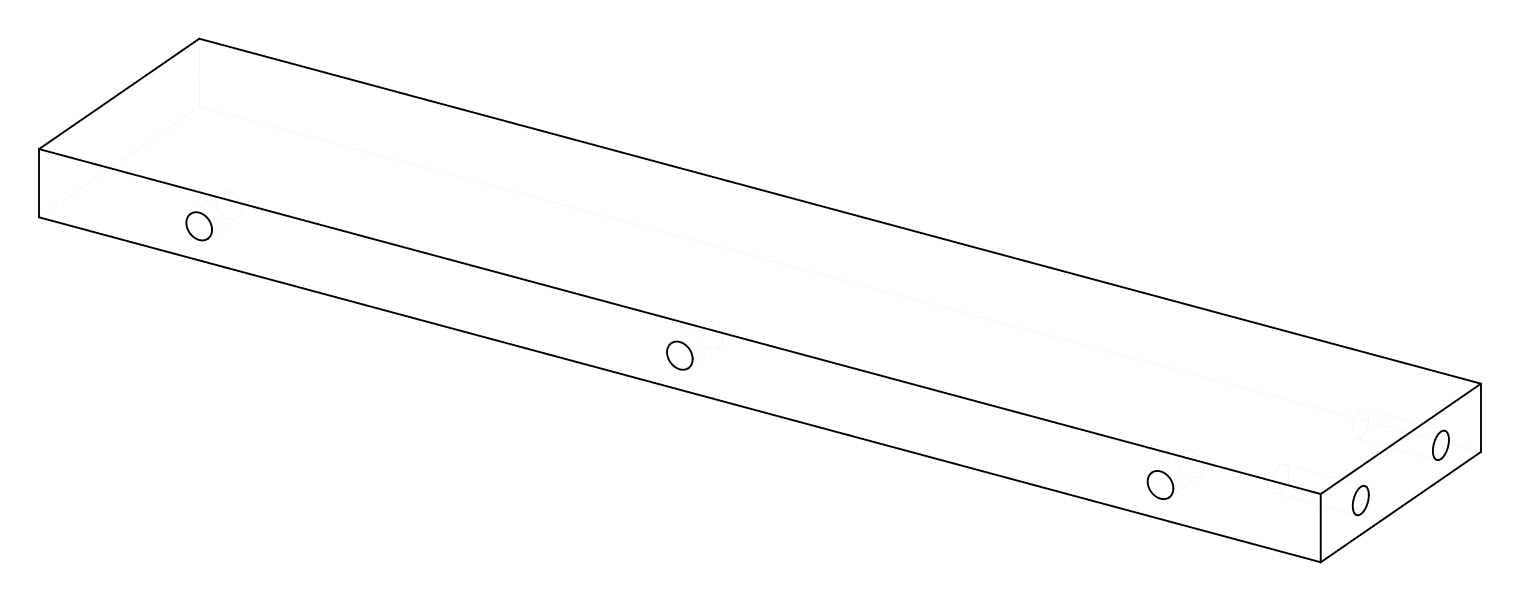
Holes for dowels: in an edge, for an edge joint (half the dowel's length, 15, deep), and in an end, for a frame corner (25 deep).
-
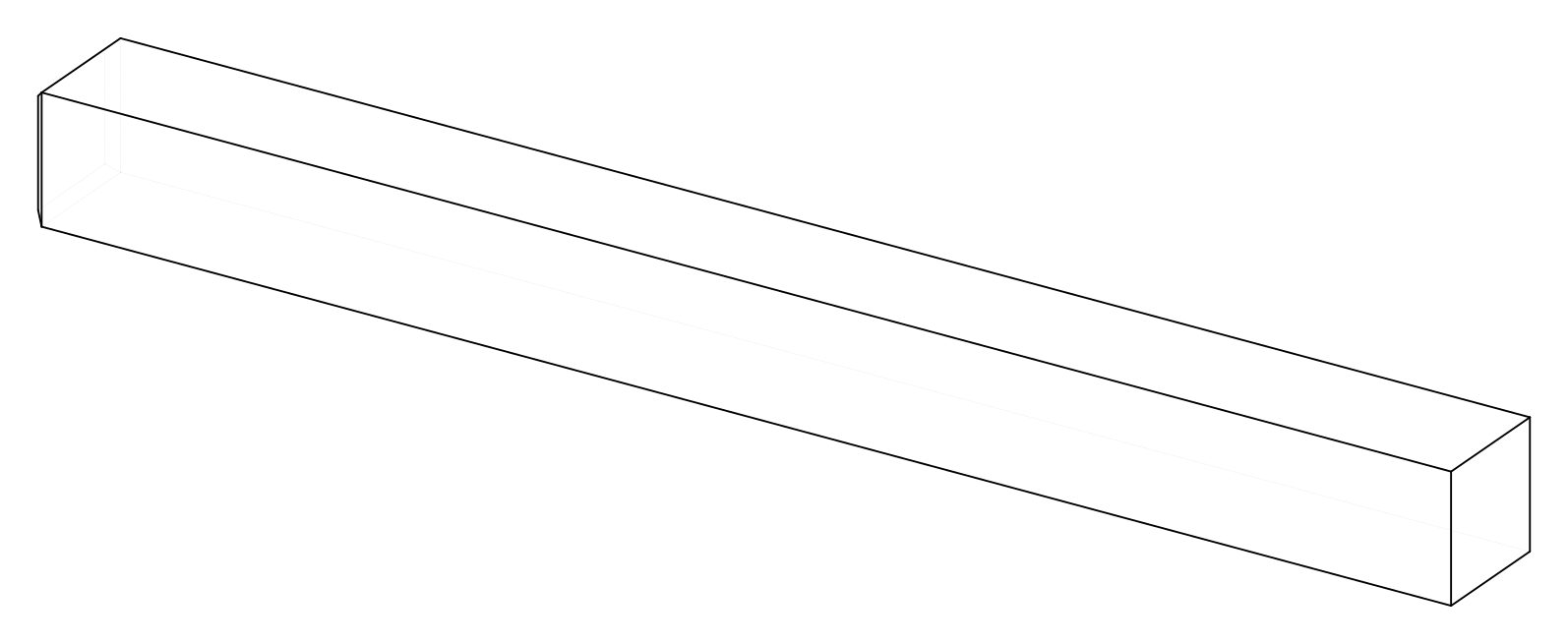
A square leg chamfered around its foot, so that it doesn't splinter.
-
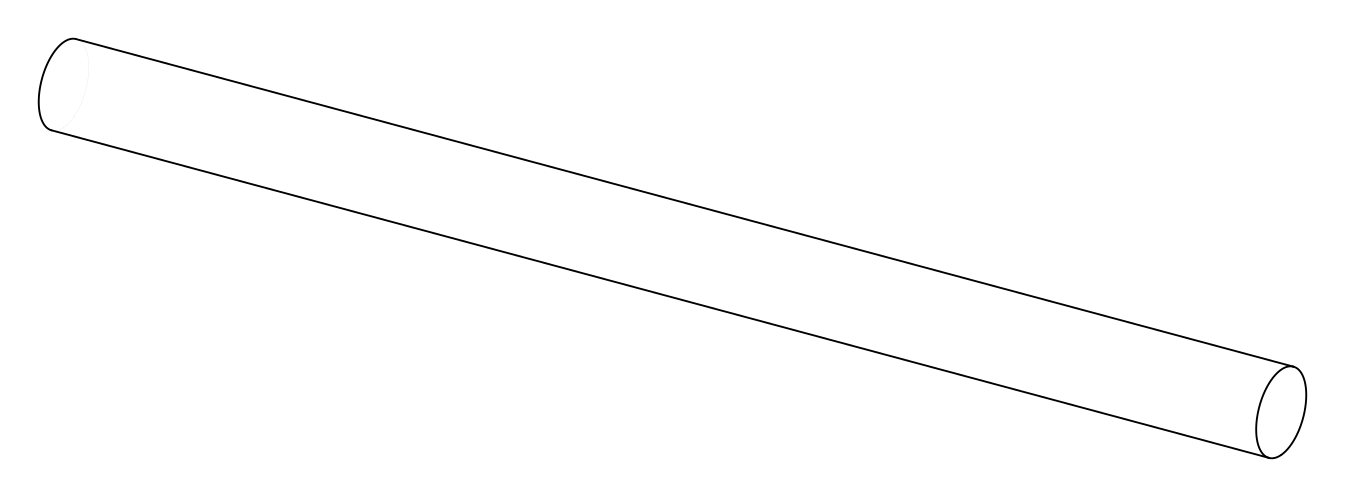
A plain rod, e.g. a ladder rung, a rail: round stock cut to length.
-
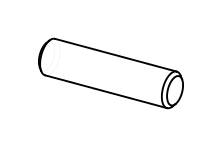
A dowel chamfered at both ends, so that it enters its holes.
-
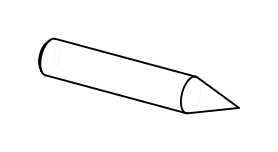
A peg (a pin) pointed at its right end, e.g. for a drawbored tenon; its other end is chamfered.
-
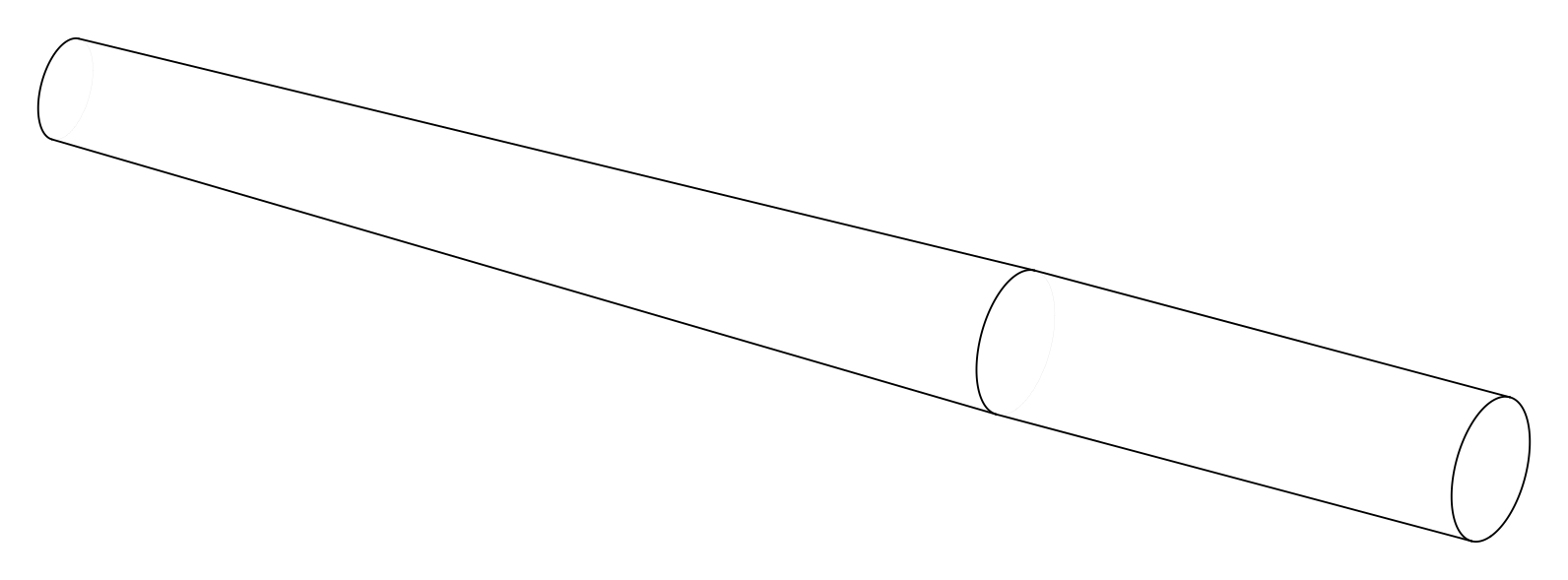
A round leg tapering (a cone, as turned) towards its foot over its lower part, chamfered around the foot.
-
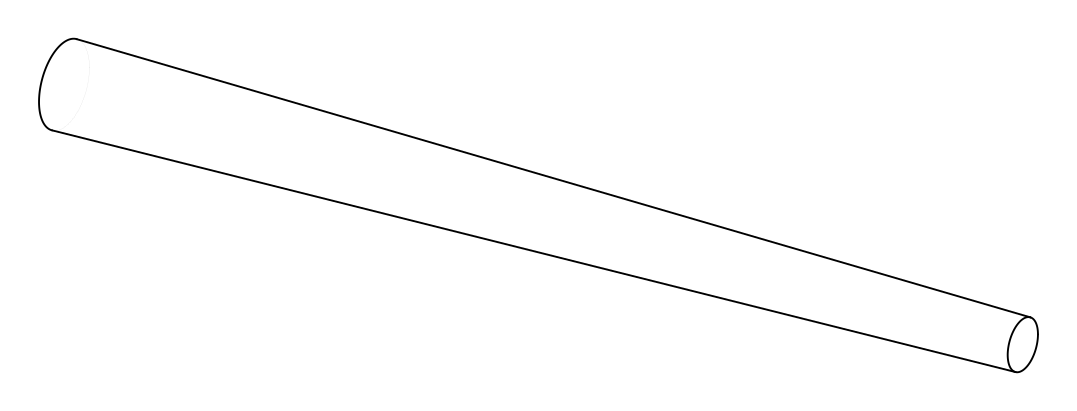
A rod tapering to a cone over its whole length, e.g. a spindle.
-
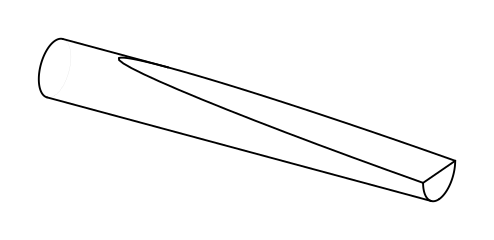
A dowel tapered flat (a sloping plane, not a cone) on one side towards its right end, e.g. a wedge driven through the tenon of a dowel tusk joint.
-
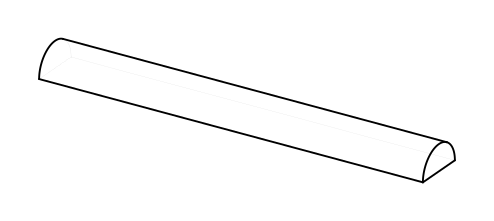
A dowel ripped in half along its length, its flat side down: e.g. the bearing of a dowel tusk wedge, glued flat on a board.
-
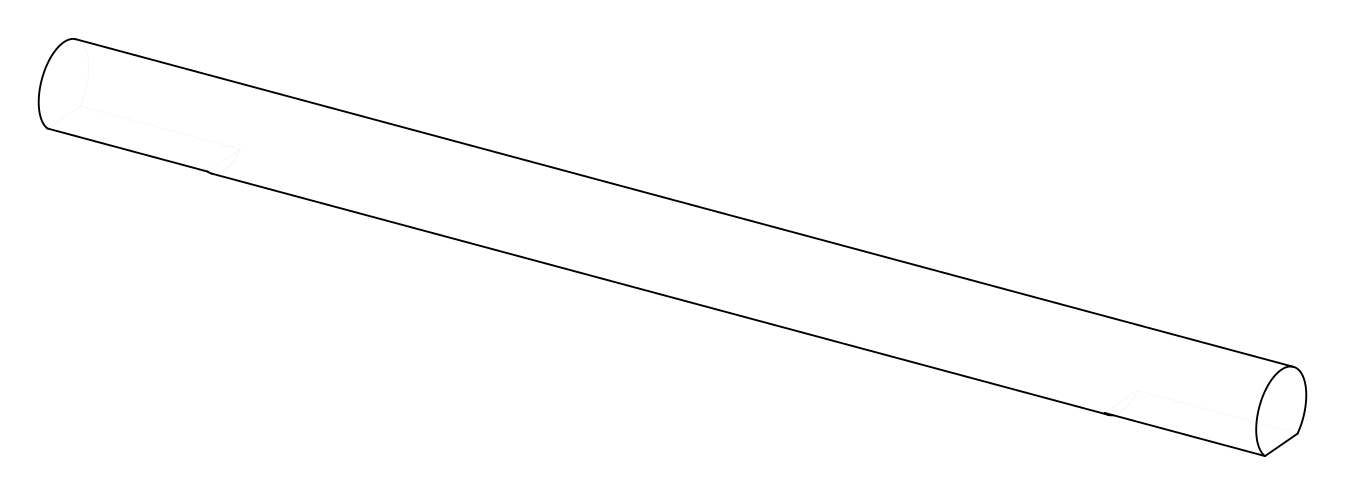
A rod with flats planed at both ends on its underside, e.g. where it lies on a pair of brackets, so that it doesn't roll.
-
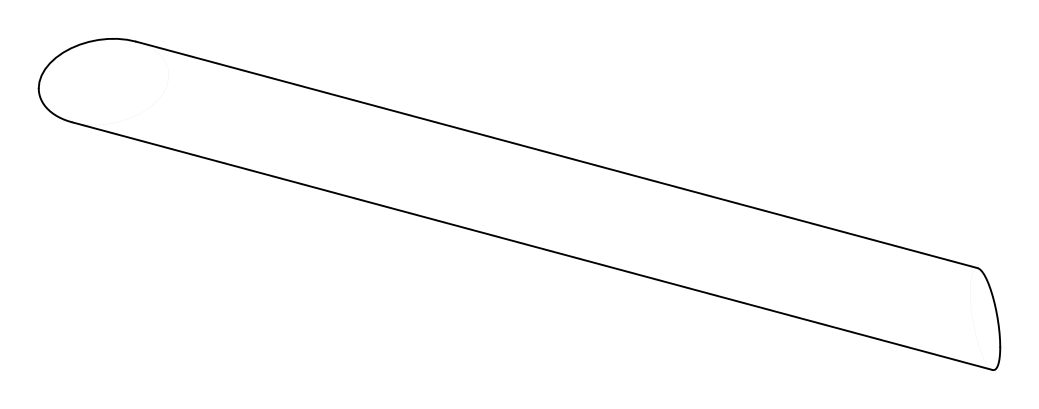
A rod mitred at both ends, e.g. a towel rail's corner.
-
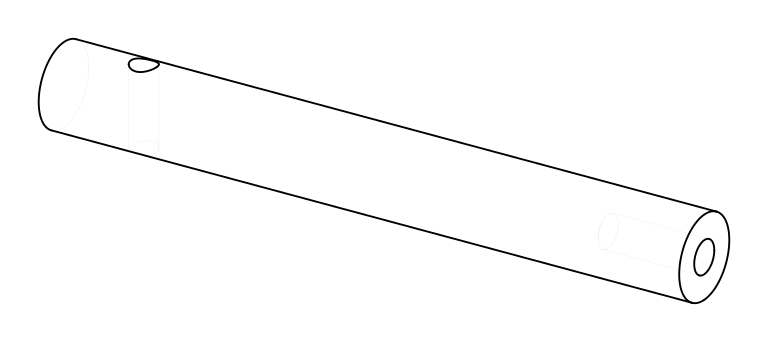
A rod with a cross hole through it near one end (e.g. for a peg) and a blind hole into its other end, on its axis (e.g. for a dowel).
-
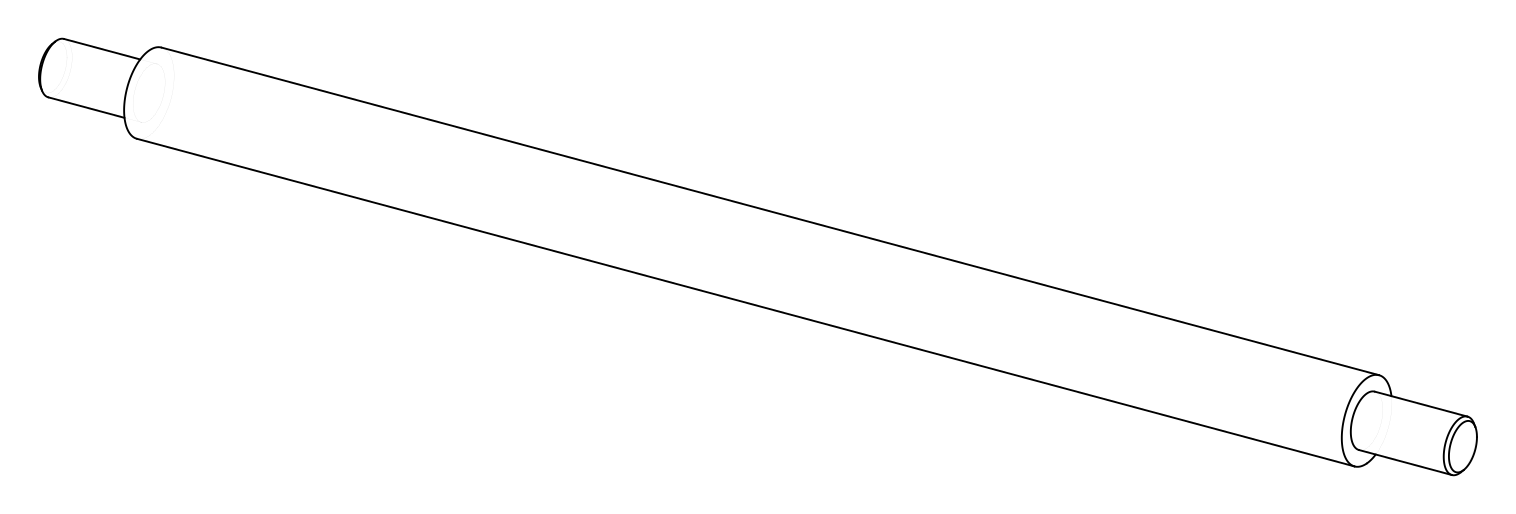
A rod with a round tenon at each end (a rung), shouldered all round and chamfered at the end; the rod grows by their length.
-
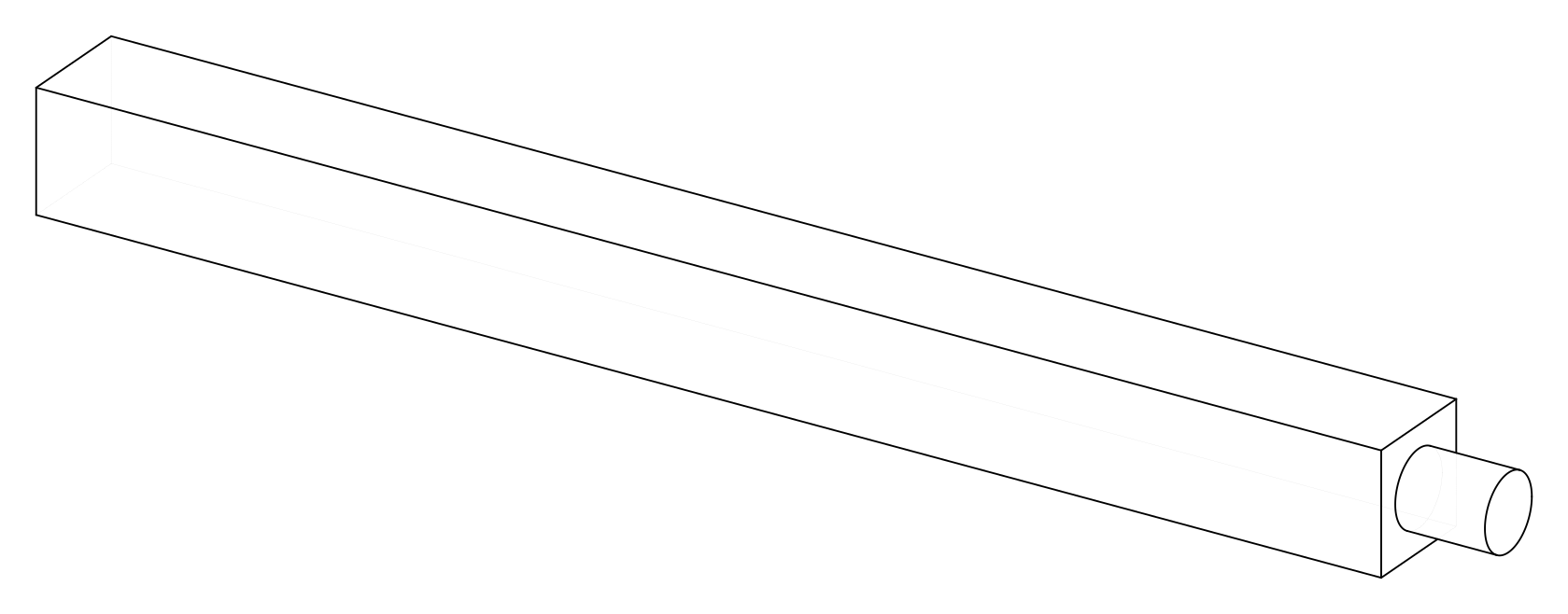
A square leg with a round tenon at its top end, e.g. for a stool's seat.
Joints
Joints of two parts: boards, rods, and the pieces joining them (wedges, dowels, pegs).
-
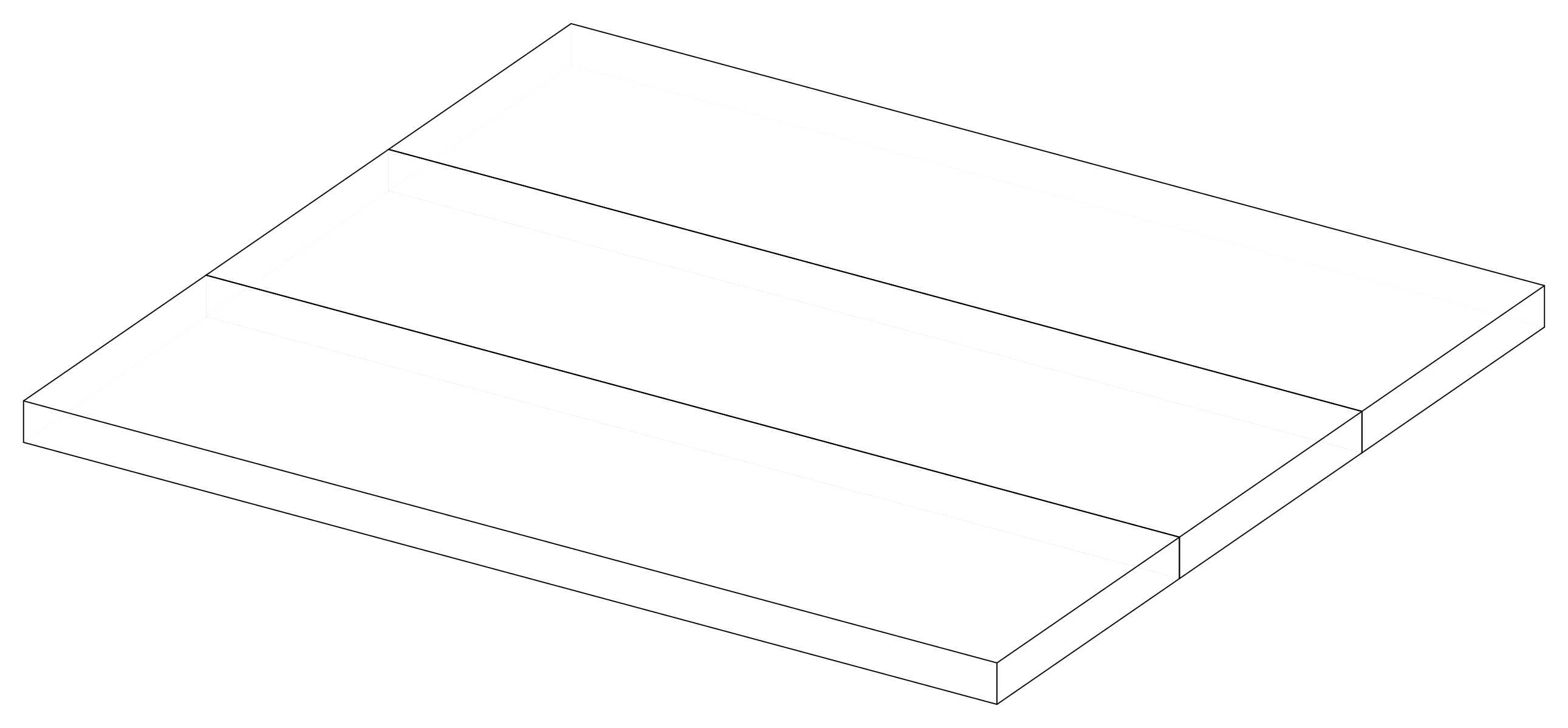
Boards glued edge to edge into a panel.
-
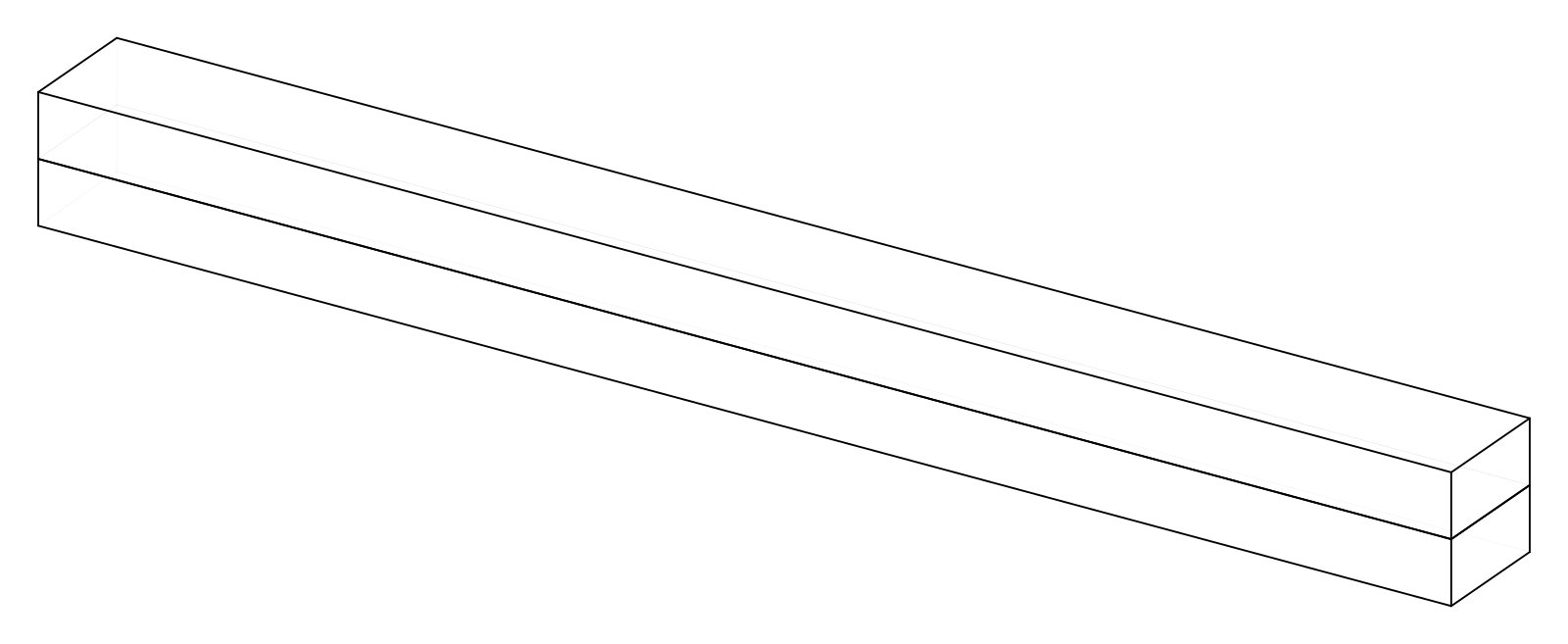
Two boards glued face to face into a thicker leg.
-
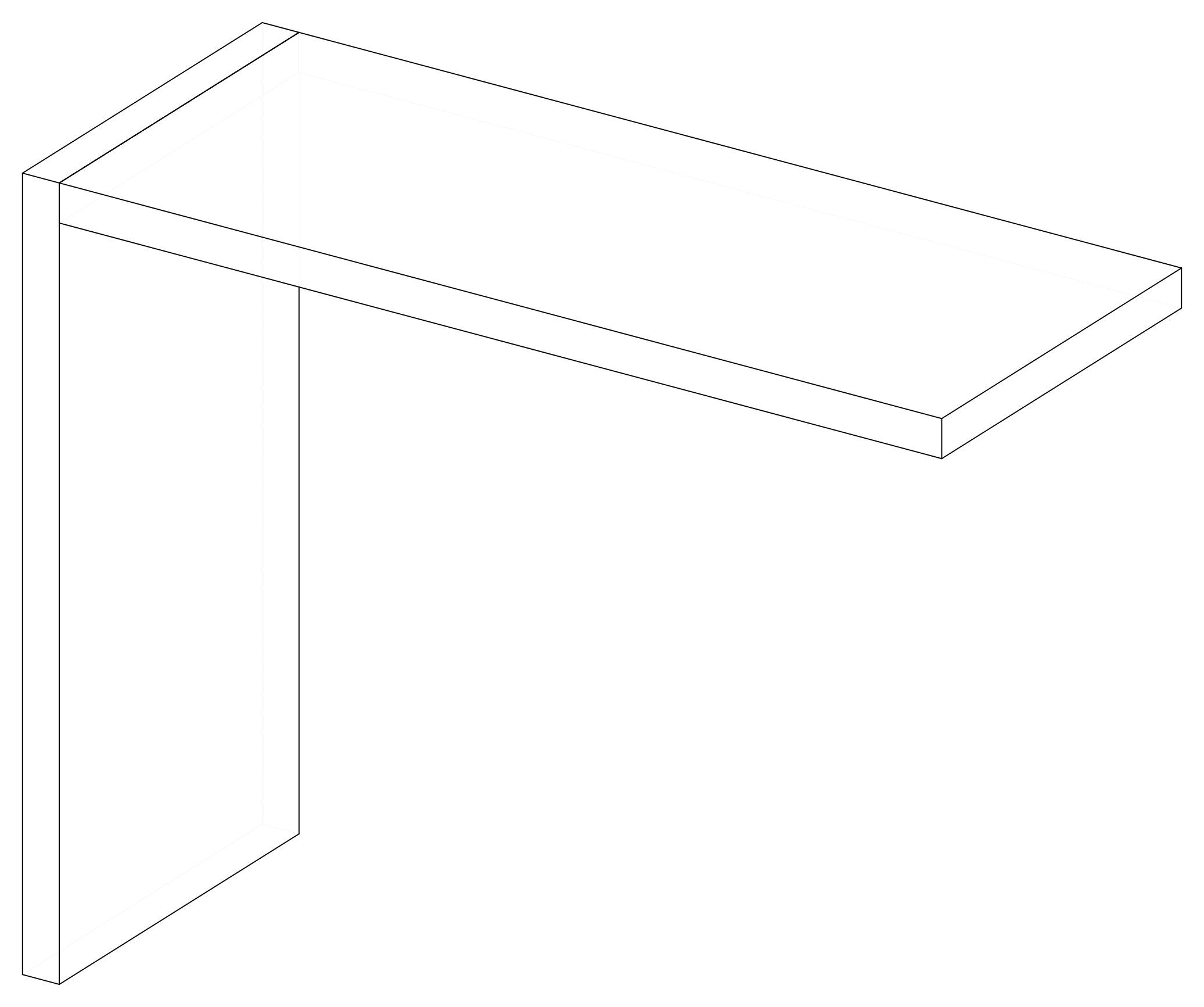
A carcase corner: the end of the top glued against the inside of the side.
-
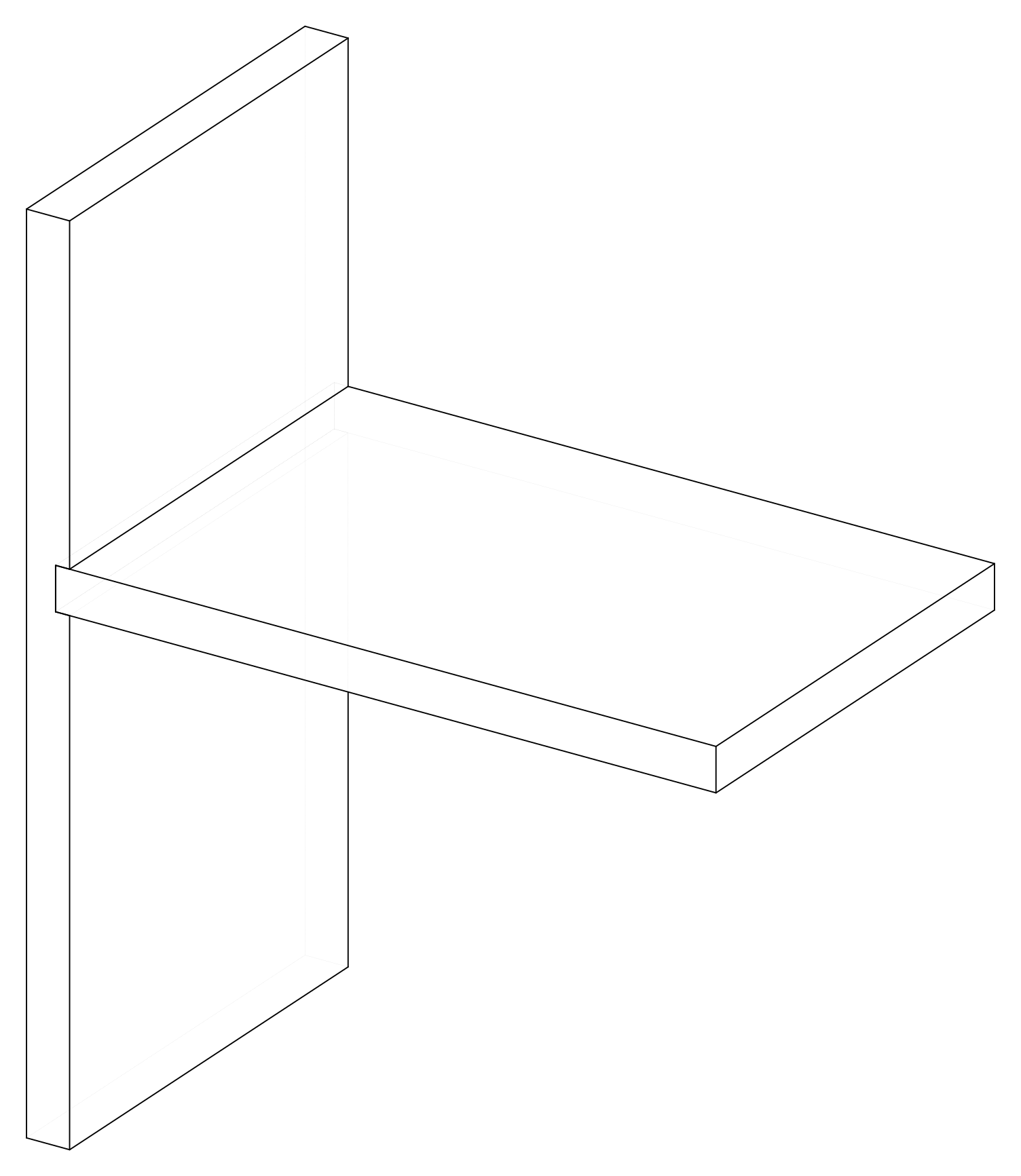
A shelf housed in a dado in the side,
shelf_heightbelow its top end. -
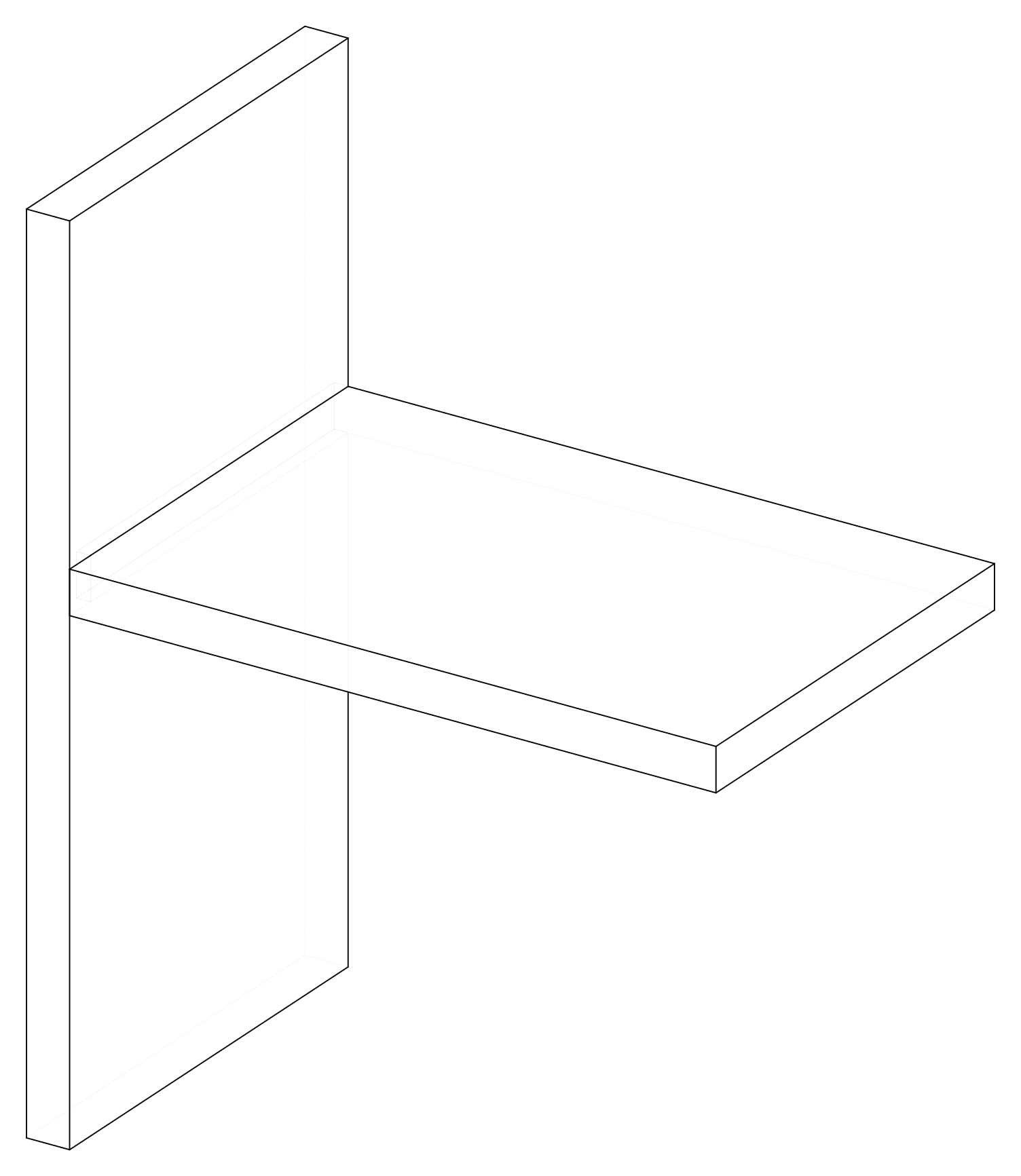
A shelf in a stopped dado, as in a bookshelf: the dado stops
stopshort of the side's front edge, so it doesn't show at the front. -
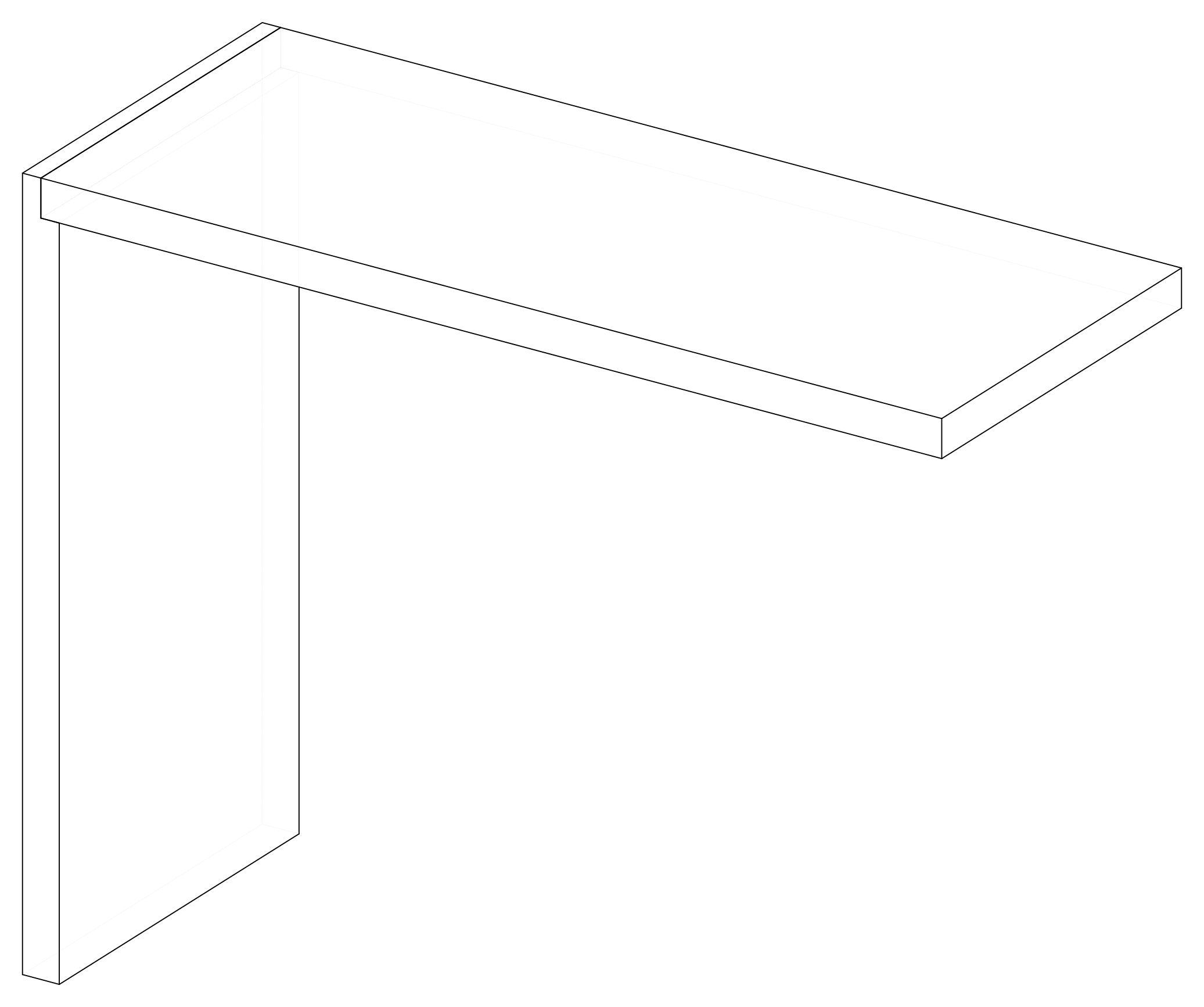
A carcase corner: the end of the top in a rabbet at the top end of the side.
-
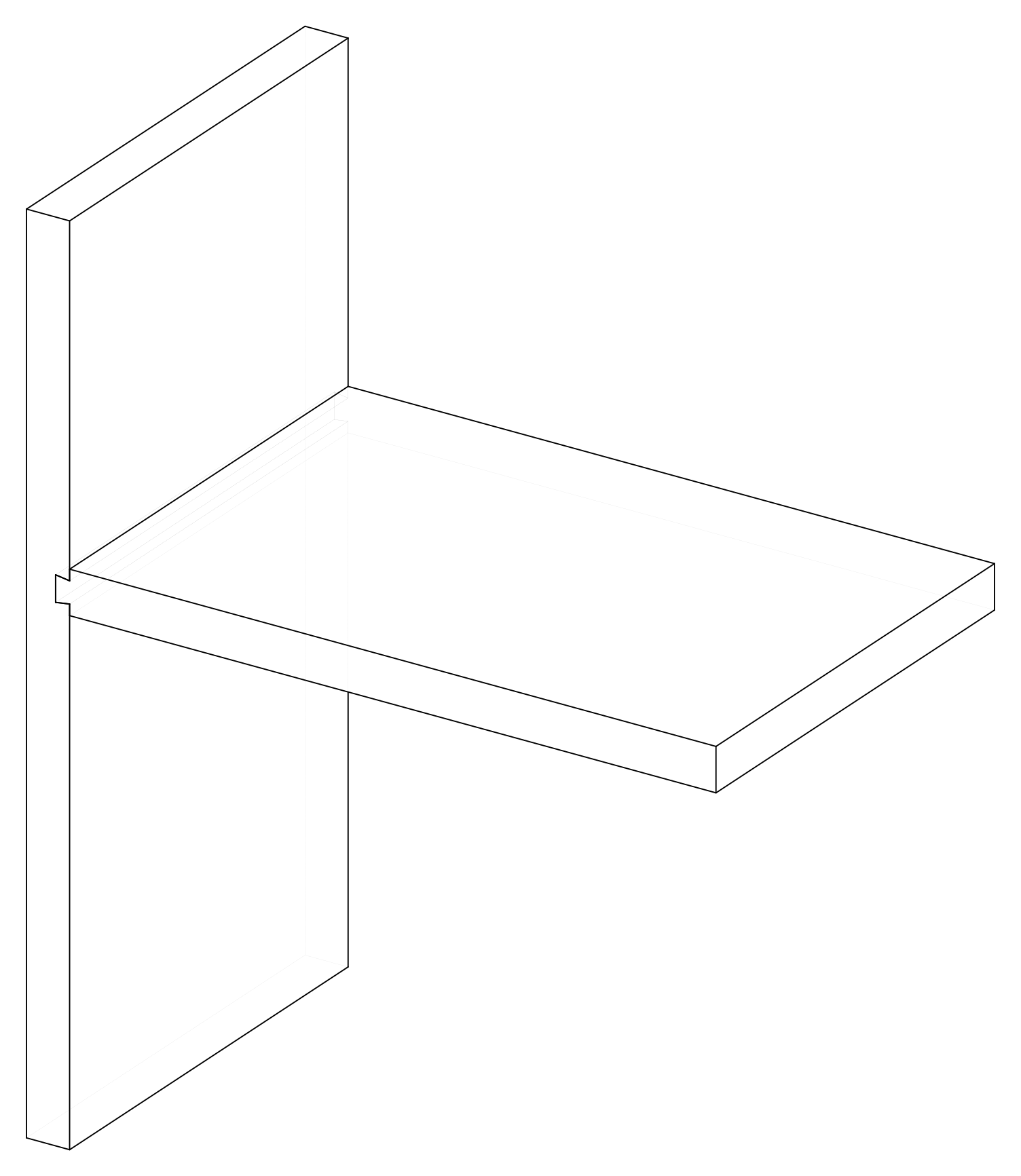
A shelf with a dovetail tongue slid into a dovetail socket across the side.
-
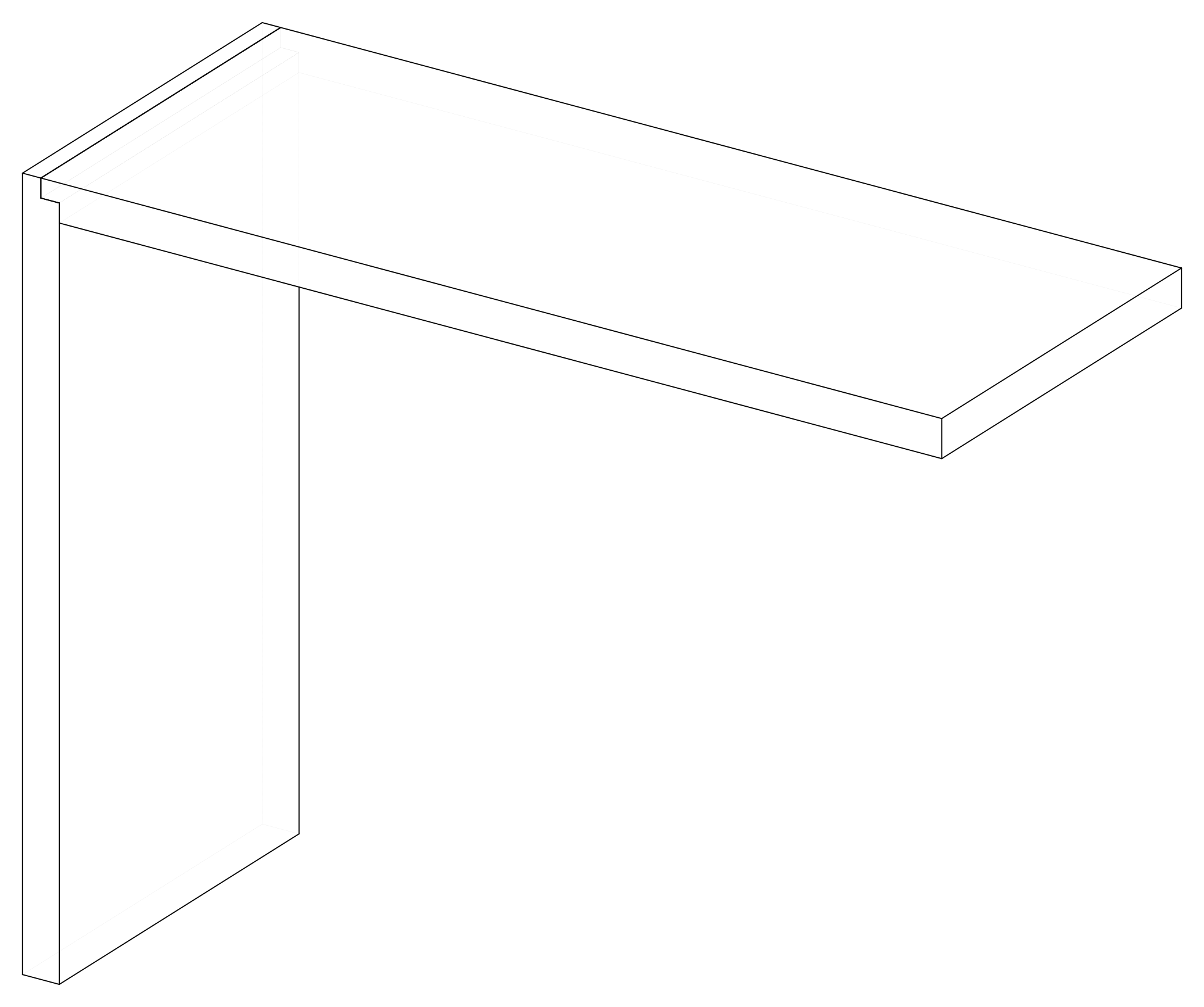
A carcase corner with two interlocking rabbets: a lip of the top in a rabbet of the side.
-
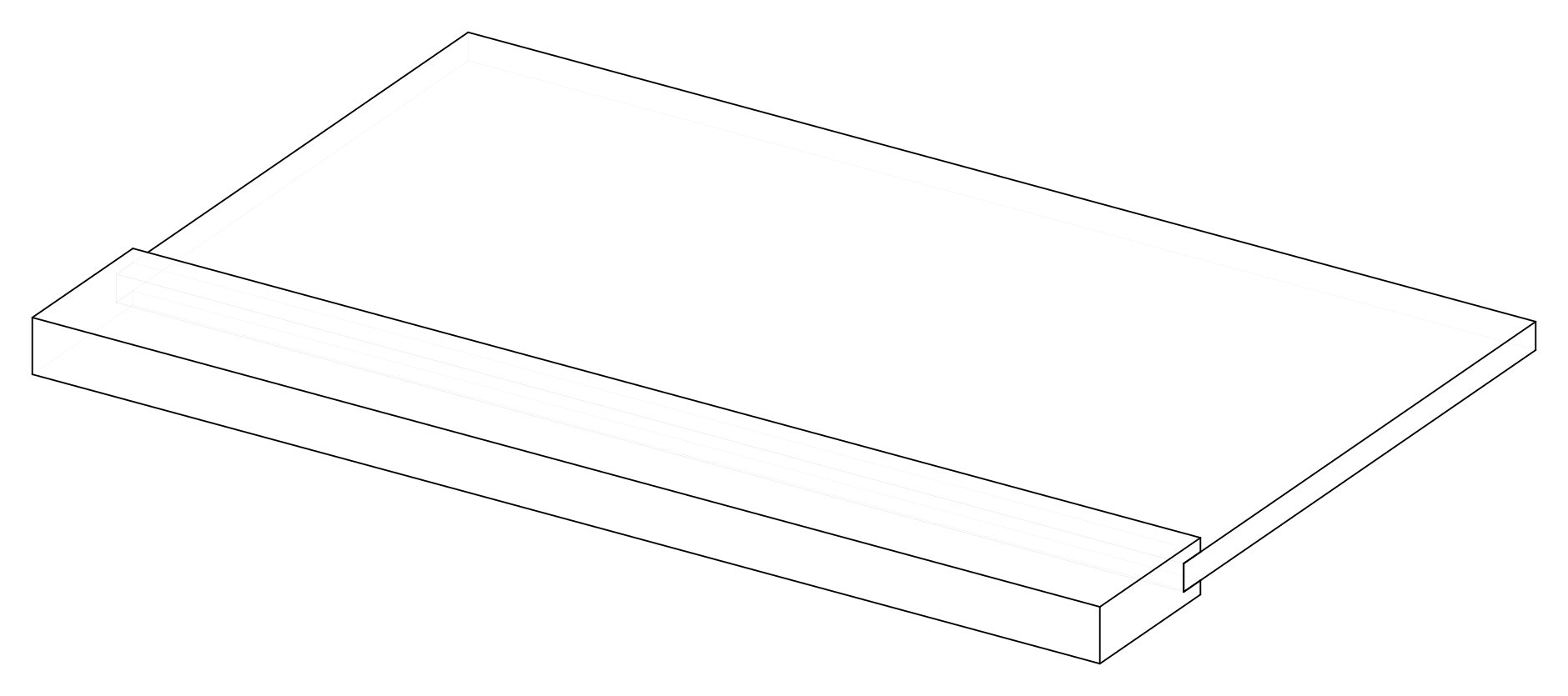
A thin panel with its edge in a groove along a rail, centered in its thickness.
-
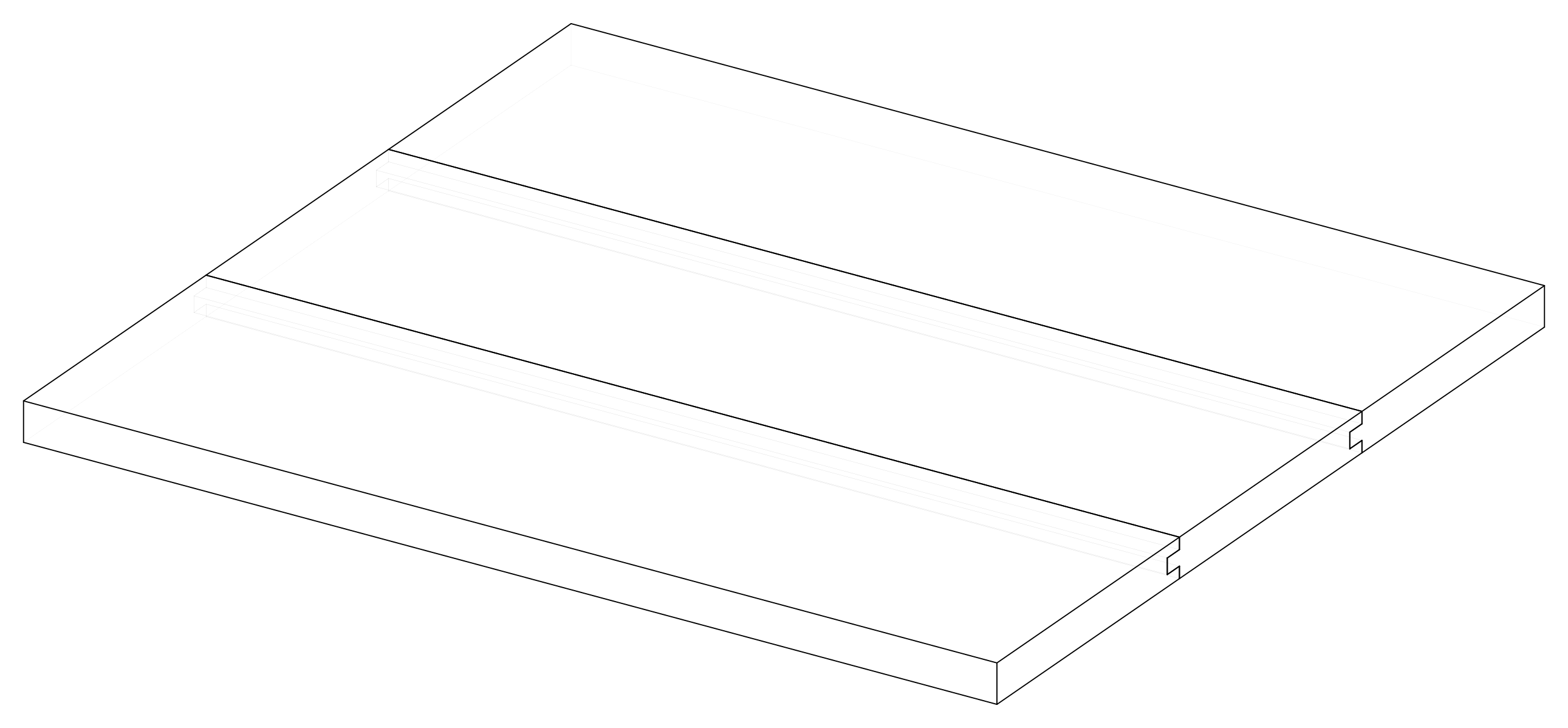
Boards edge to edge, a tongue along each in a groove along the next one.
-
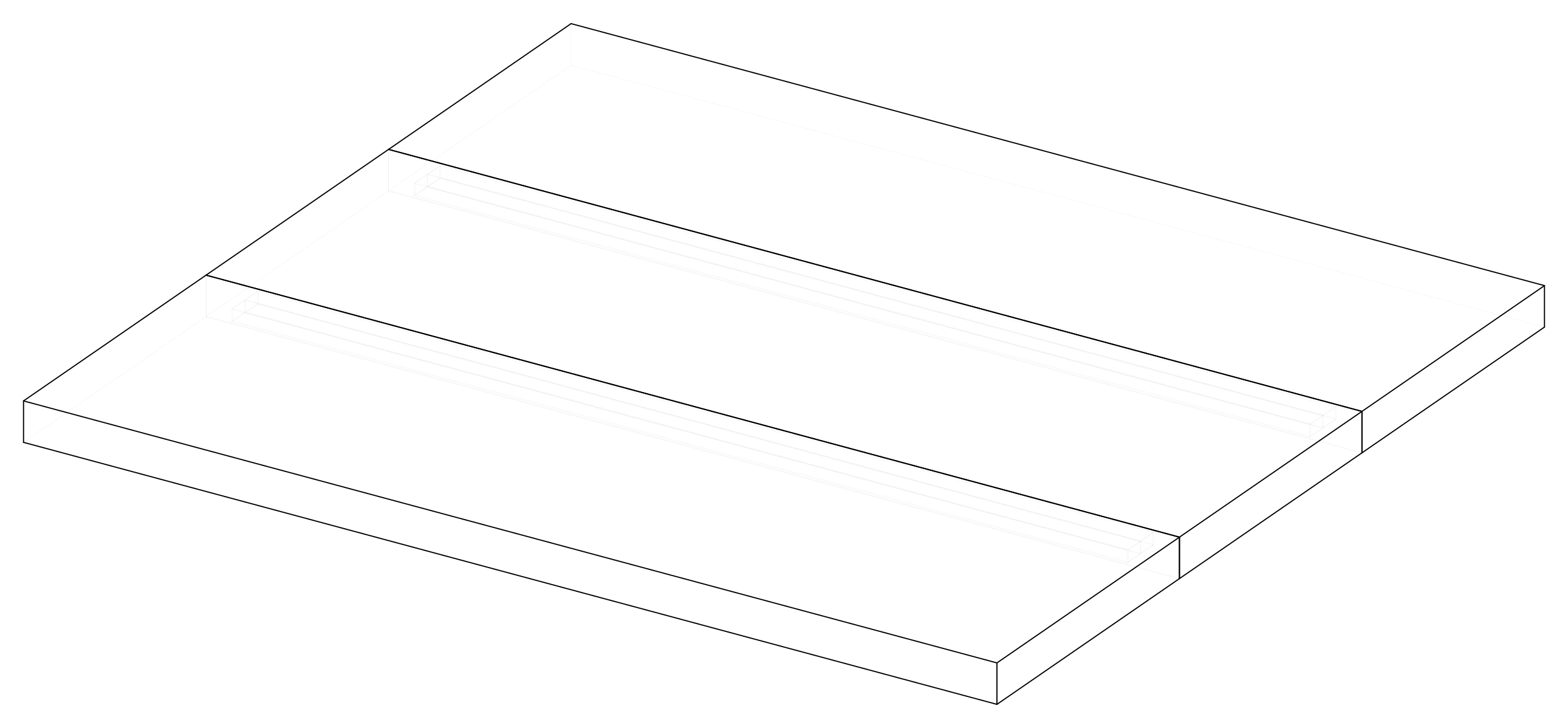
Boards glued edge to edge, a loose tongue in a groove along each of the two edges at every joint.
-
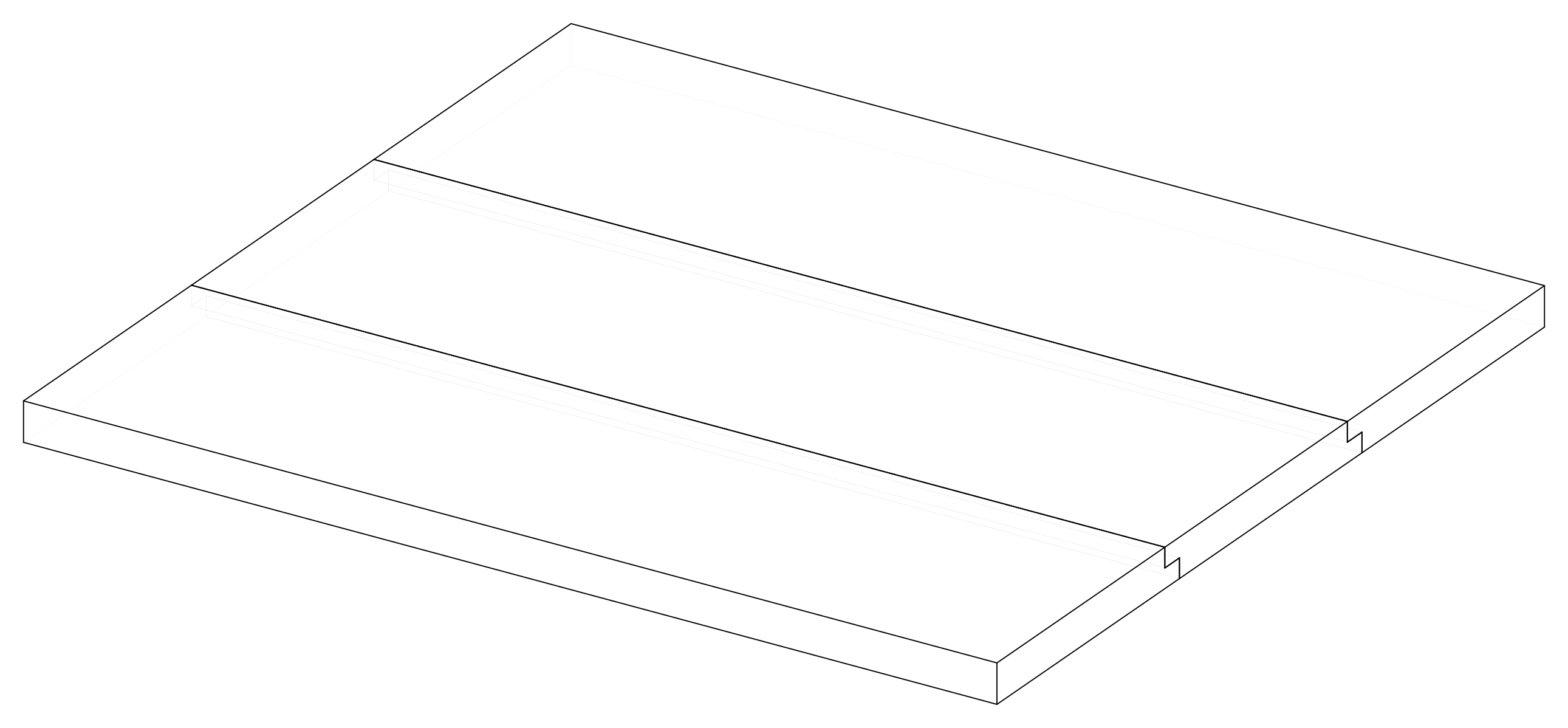
Boards edge to edge, lapped over each other in rabbets half their thickness.
-
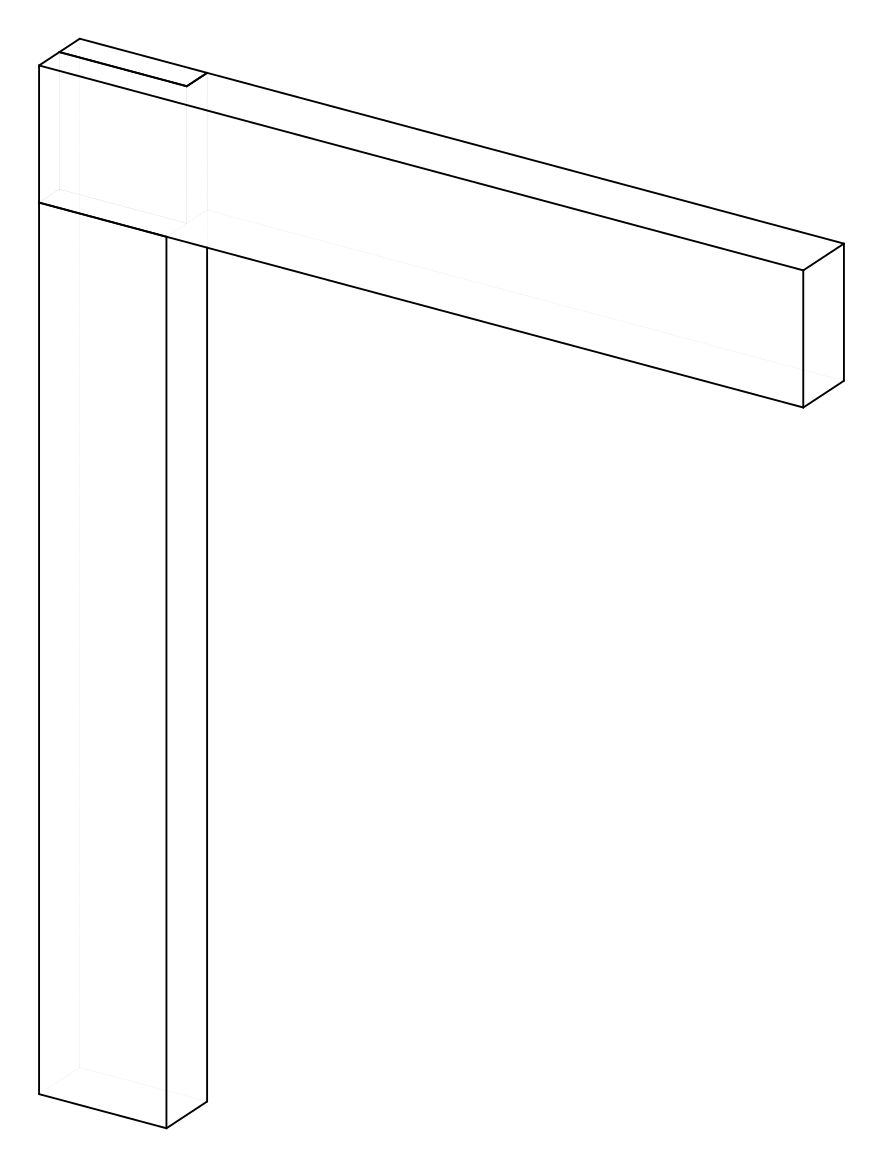
An L-shaped half-lap corner: a lap on the rail, an end rabbet on the stile.
-
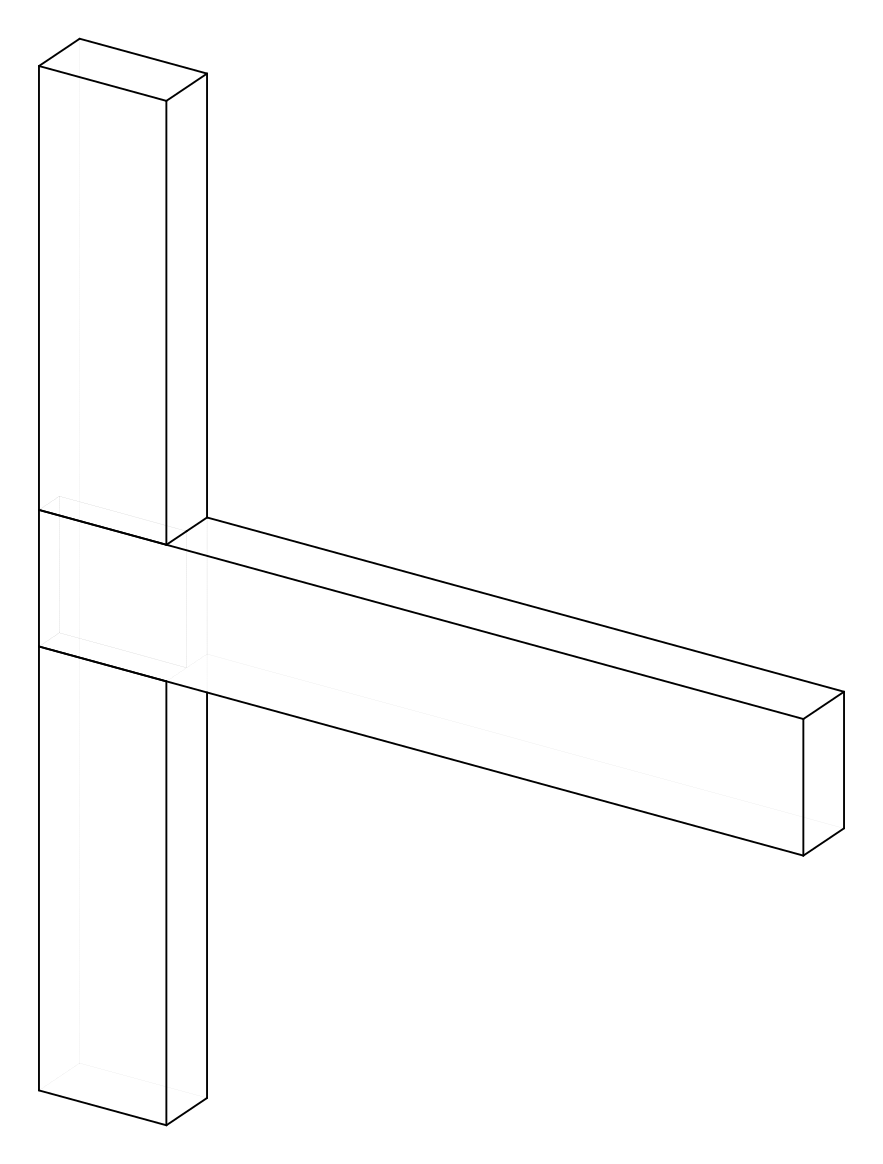
A T-shaped half lap: a lap on the end of the rail, a dado across the stile.
-
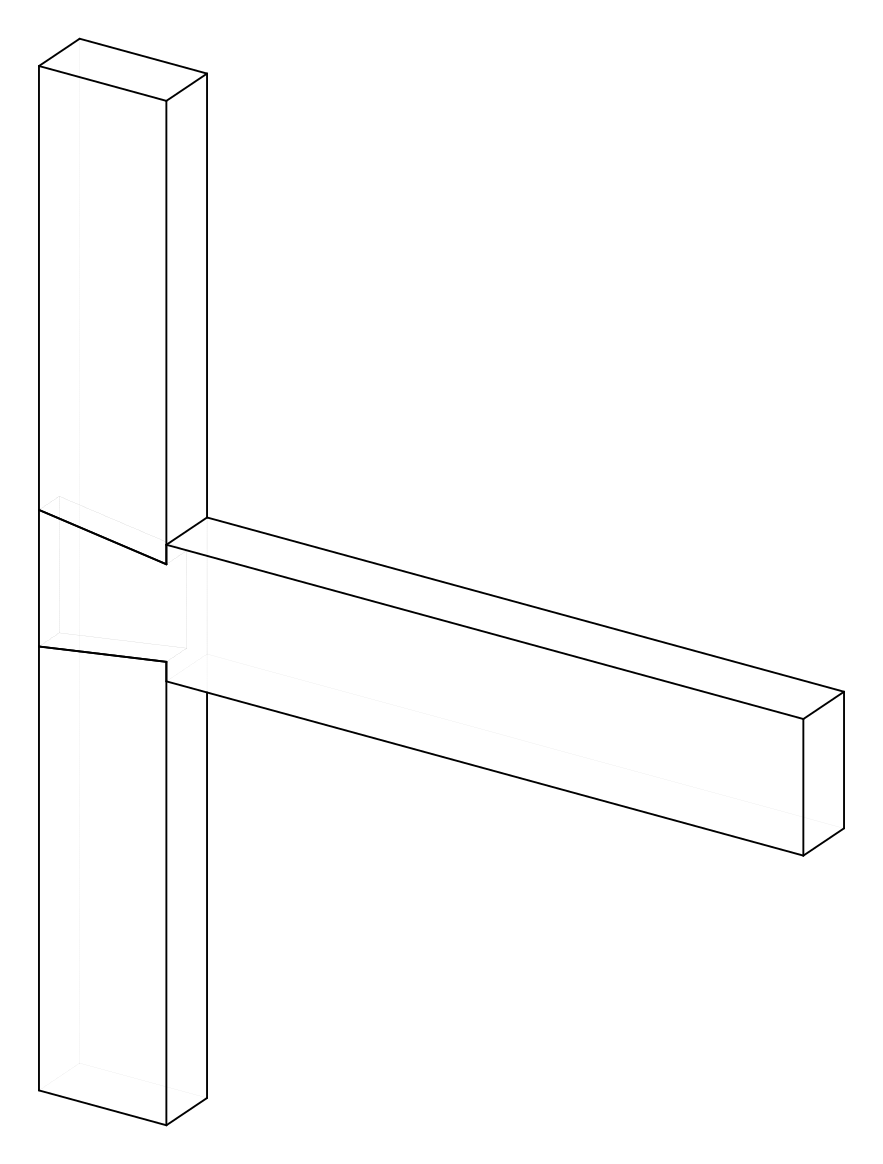
A T-shaped dovetailed half lap: the lap on the rail cut to a tail, wider at its end than at the shoulder, in a socket of its shape across the stile.
-
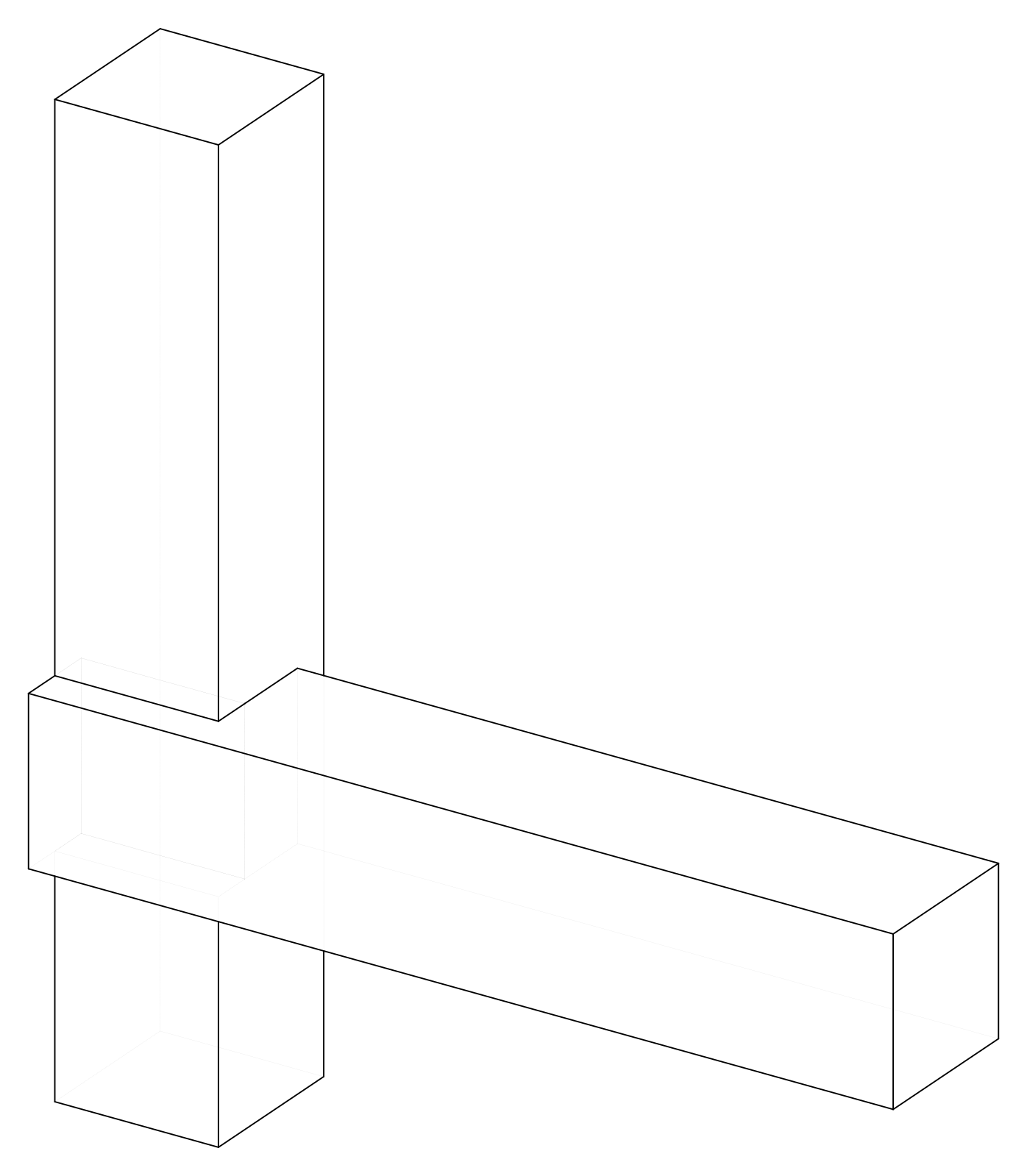
A square rail lapped across a leg of the same section, at the rail's end, partly let in (as the rails of a workbench's legs): the rail is cut to half its thickness, the leg notched a quarter of its, so the rail stands out of the leg by a quarter, towards the viewer. Its end is flush with the far edge of the leg.
-
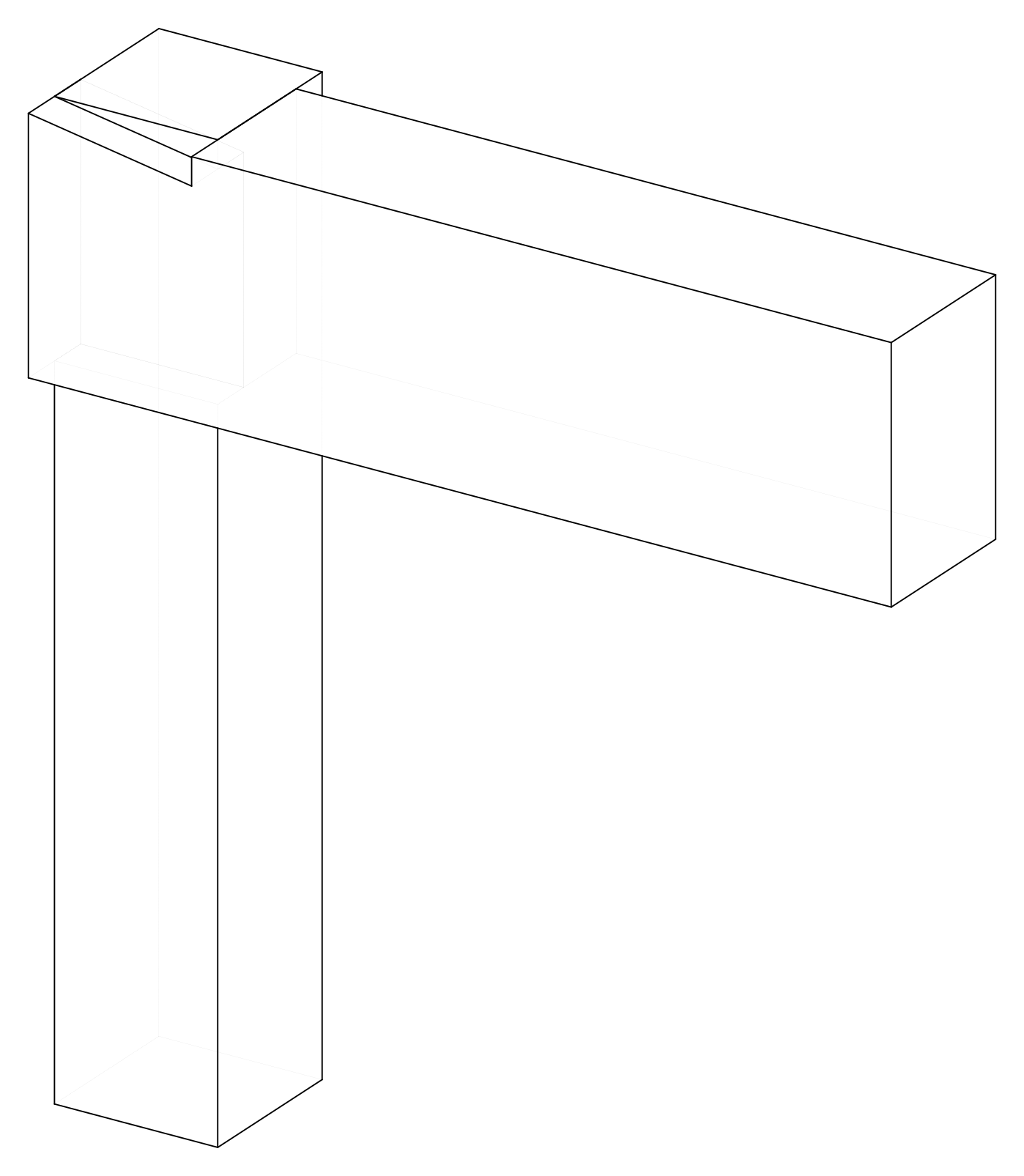
A rail lapped across the top of a square leg as
let_in_rail, its lap cut to a half dovetail: flat at the bottom, sloped 1:6 at the top, so the rail can't be pulled out of the leg along its length. The rail is deeper than it is thick (2:3), flush with the top of the leg; the notch in the leg is open at the top. -
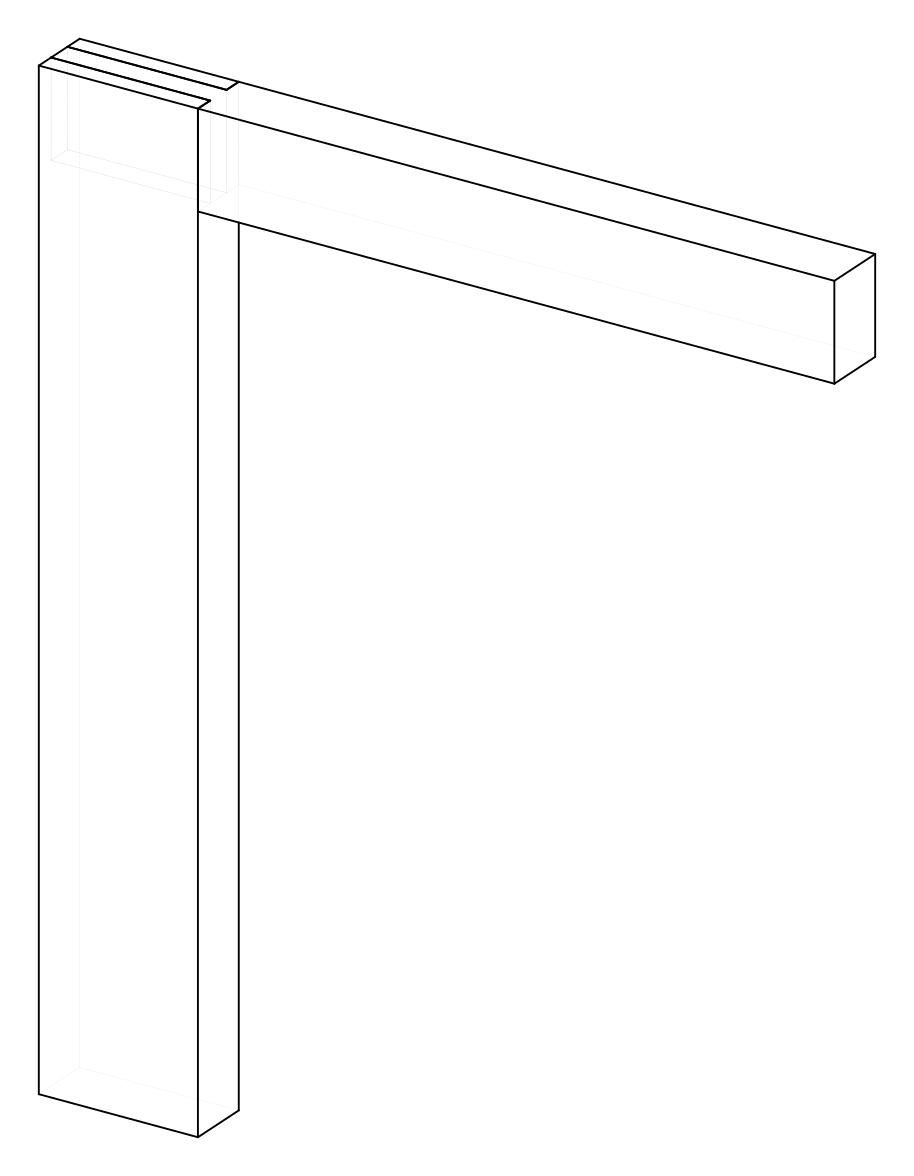
An L-shaped bridle joint: a tenon over the whole rail in a slot in the stile's end.
-
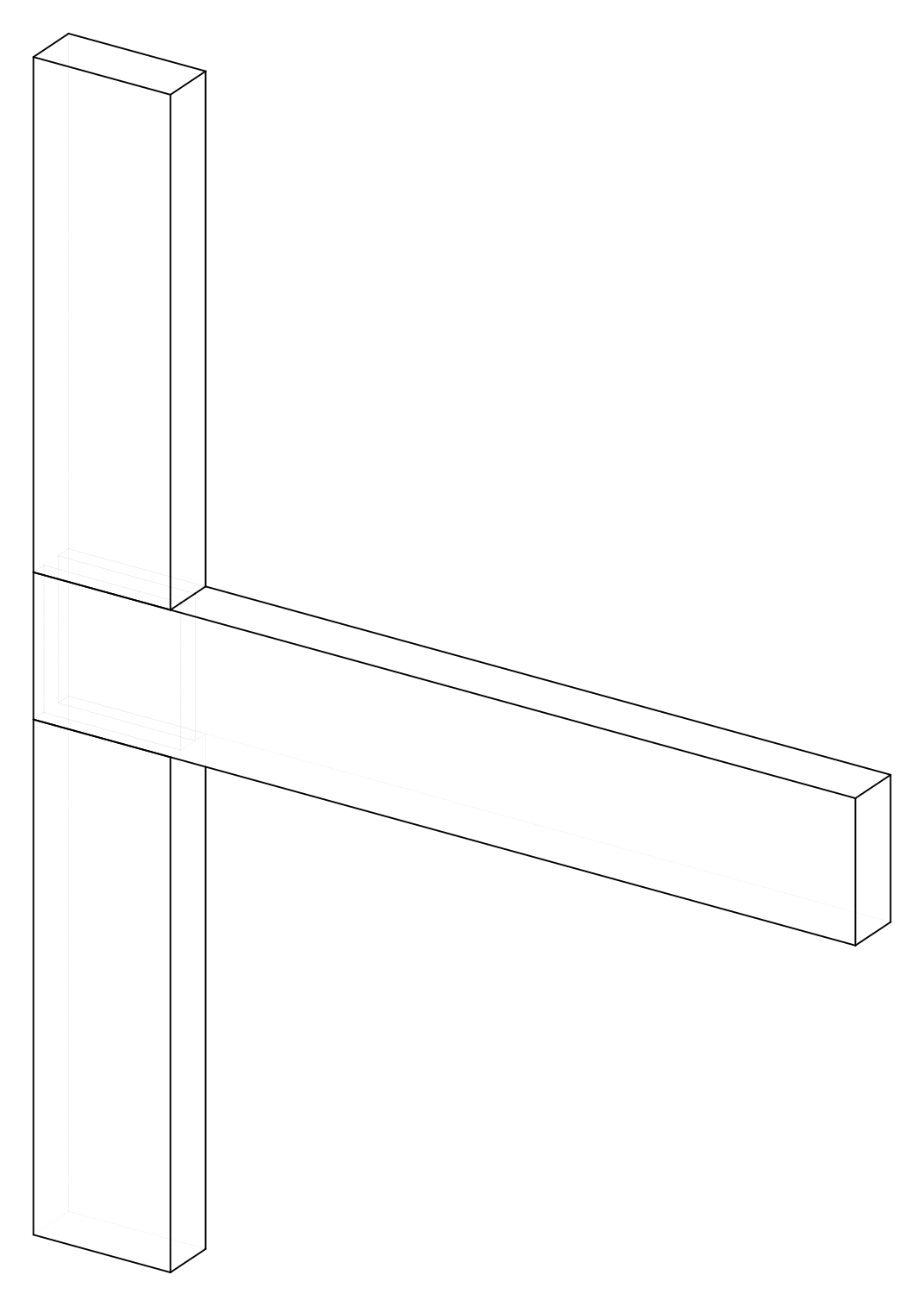
A T-shaped bridle: a slot in the end of the rail straddles the stile, which is cut down to a tongue by a dado across each face.
-
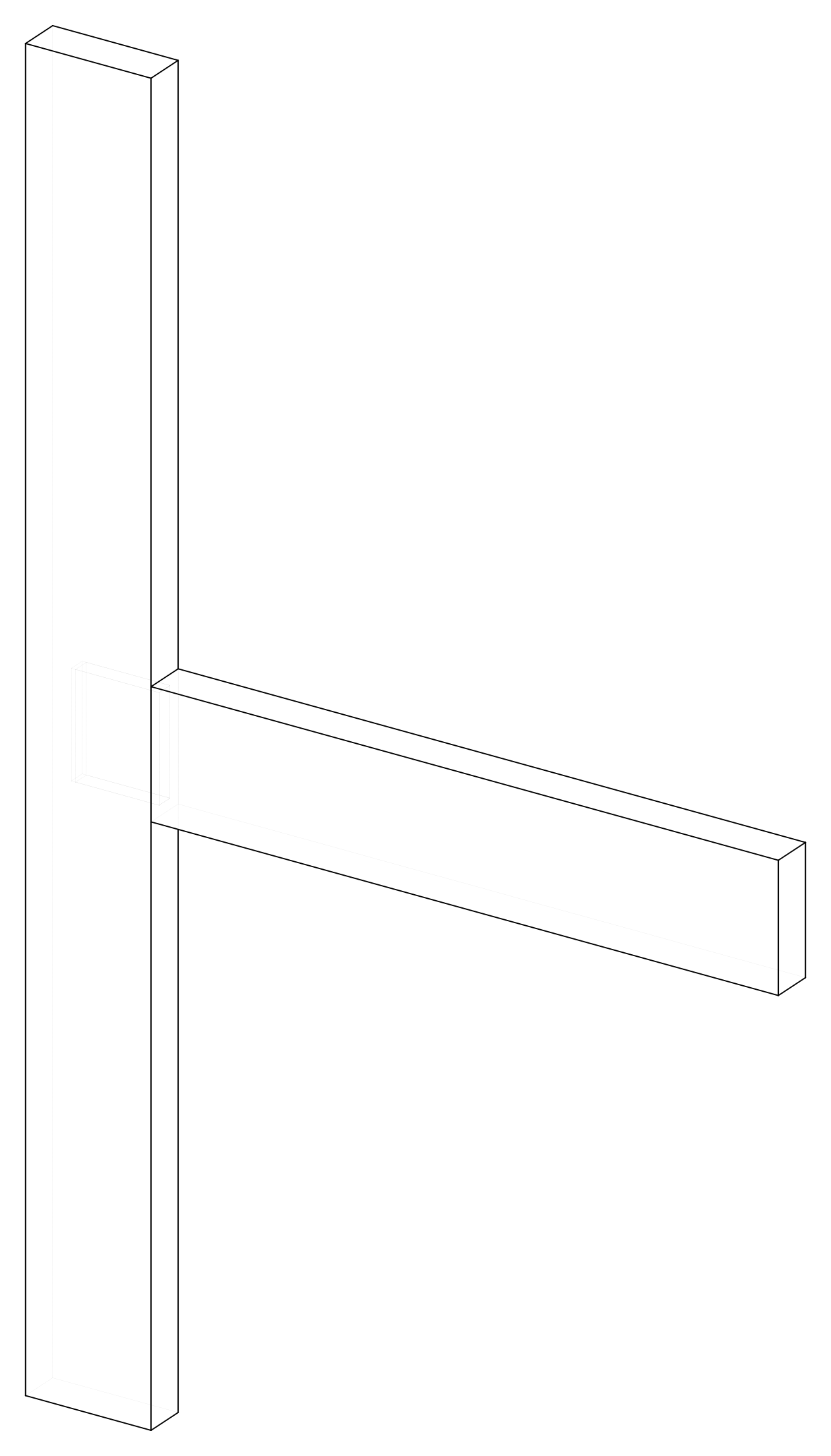
A rail tenoned into the back edge of a stile, centered along it (T-joint).
-
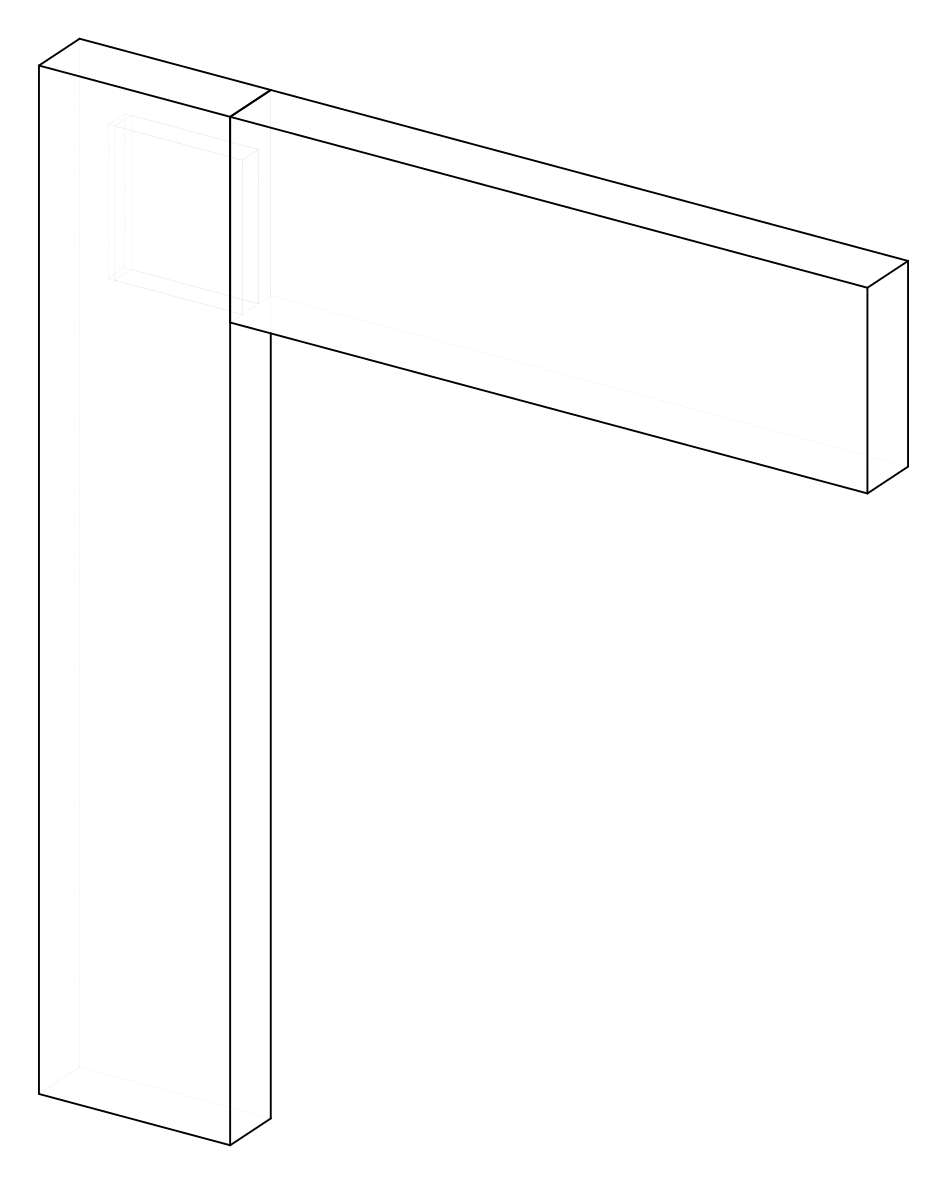
A frame corner with a stub tenon: shoulders on the faces and the outer edge only.
-
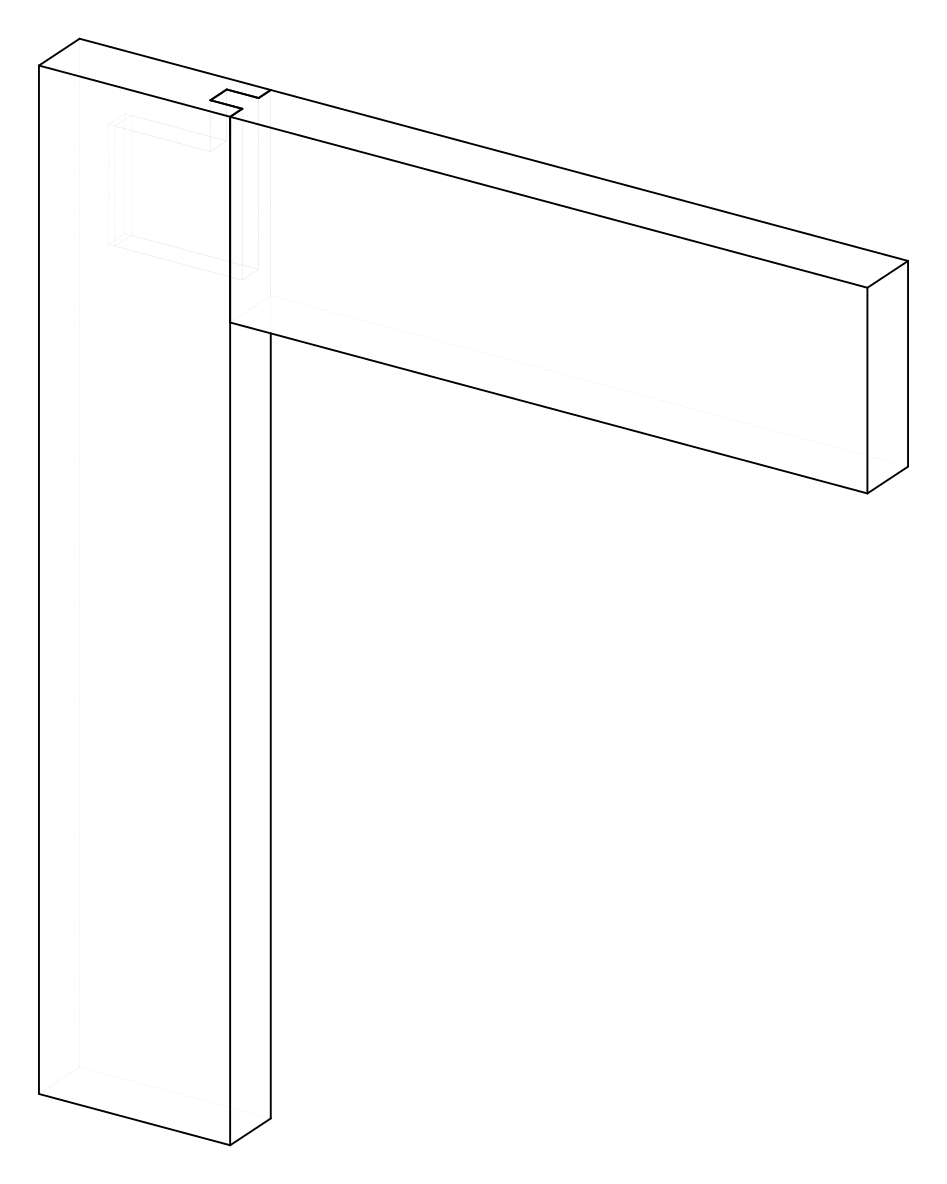
A frame corner with a haunched tenon: shoulders on both edges, a haunch on the outer one.
-
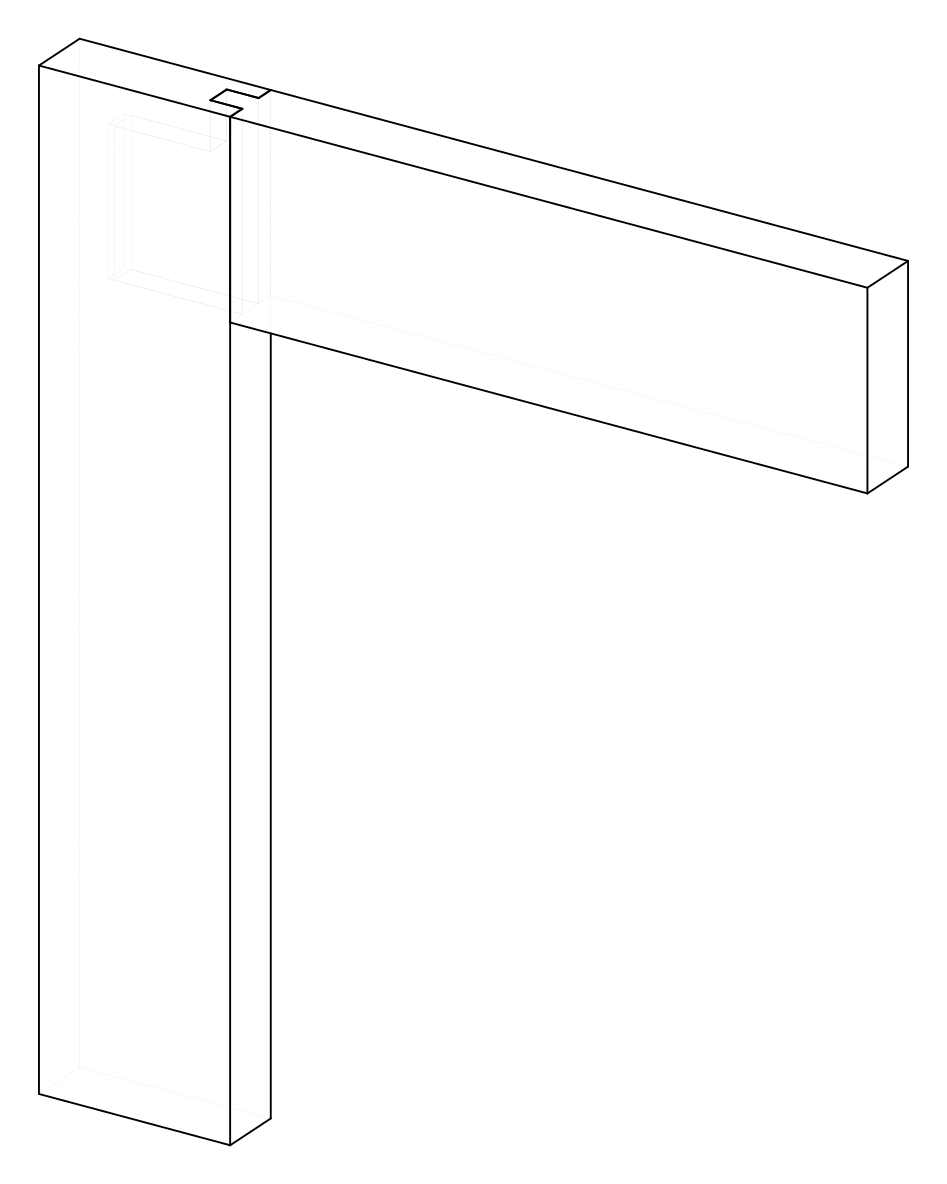
A frame corner with a haunched stub tenon: a haunch on the outer edge, no inner shoulder.
-
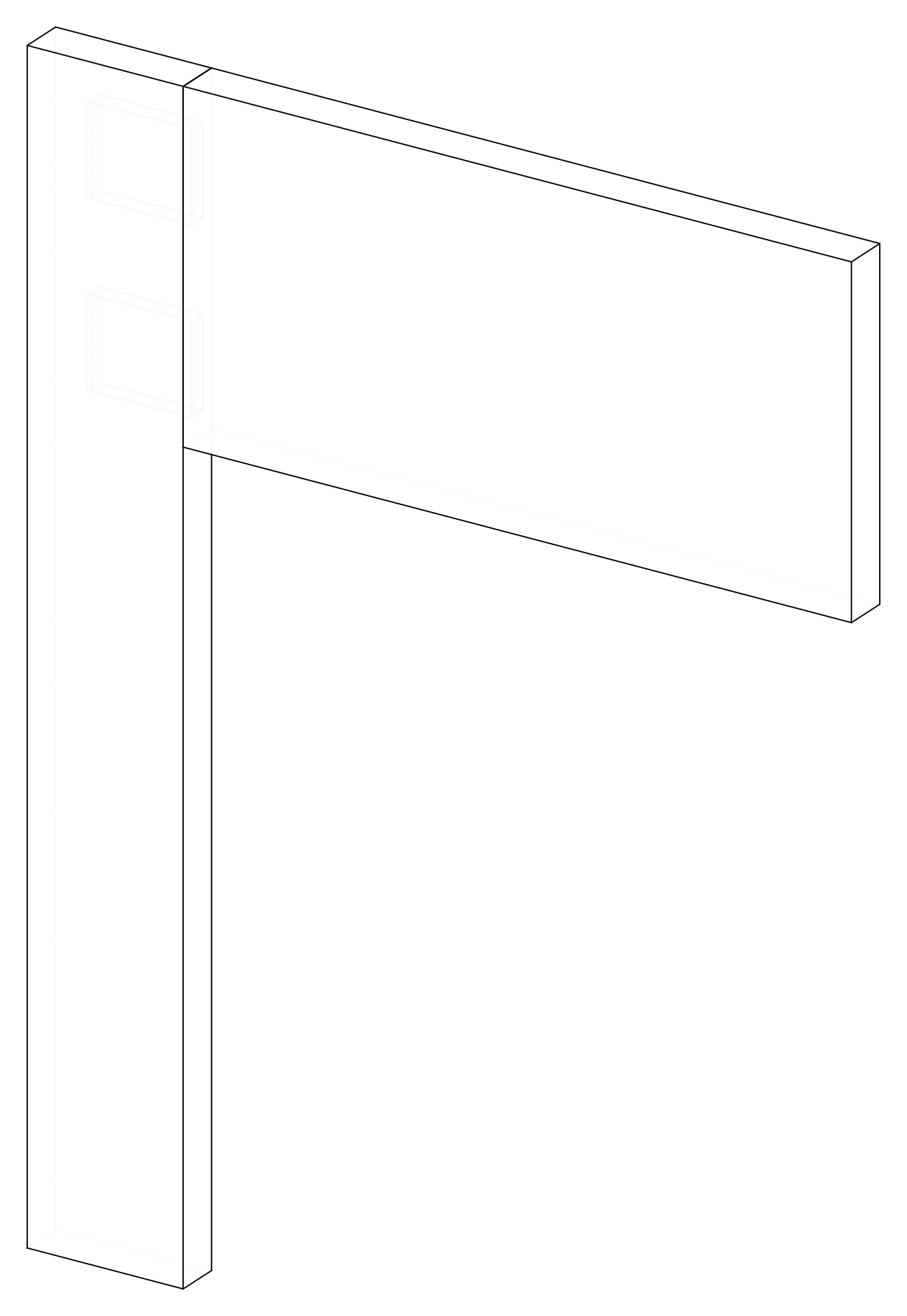
A wide rail at a frame corner (e.g. the bottom rail of a door) with twin tenons.
-
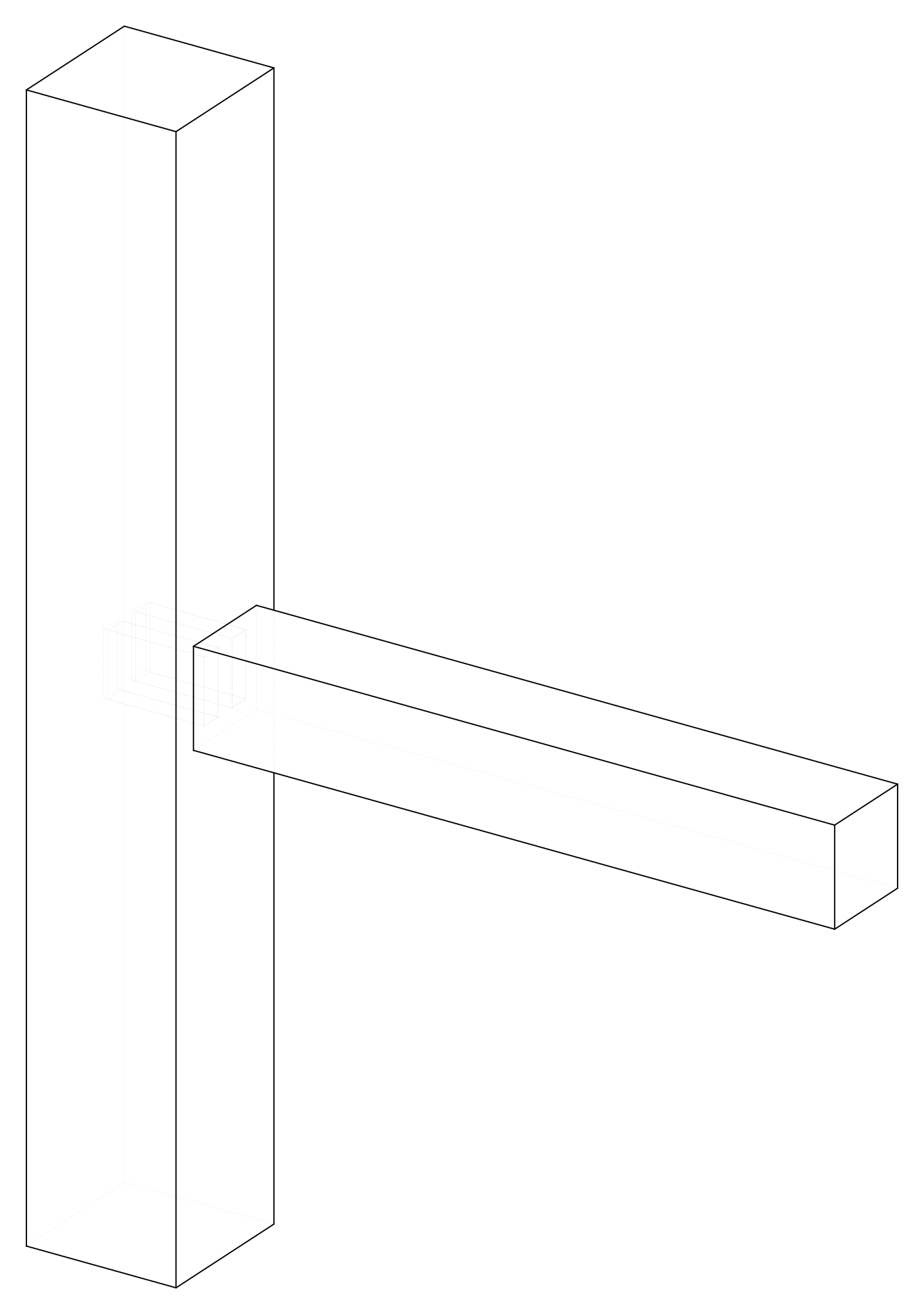
A thick, square rail (e.g. a bench stretcher) tenoned into a post with two tenons one beside the other across its thickness.
-
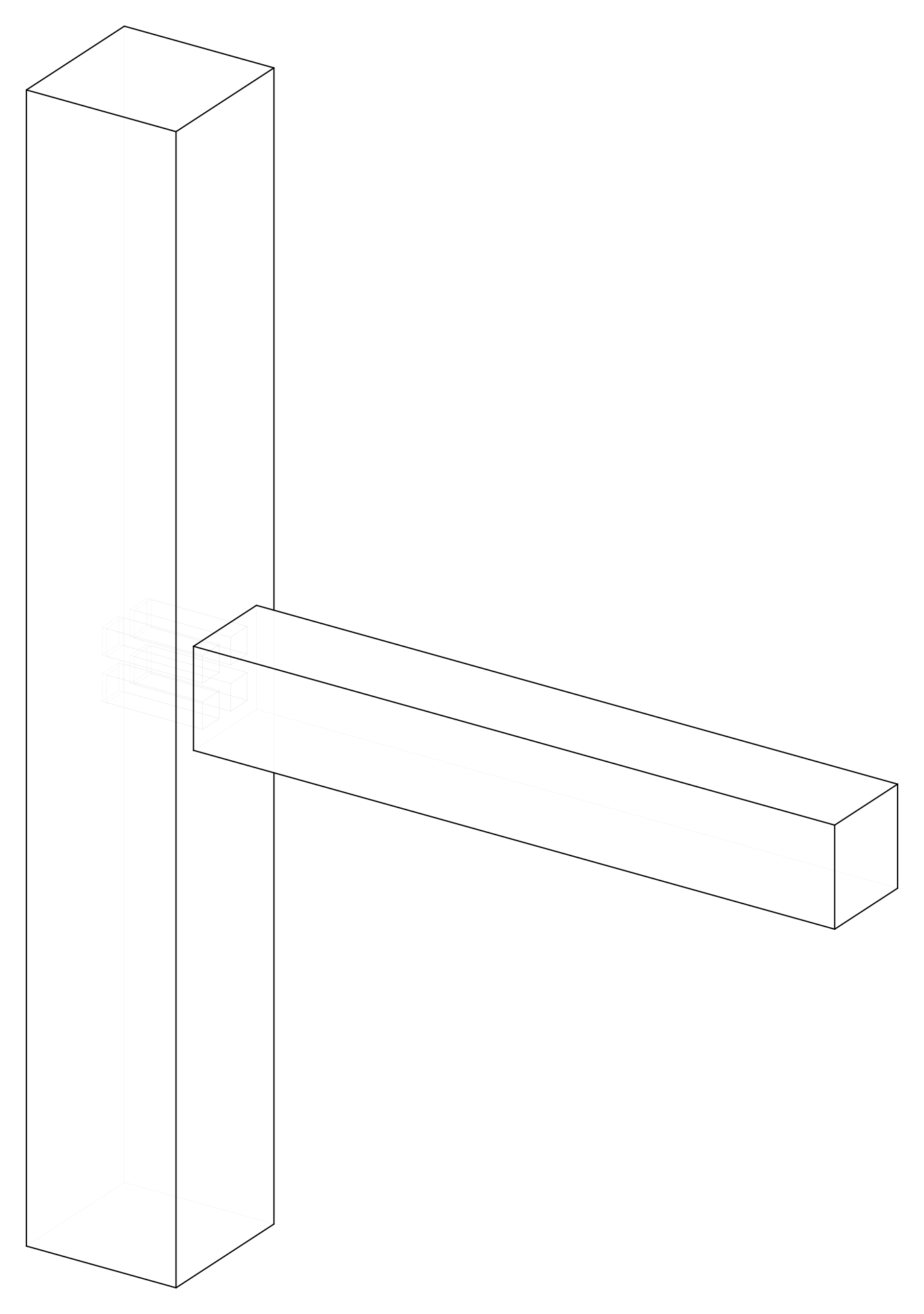
A square rail tenoned into a post with four tenons in a 2 x 2 grid: two across the width as well as two across the thickness, each in its own mortise. The tenons are square, 12 mm, 8 mm apart both ways, with shoulders all round.
-
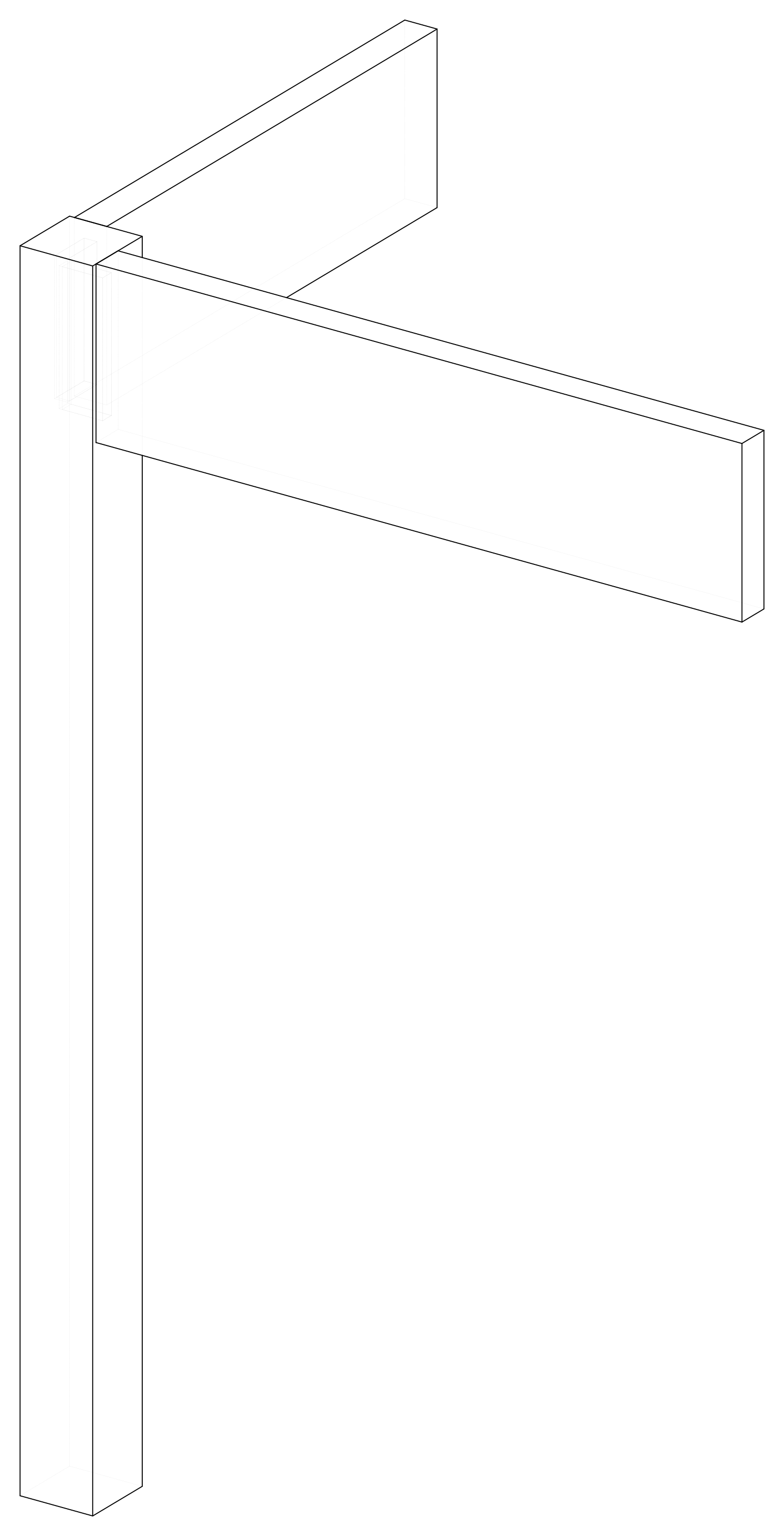
A table leg with two aprons, their short tenons not meeting inside the leg.
-
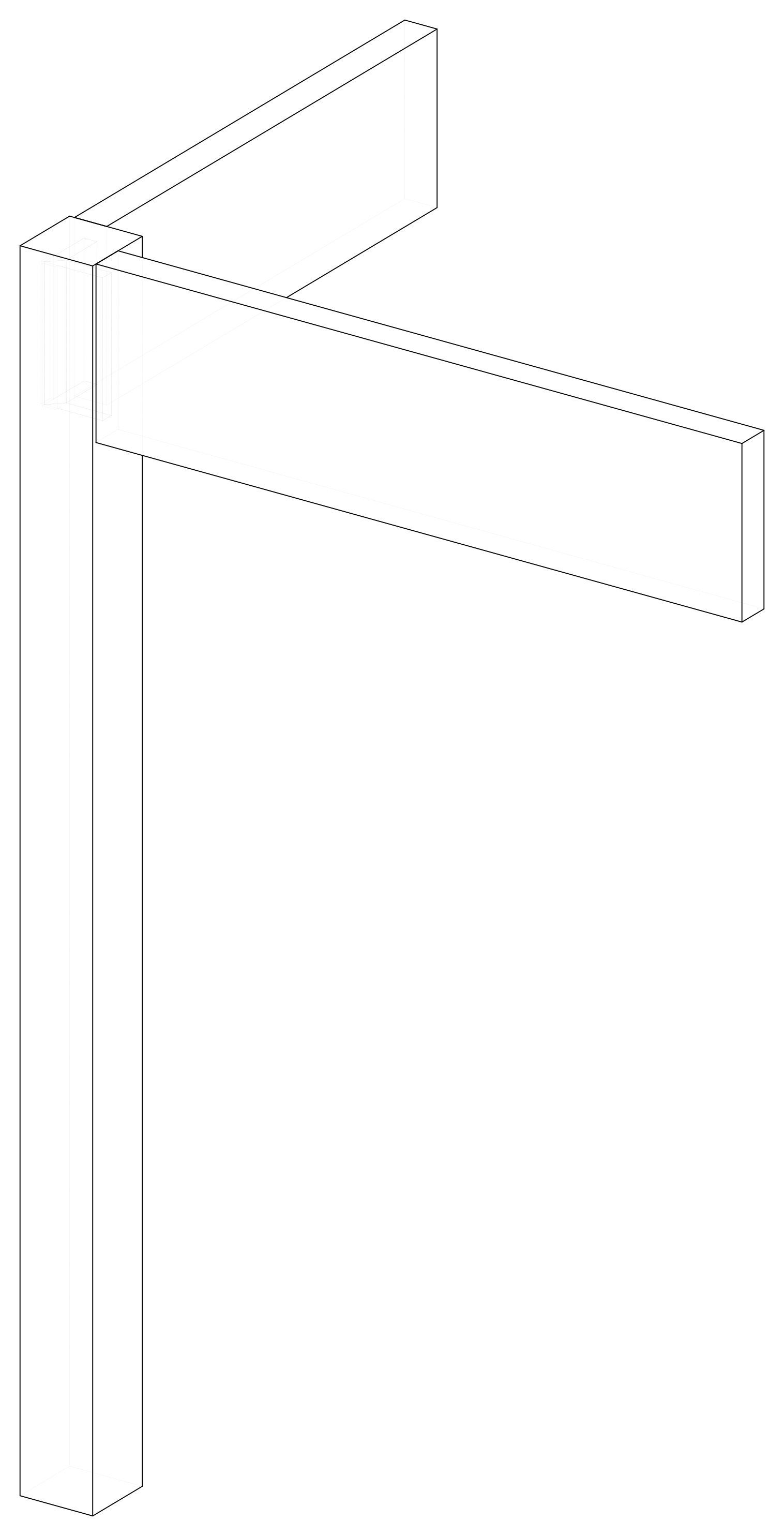
A table leg with two aprons, their long tenons mitred to meet inside the leg.
-
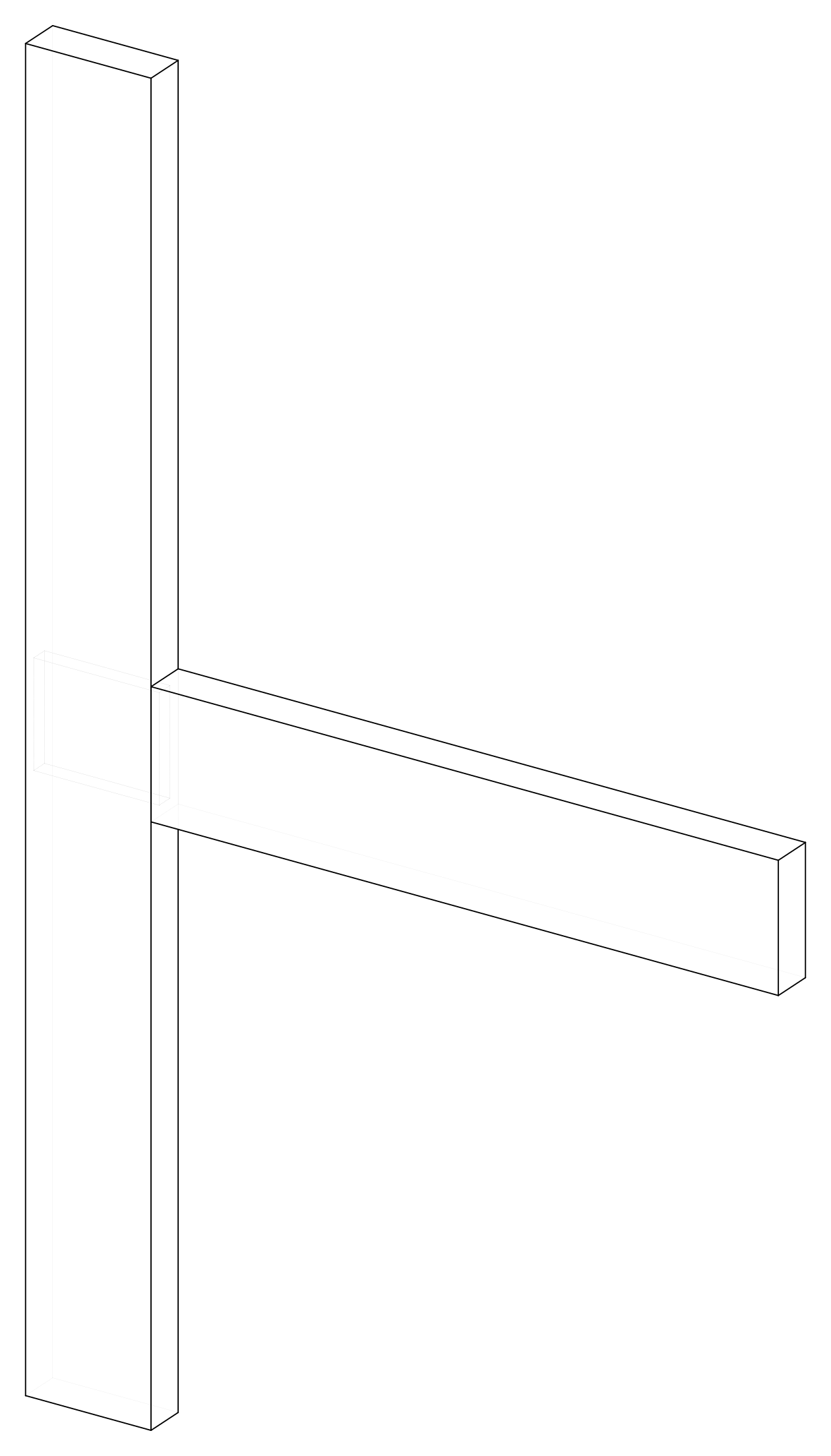
A rail tenoned through the stile: the tenon is as long as the stile is wide.
-
Protruding through mortise tenon
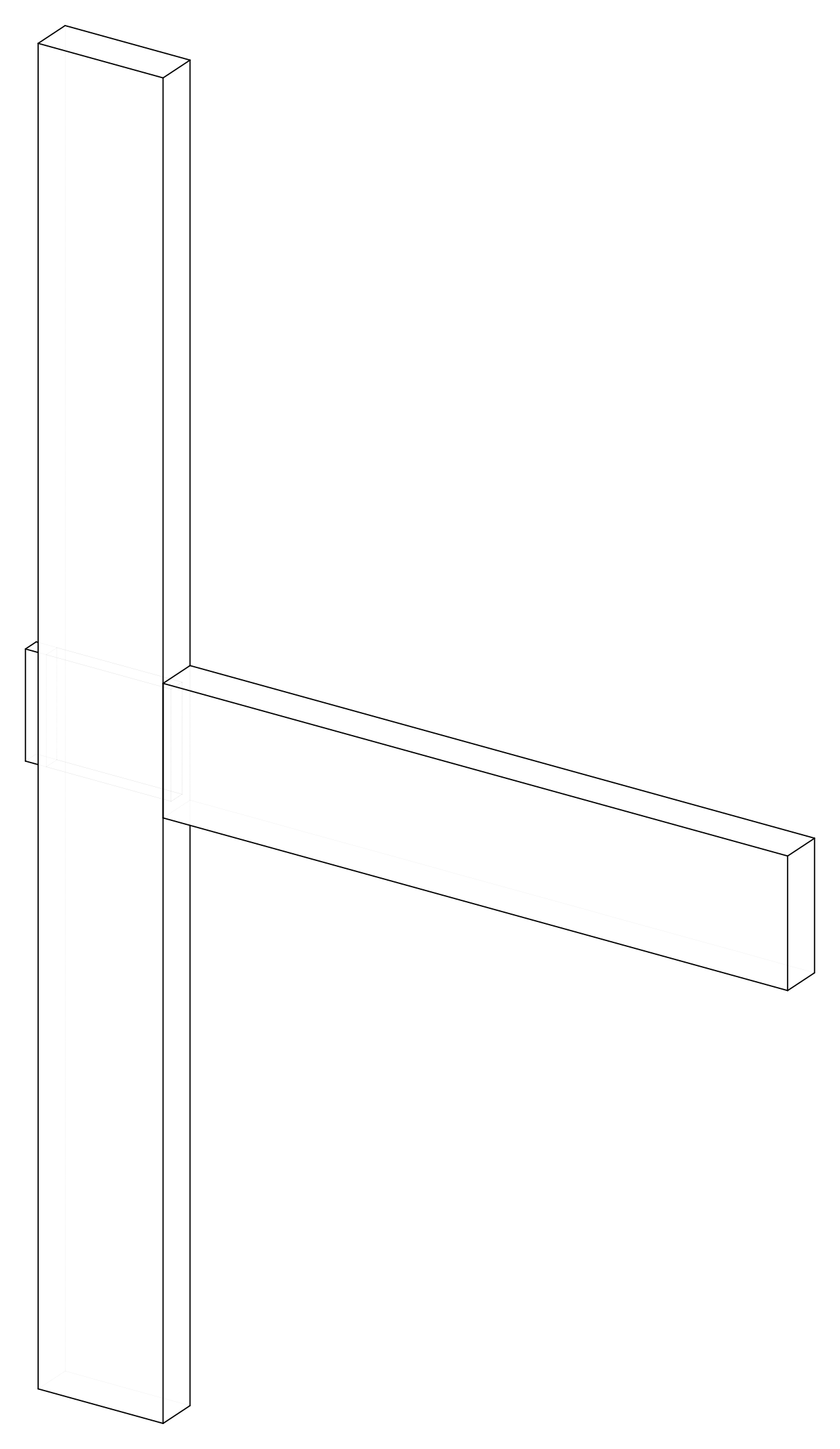
A through tenon standing
protrusionproud of the stile, its end square. -
Chamfered through mortise tenon
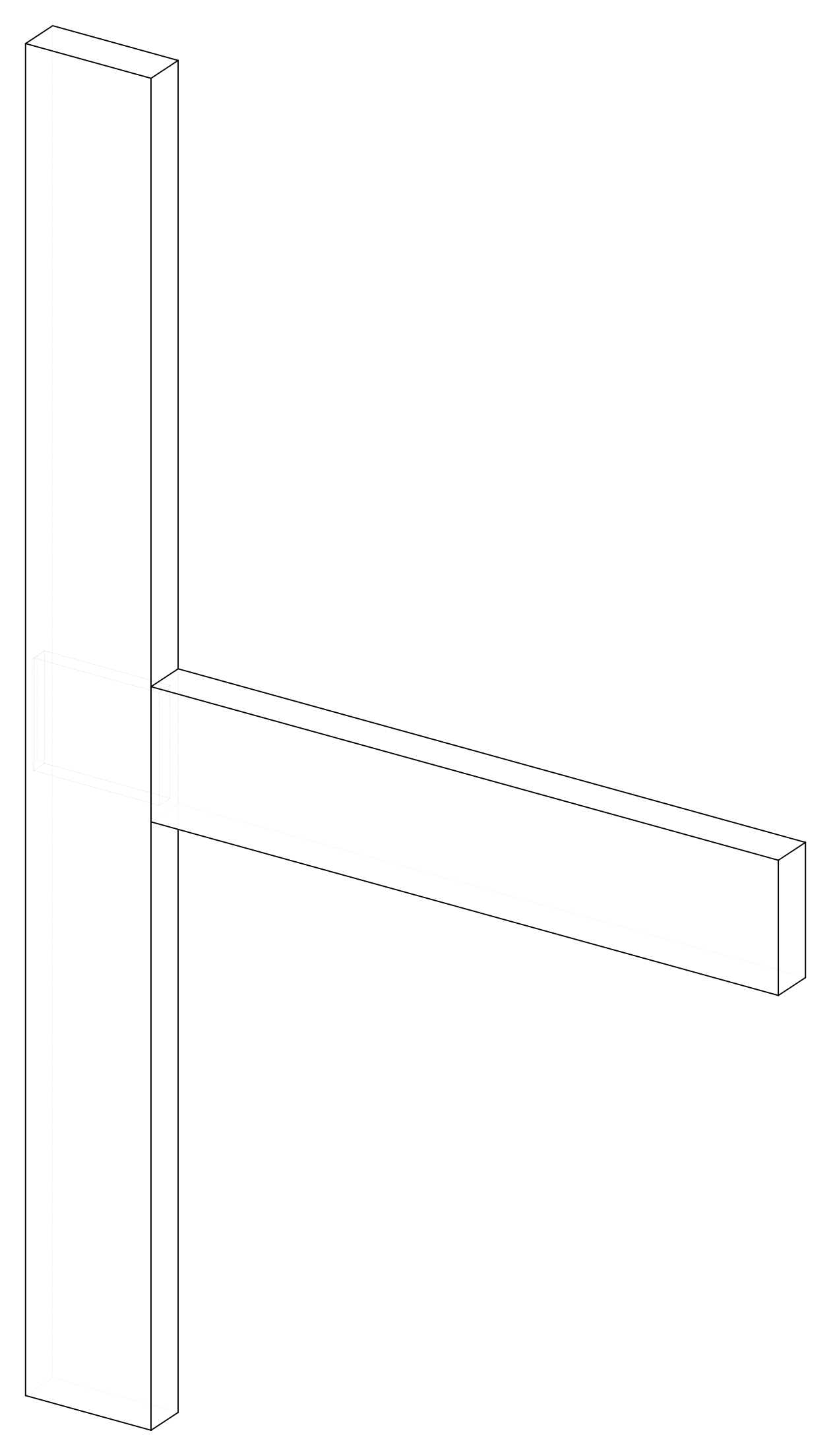
A through tenon whose chamfered end alone stands proud of the stile, like a low pyramid on the stile's edge.
-
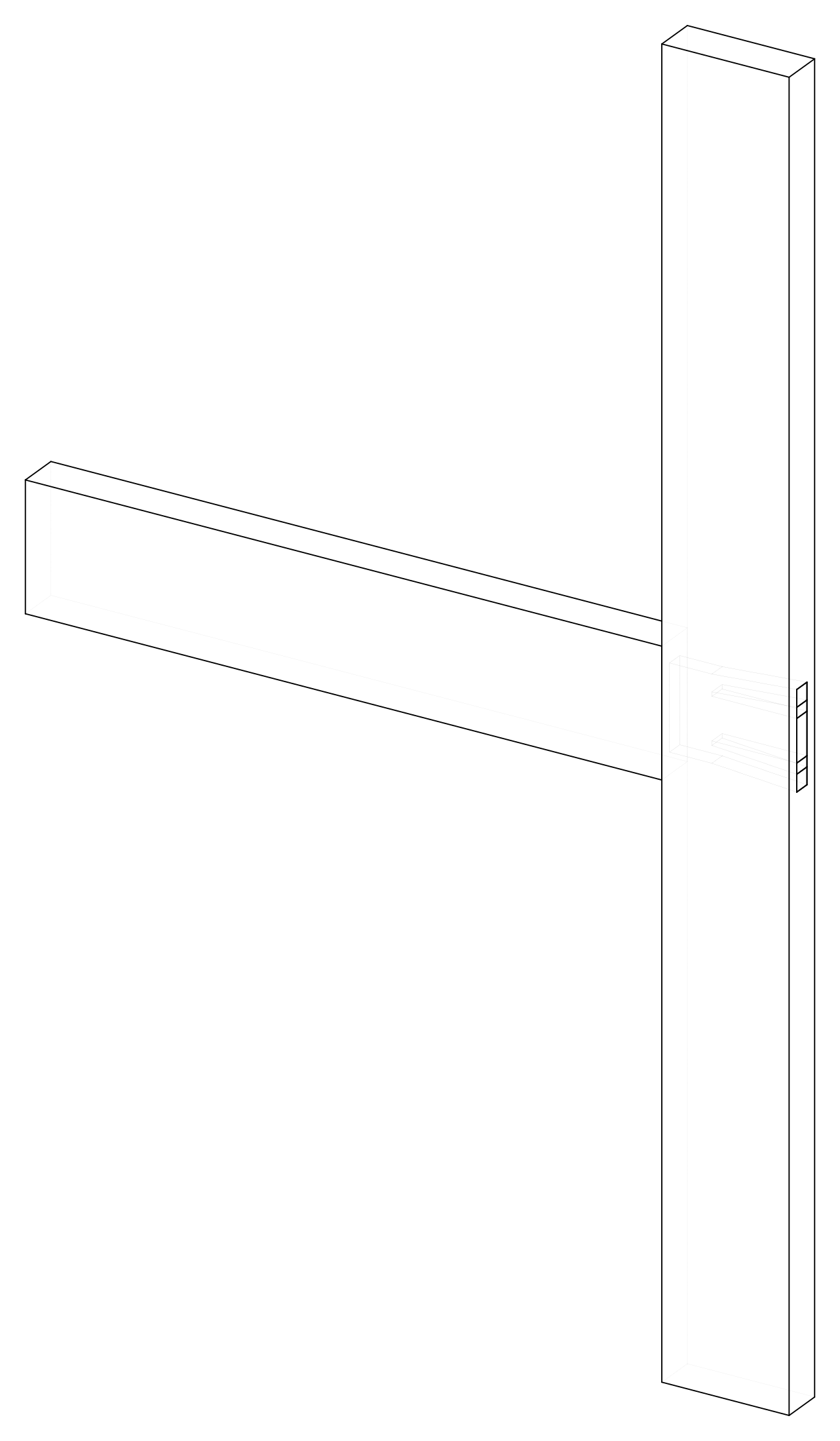
A through tenon spread by two wedges into a mortise flared towards the outside.
-
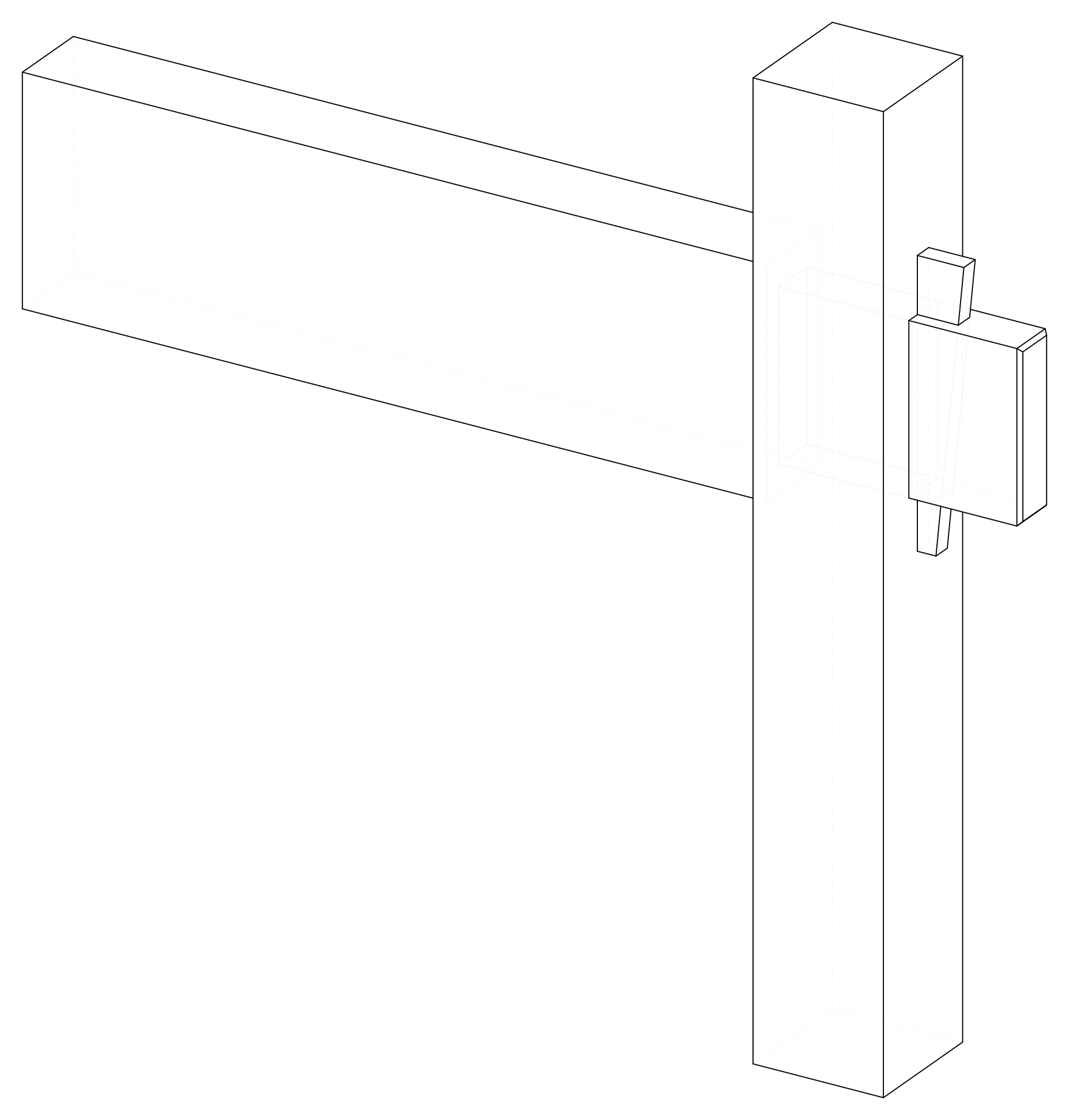
A tusk tenon with the wedge parallel to the stile: a knock-down joint of a workbench stretcher through a leg, the wedge upright.
-
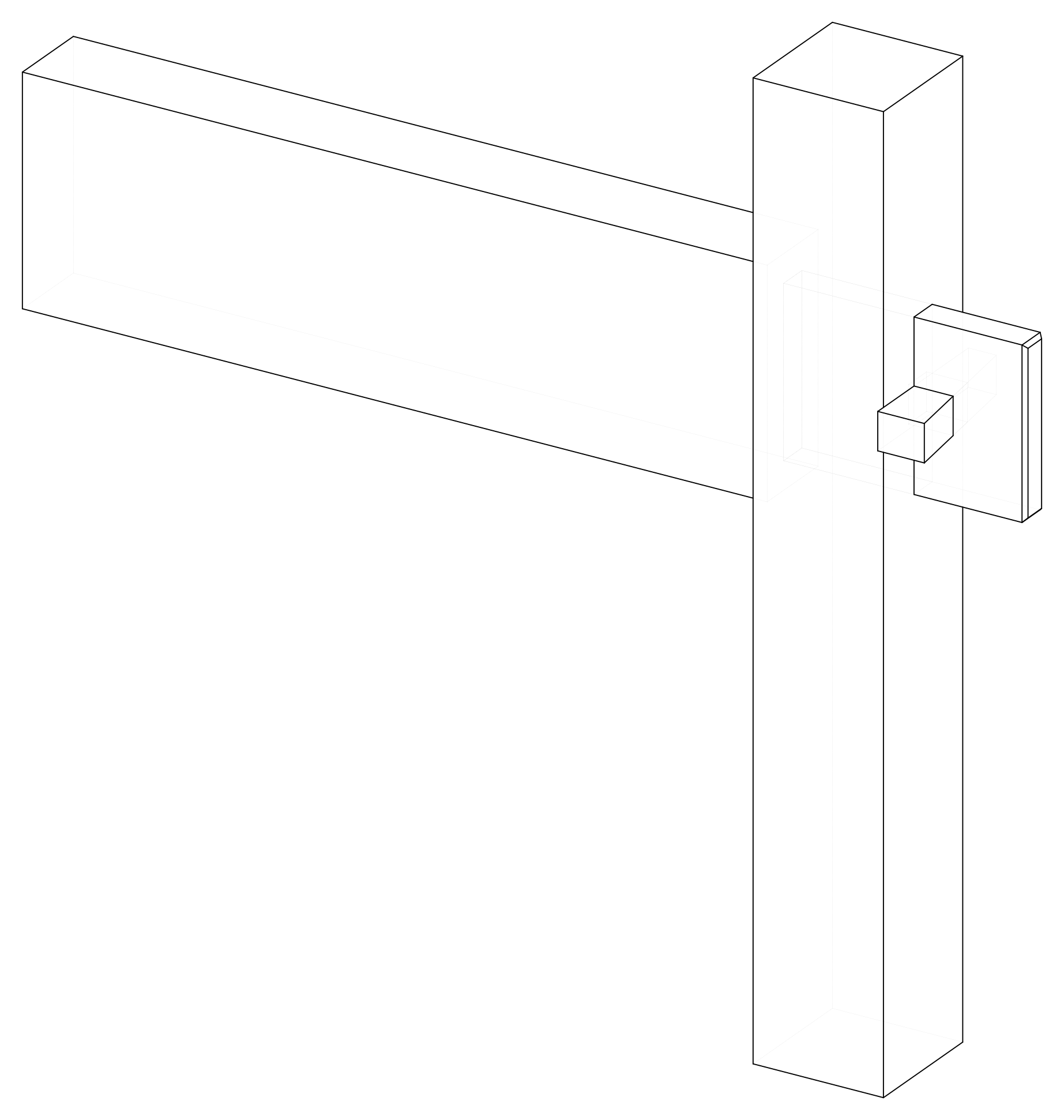
A tusk tenon with the wedge perpendicular to the stile: the wedge lies level, through the tenon's thickness, its head towards the viewer.
-
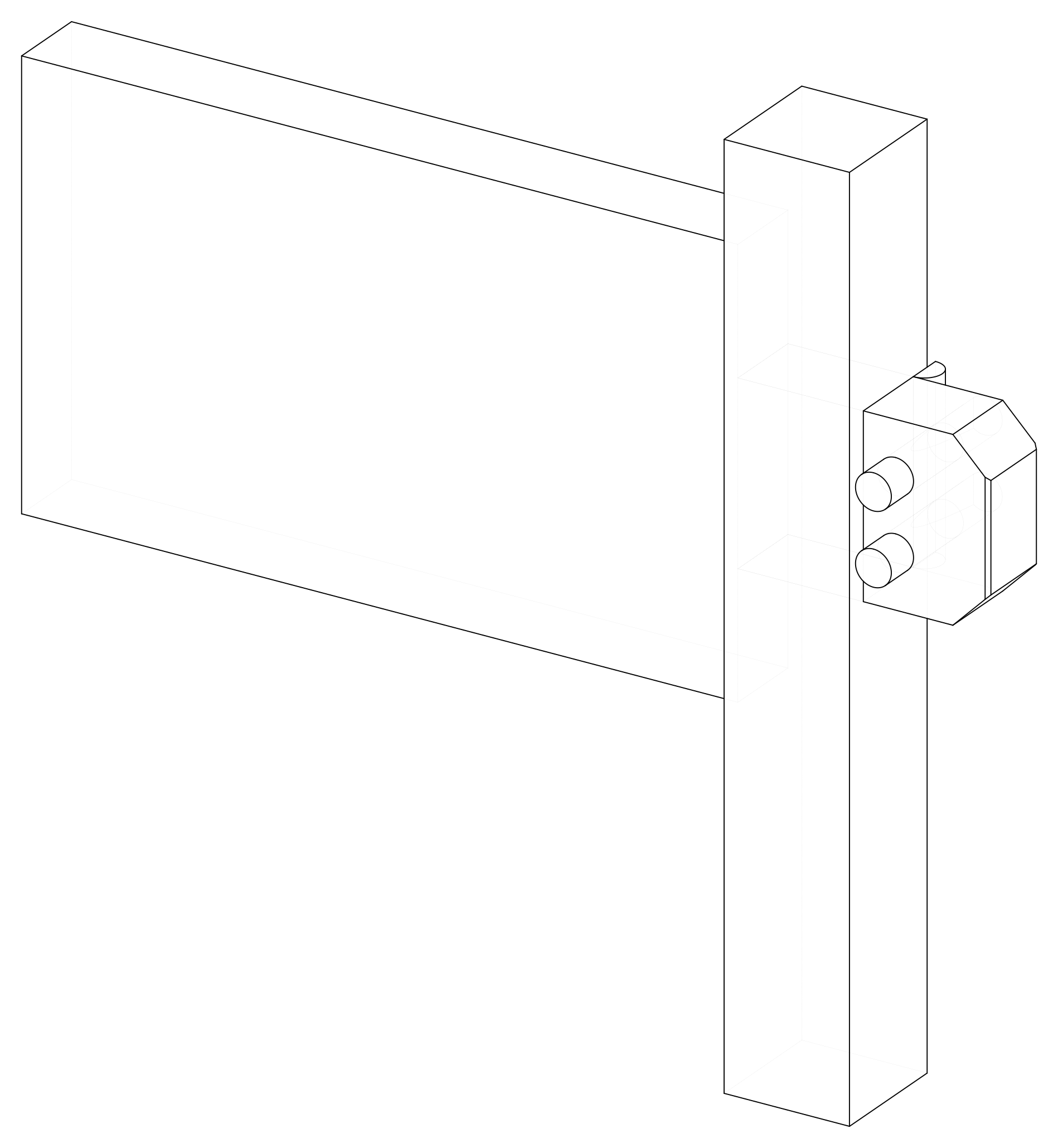
A tusk tenon held by dowels (after Rex Krueger's workbench): a wide stretcher through a 70 mm square leg, held by two tapered dowels through its tenon, level, their heads towards the viewer.
-
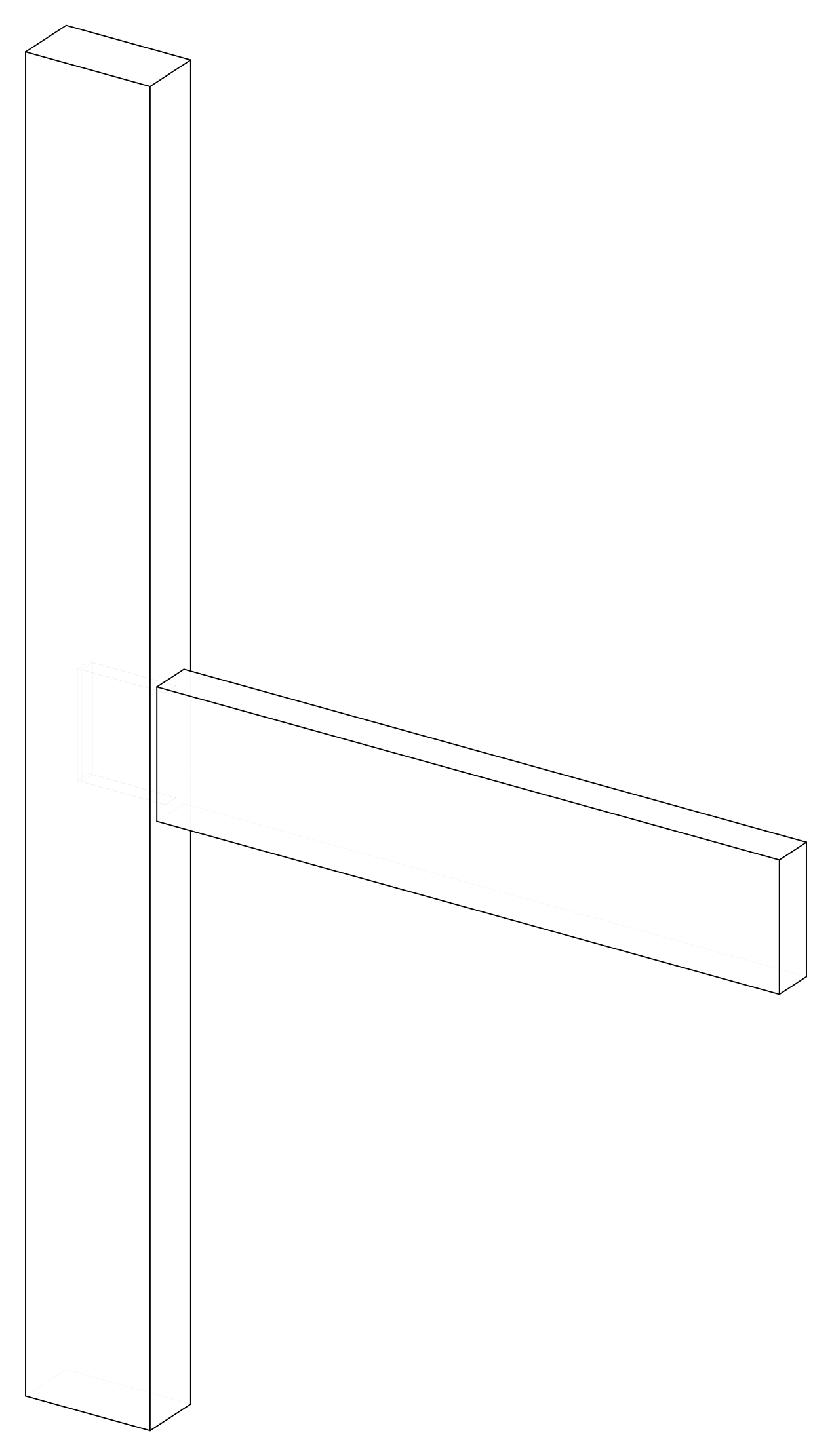
A rail thinner than the stile, centered on it across the thickness.
-
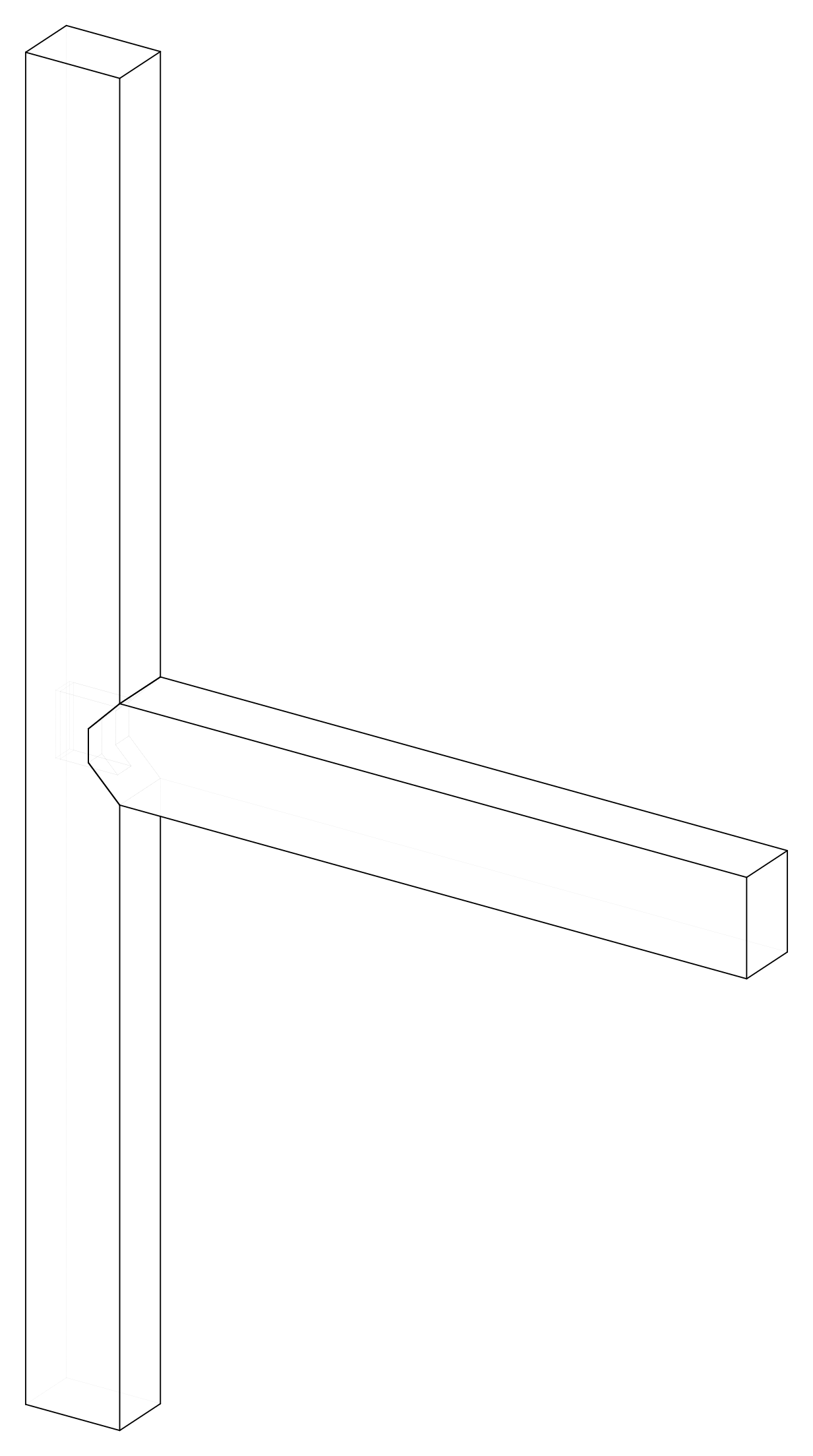
A T-joint of square-ish stock: the rail reaches into a notch in the stile, mitred at both edges, and a stub tenon goes on from there.
-
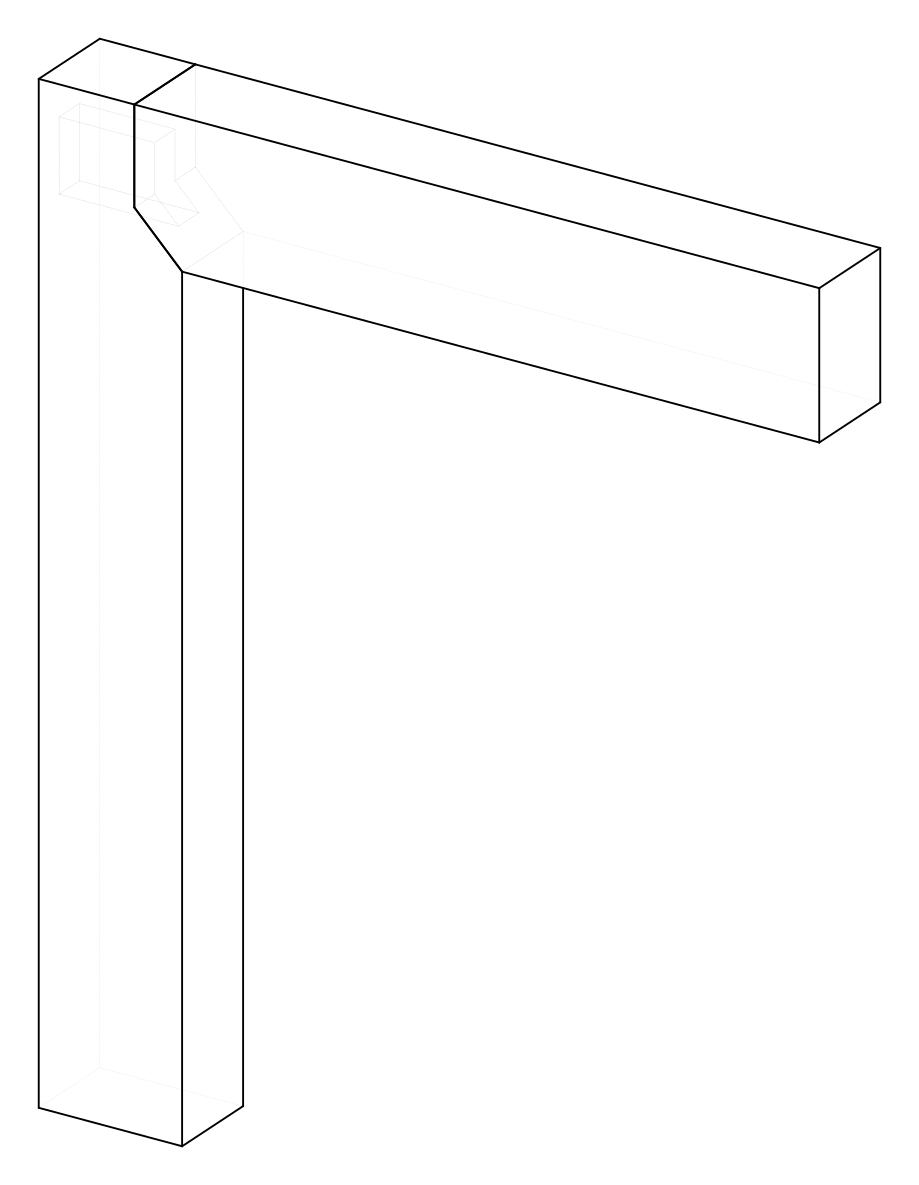
An L-shaped frame corner of square-ish stock, mitred only at the inner edge.
-
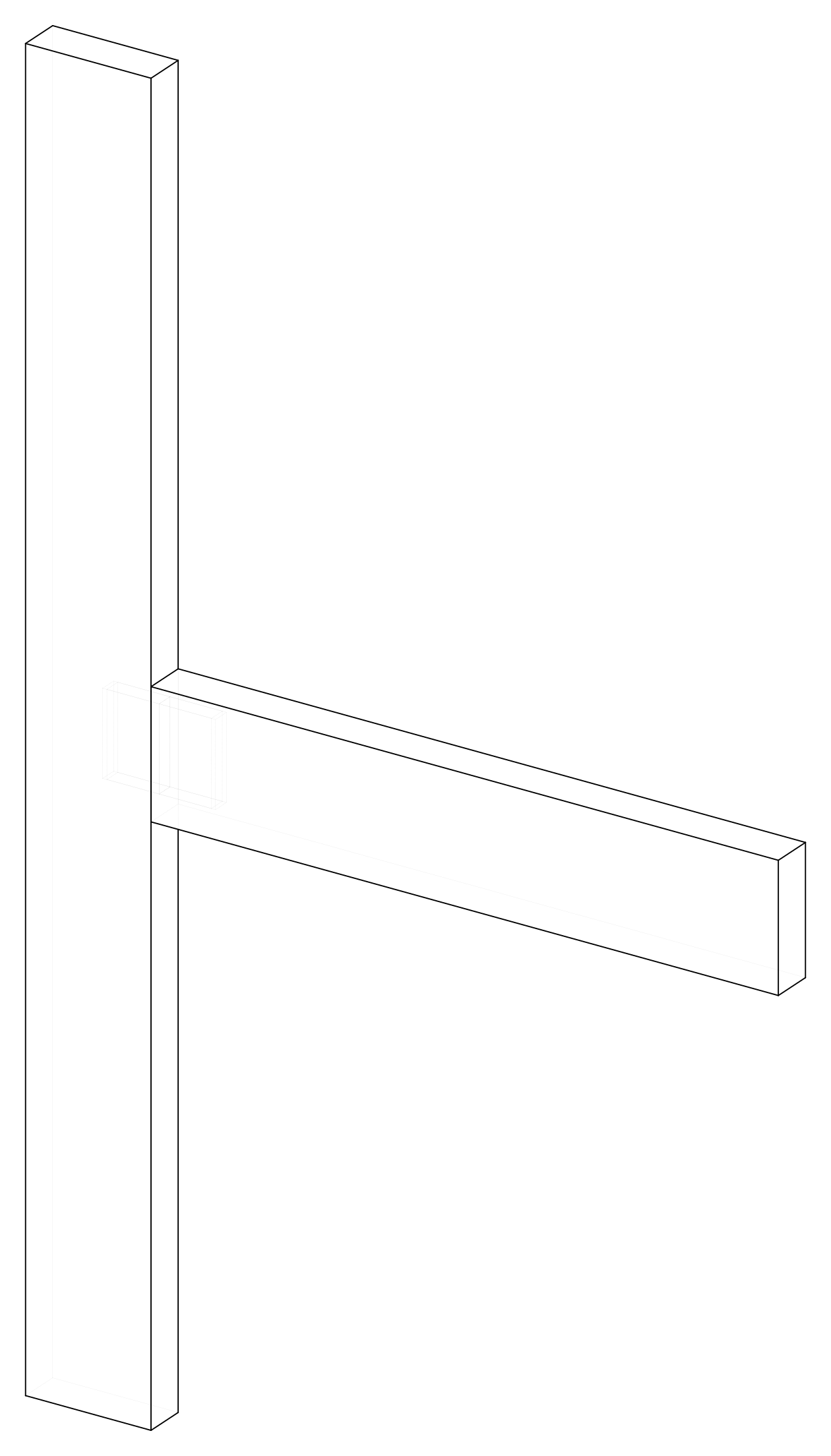
A rail joined to the back edge of a stile by a loose tenon.
-
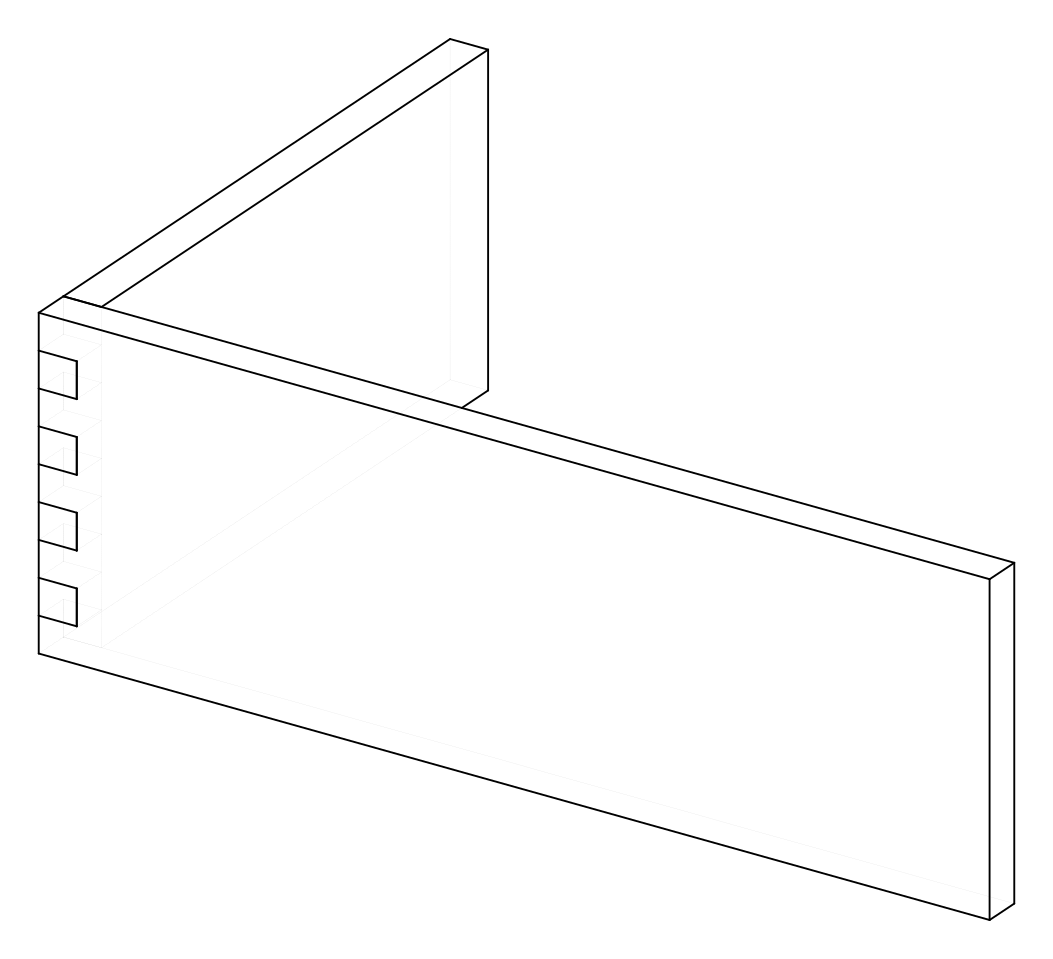
The corner of a box with a box (finger) joint: square fingers on both ends.
-
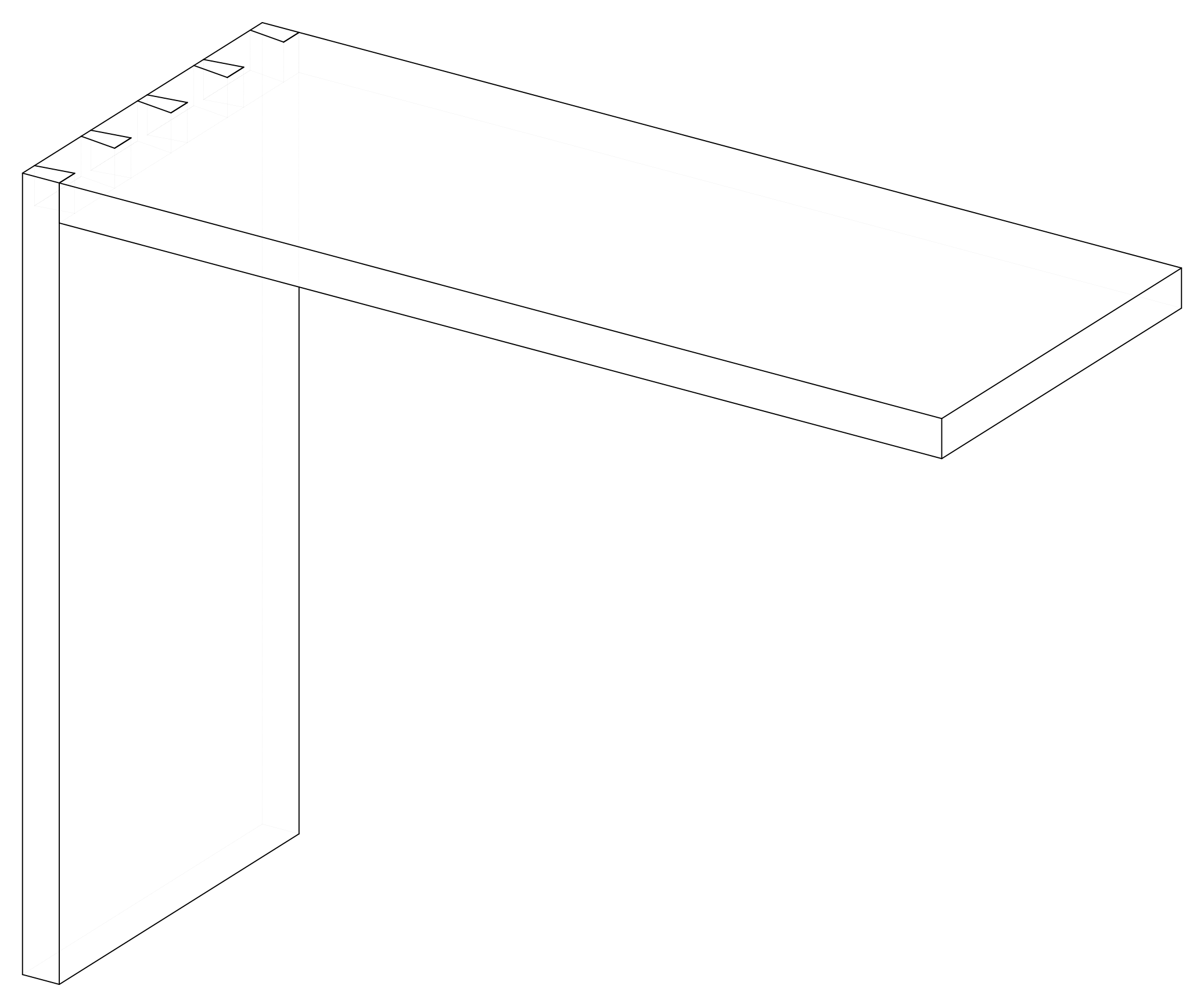
A through-dovetail corner of a carcase: tails on the top, pins on the side.
-
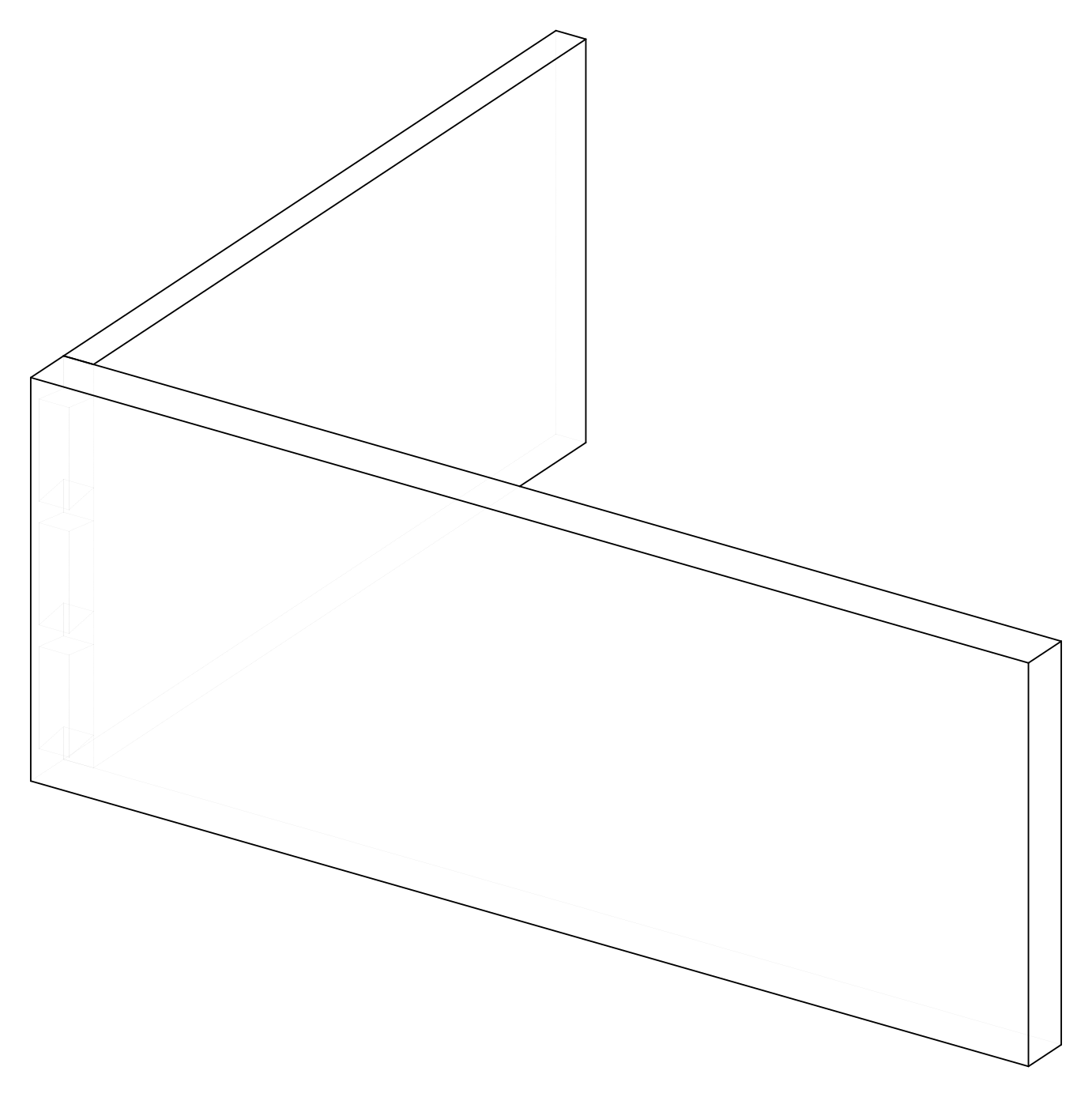
The front corner of a drawer: half-blind dovetails, the tails hidden behind a lap.
-
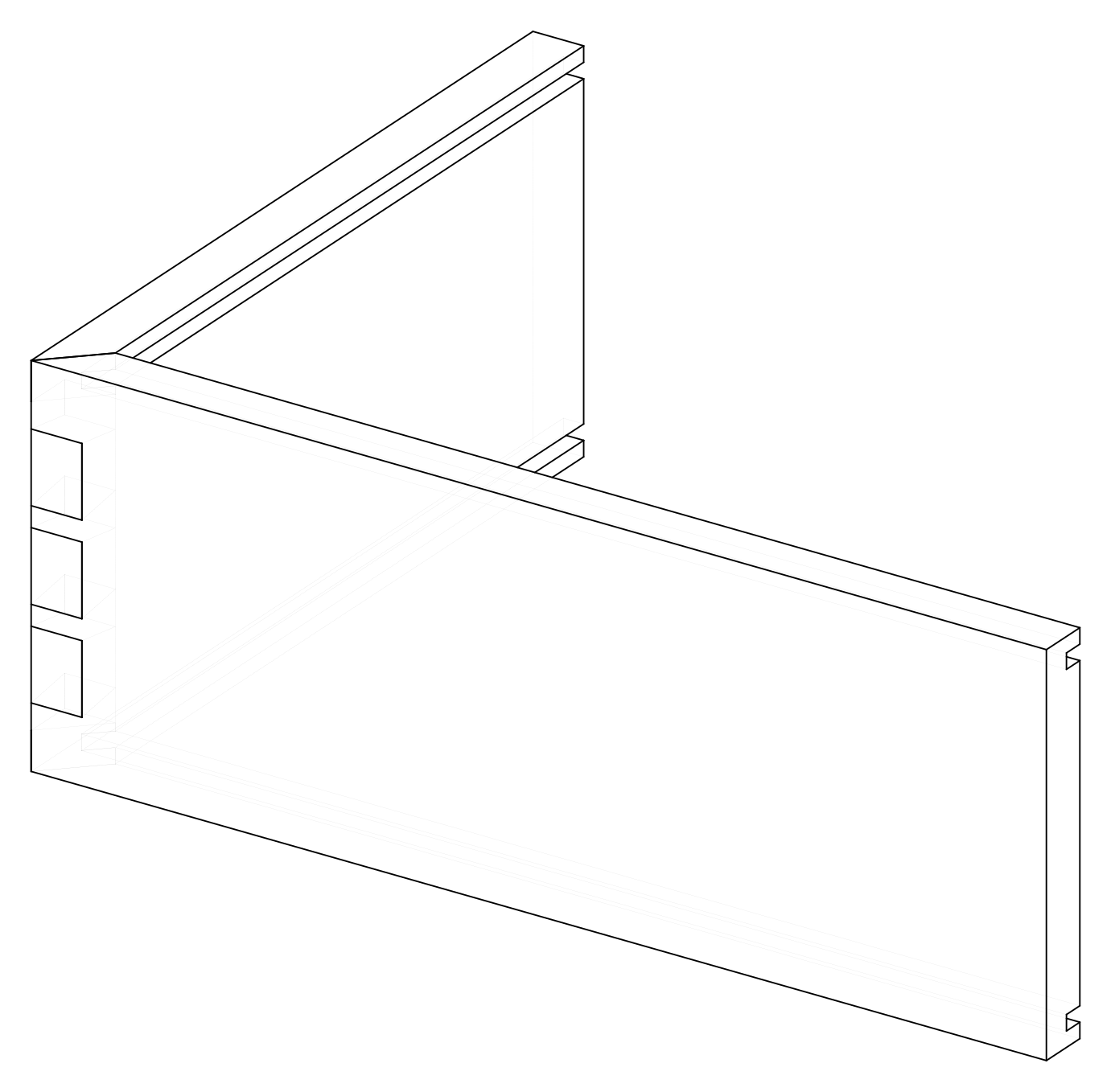
The corner of a box made to be sawn open: through dovetails mitred at both edges.
-
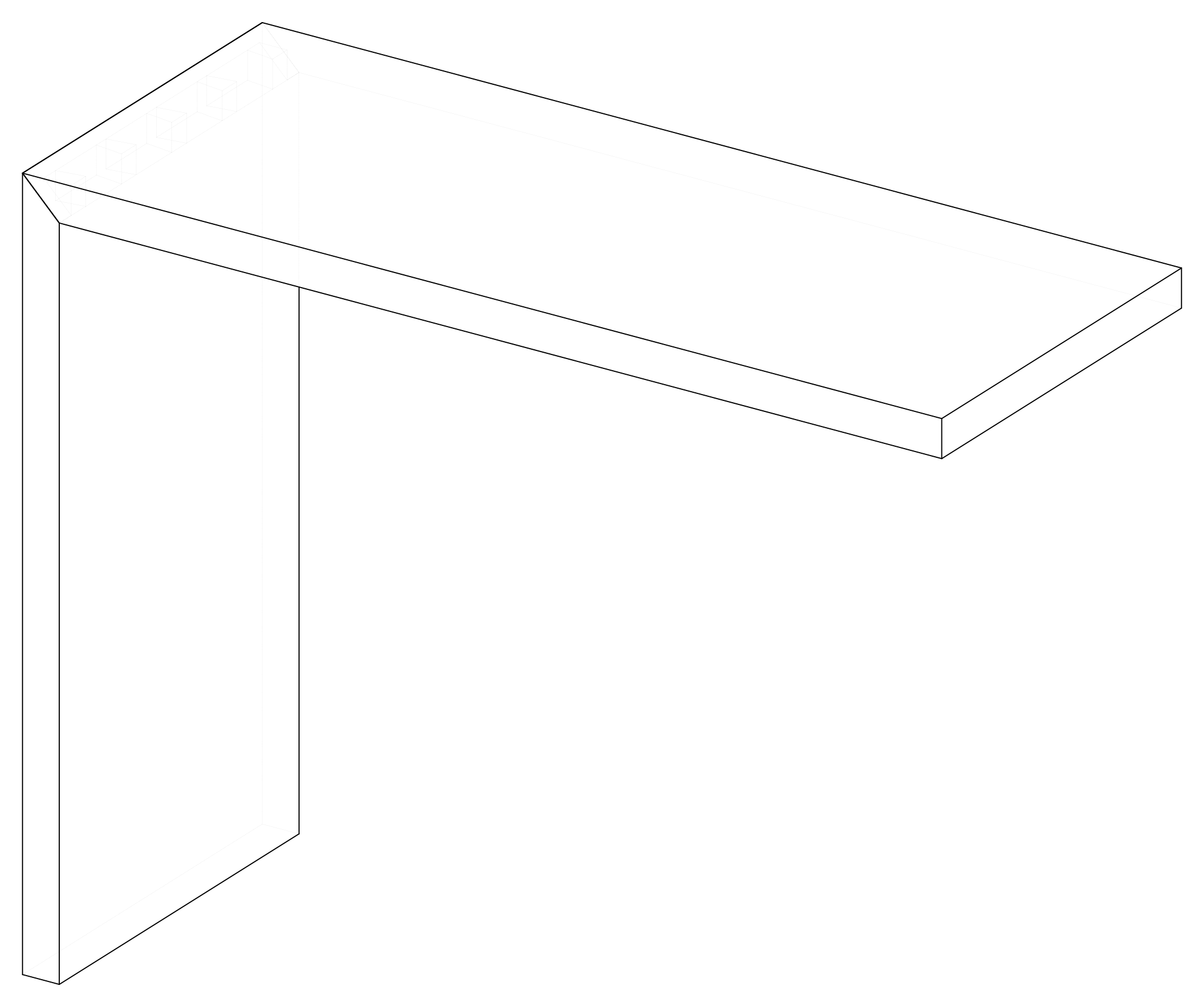
A carcase corner with blind mitred (secret mitre) dovetails: tails on the top, pins on the side, hidden behind mitred lips; outside dimensions.
-
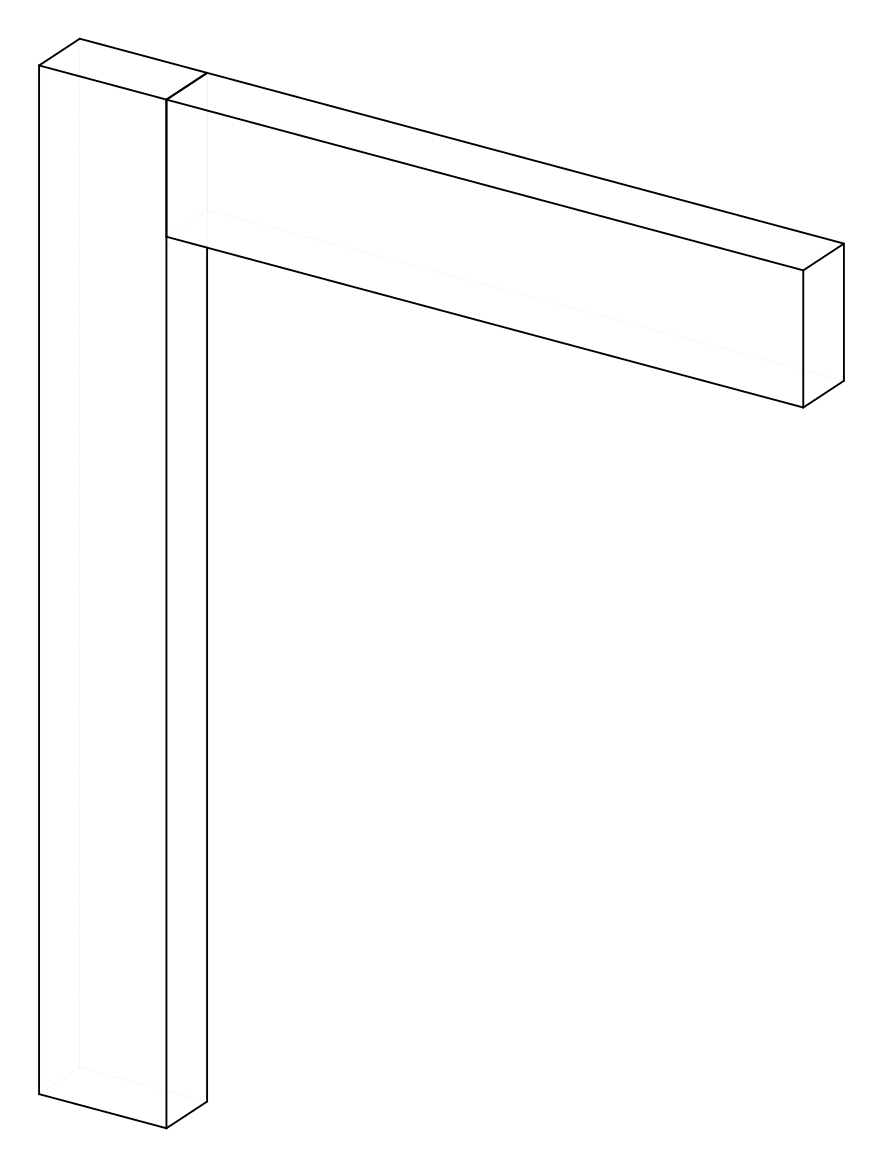
An L-shaped corner of a frame: the end of the rail glued to the edge of the stile.
-
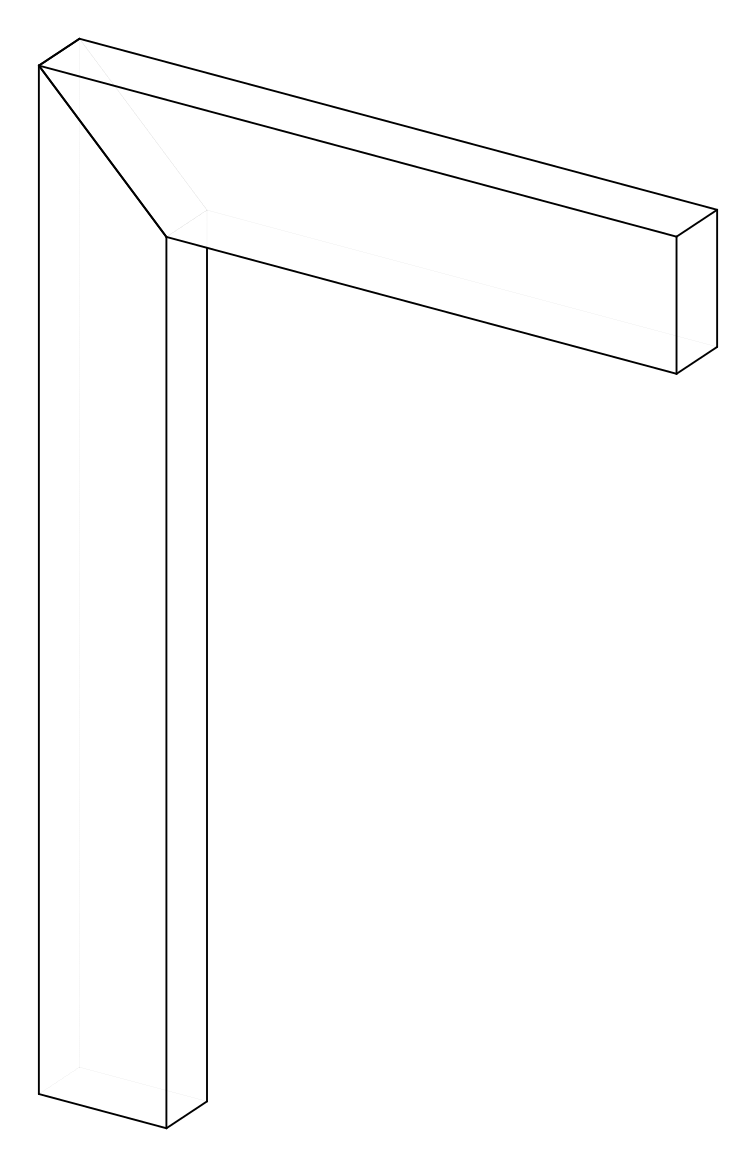
A picture frame corner: both ends mitred across the face, lengths to the outside.
-
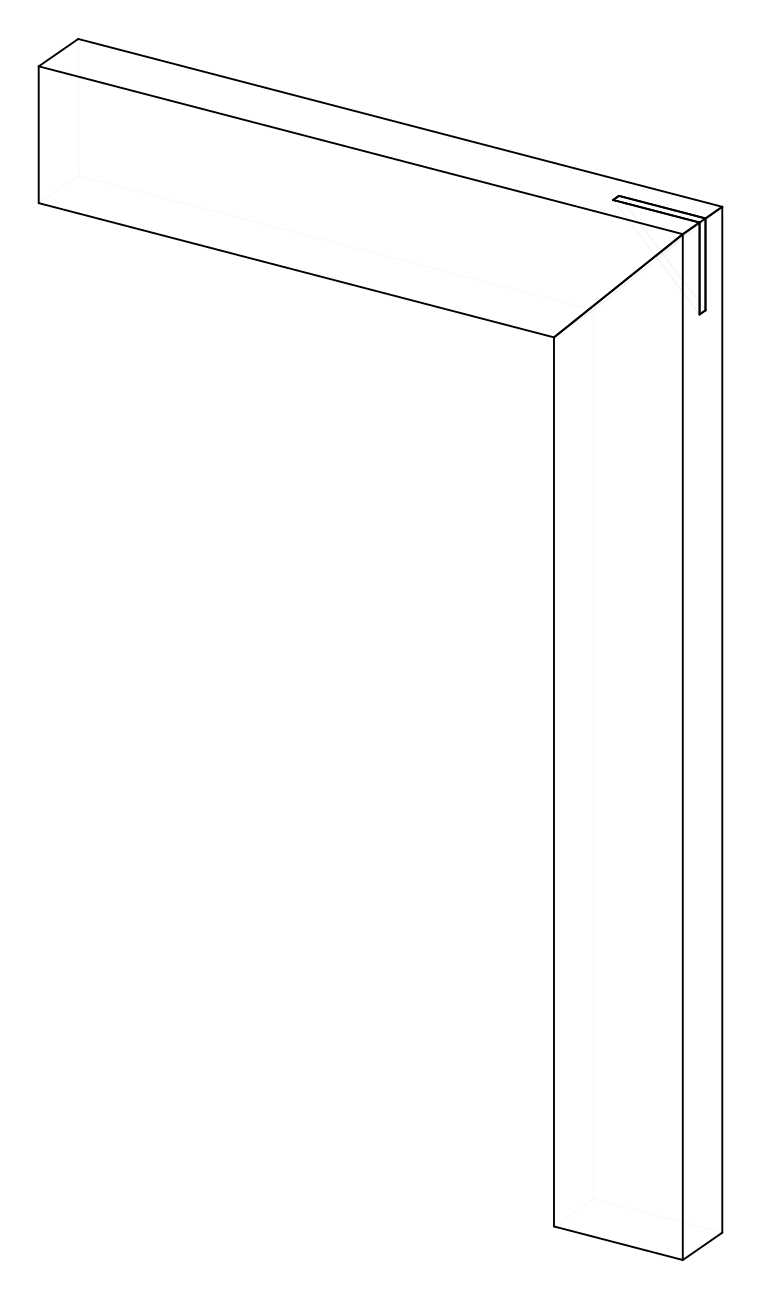
A picture frame corner with a key (a slip feather) across the outside corner.
-
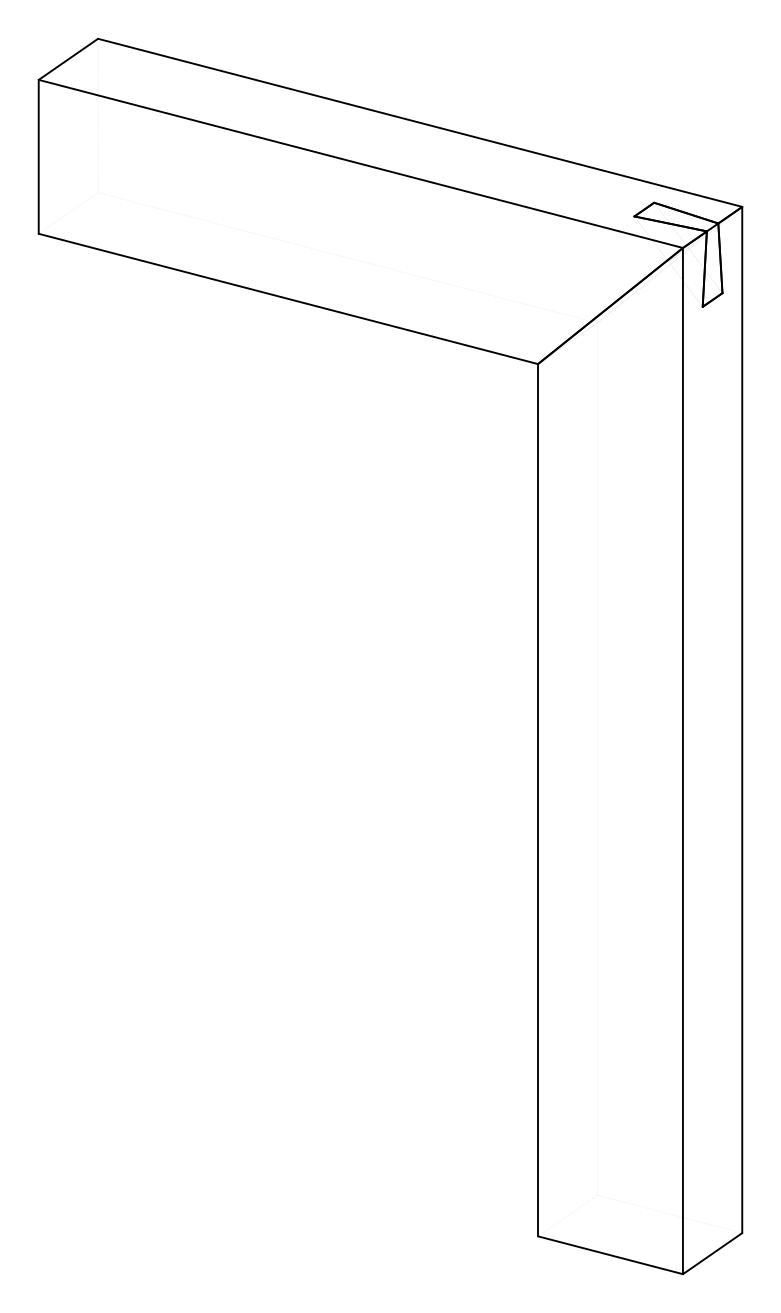
A frame corner with a dovetail key across the outside corner.
-
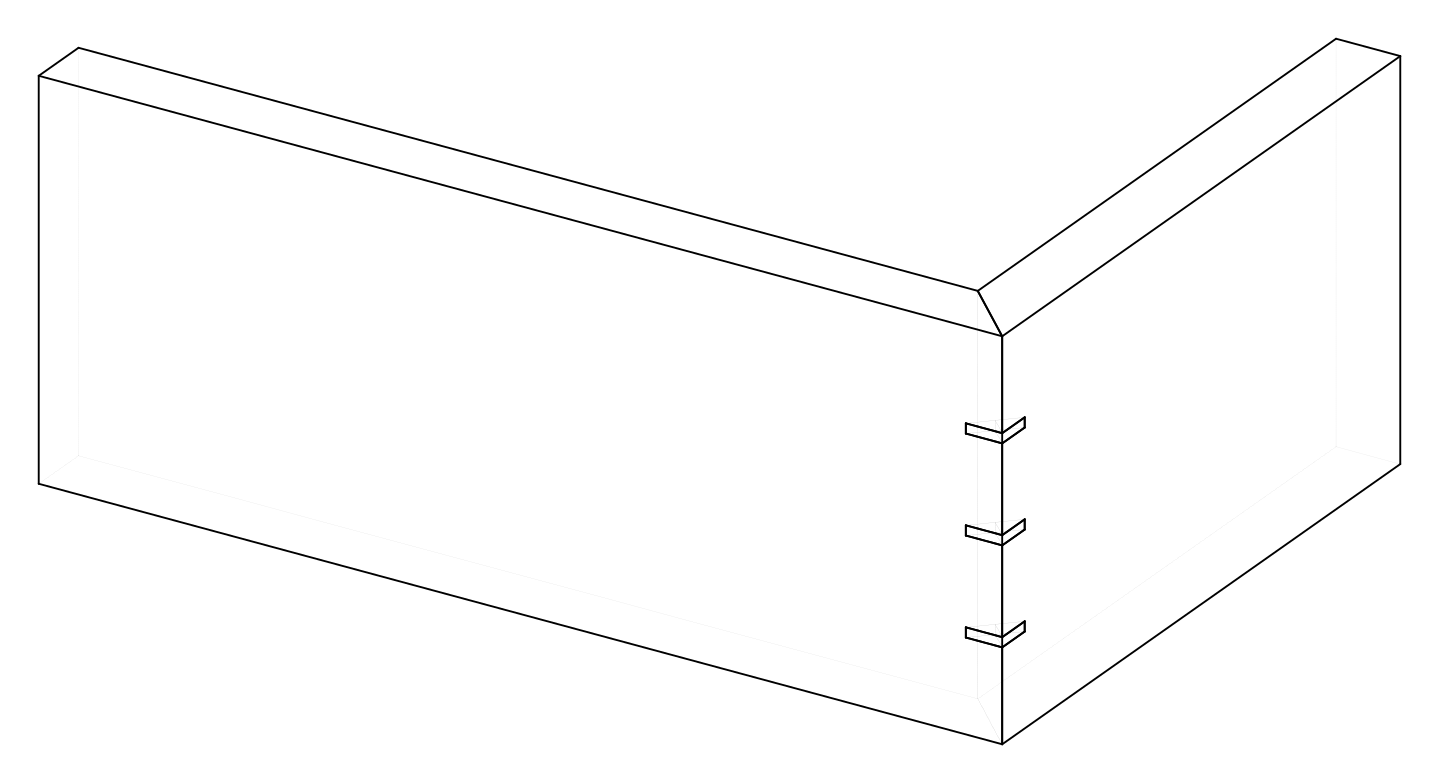
A box corner mitred across the edges, with three keys across the outside corner, spaced evenly up it, 8 mm deep along the mitre line.
-
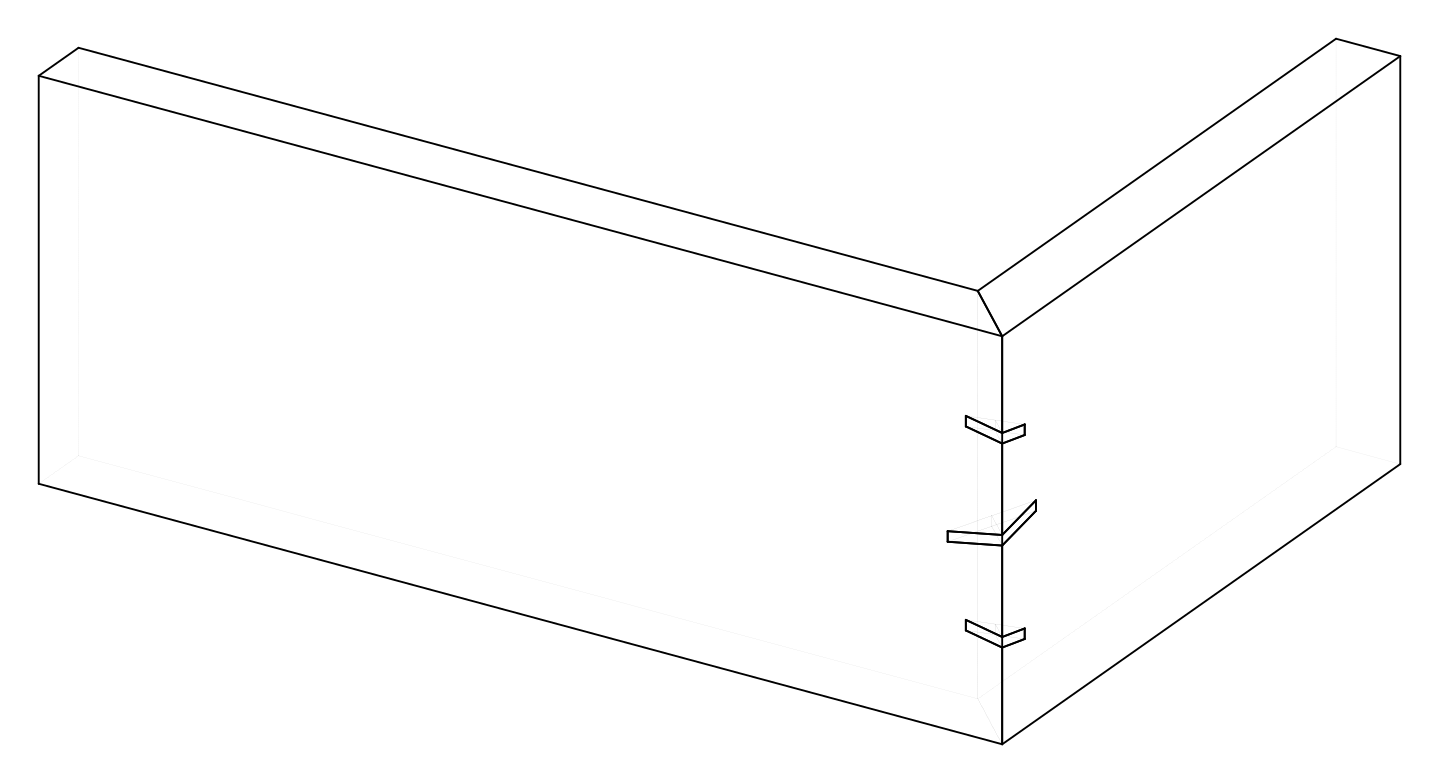
A keyed box corner, the kerfs tilted alternately up and down by
angle(the cradle set askew), so that the keys show as slanted lines on both faces; the middle one deeper than the others. -
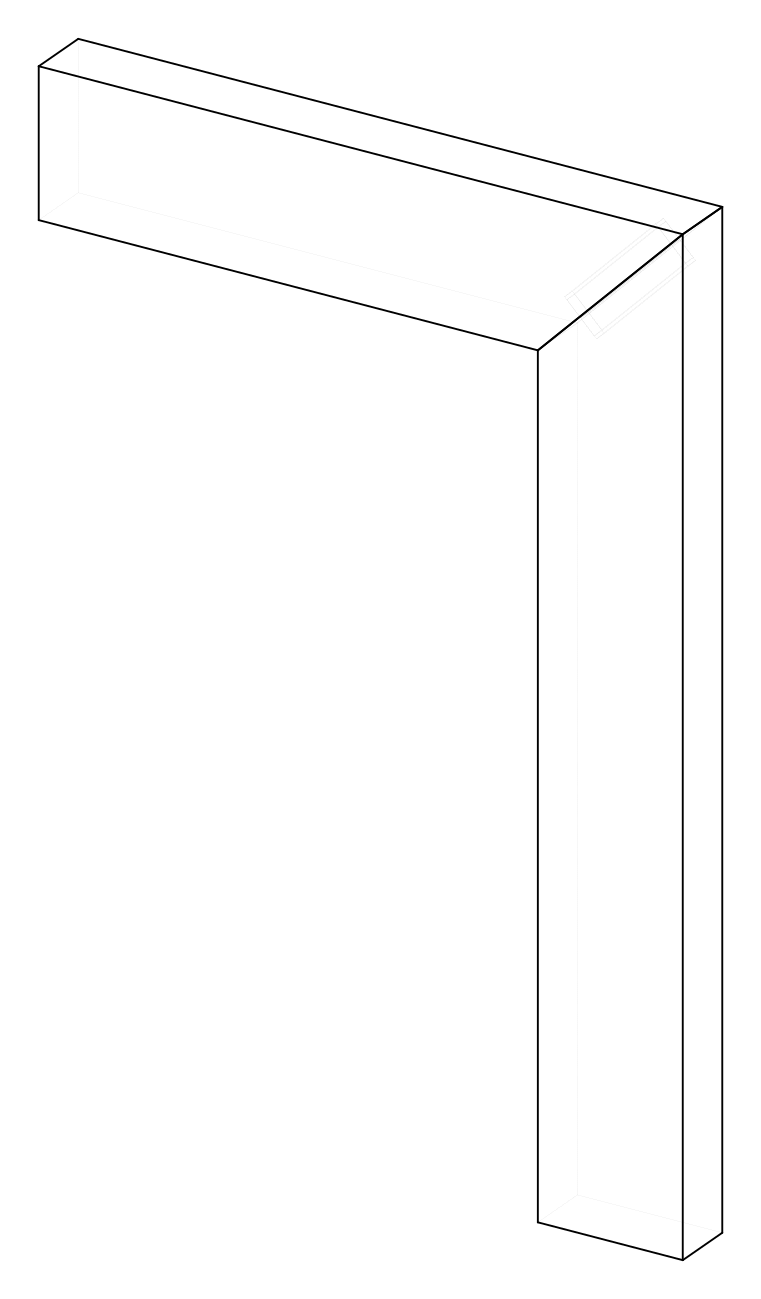
A picture frame corner with a spline hidden in the mitre.
-
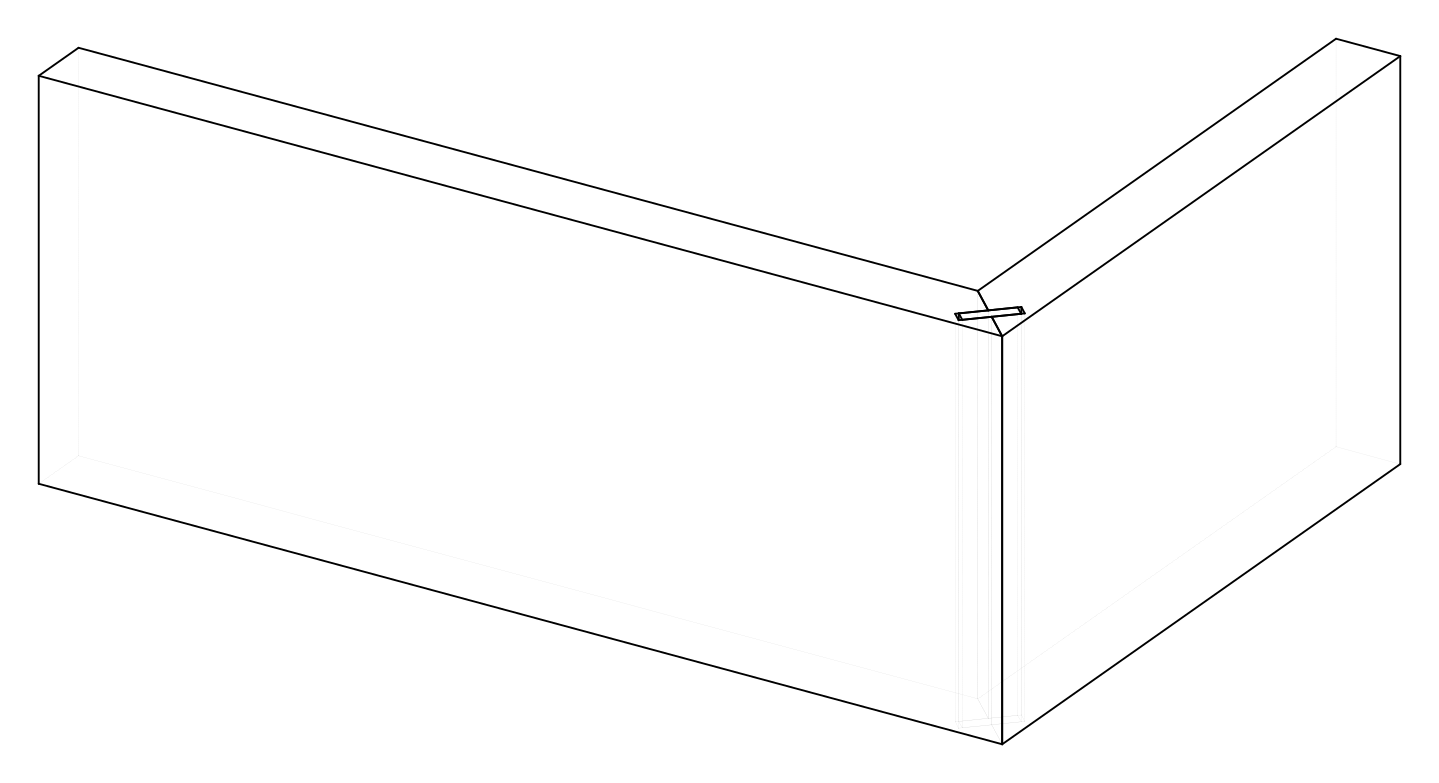
A box corner mitred across the edges, with a plywood spline through the whole height of the corner, in grooves sawn square to the mitre faces (the blade tilted 45 degrees); lengths to the outside.
-
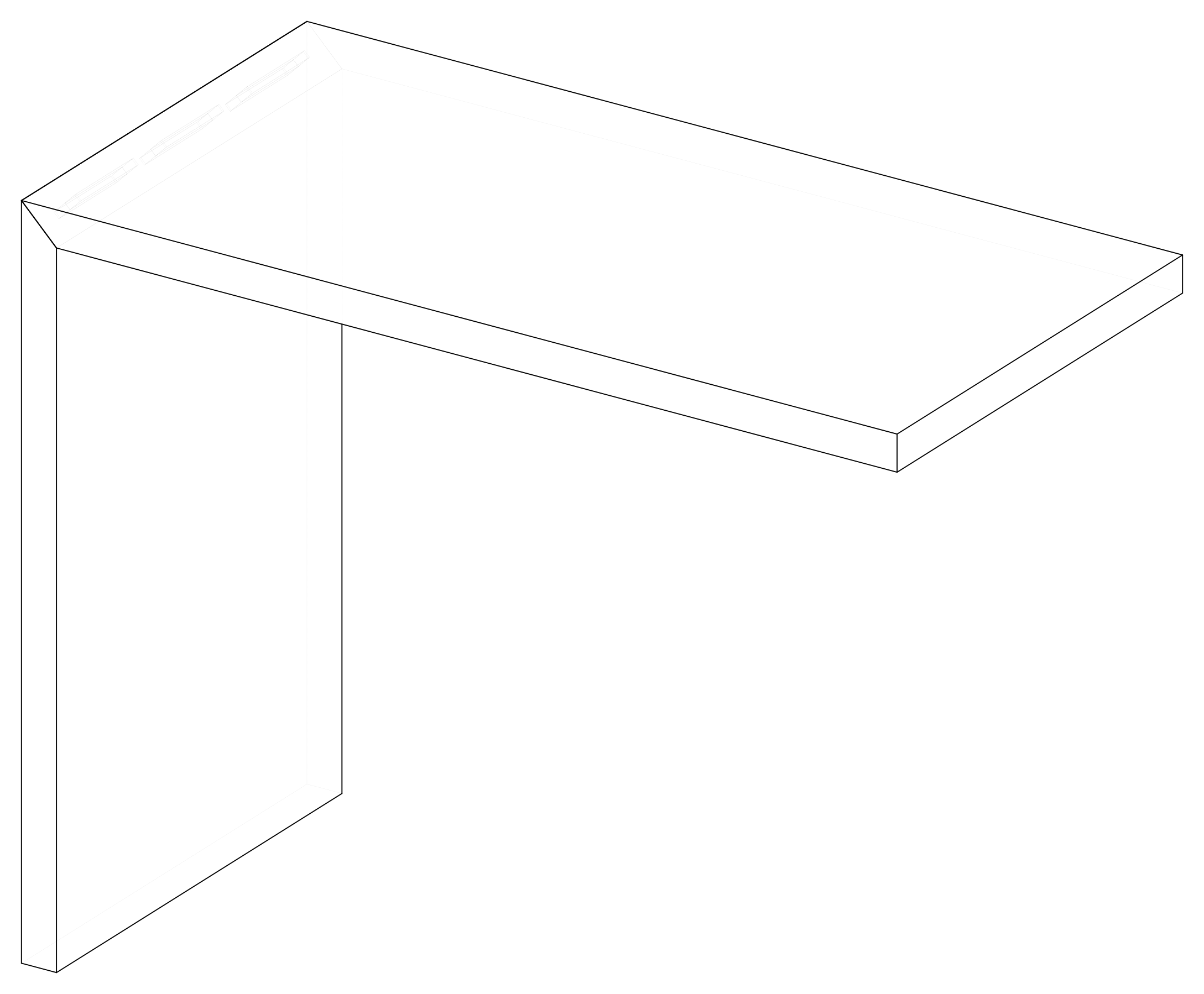
The top corner of a shelf, mitred across the edges, with three short oak splines in a row along the corner, in stopped grooves (routed) with equal gaps between them, so the joint doesn't show at the front or the back. Lengths to the outside.
-
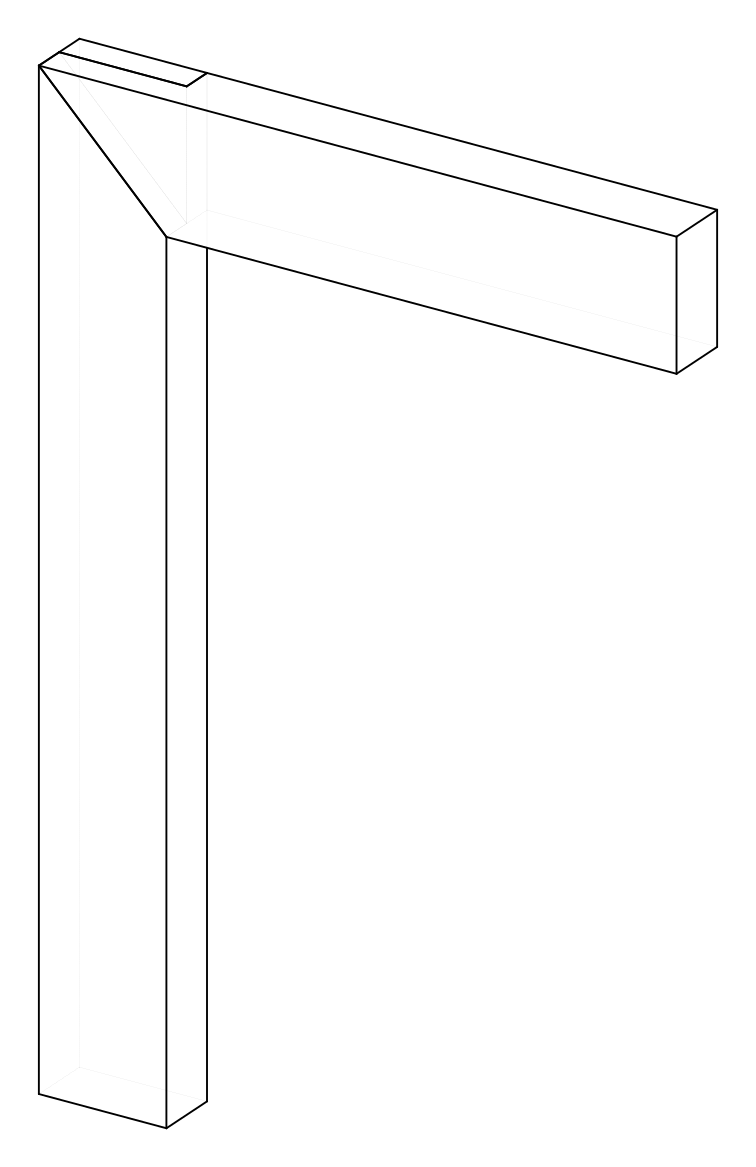
A frame corner mitred on the face and half-lapped behind: lengths to the outside.
-
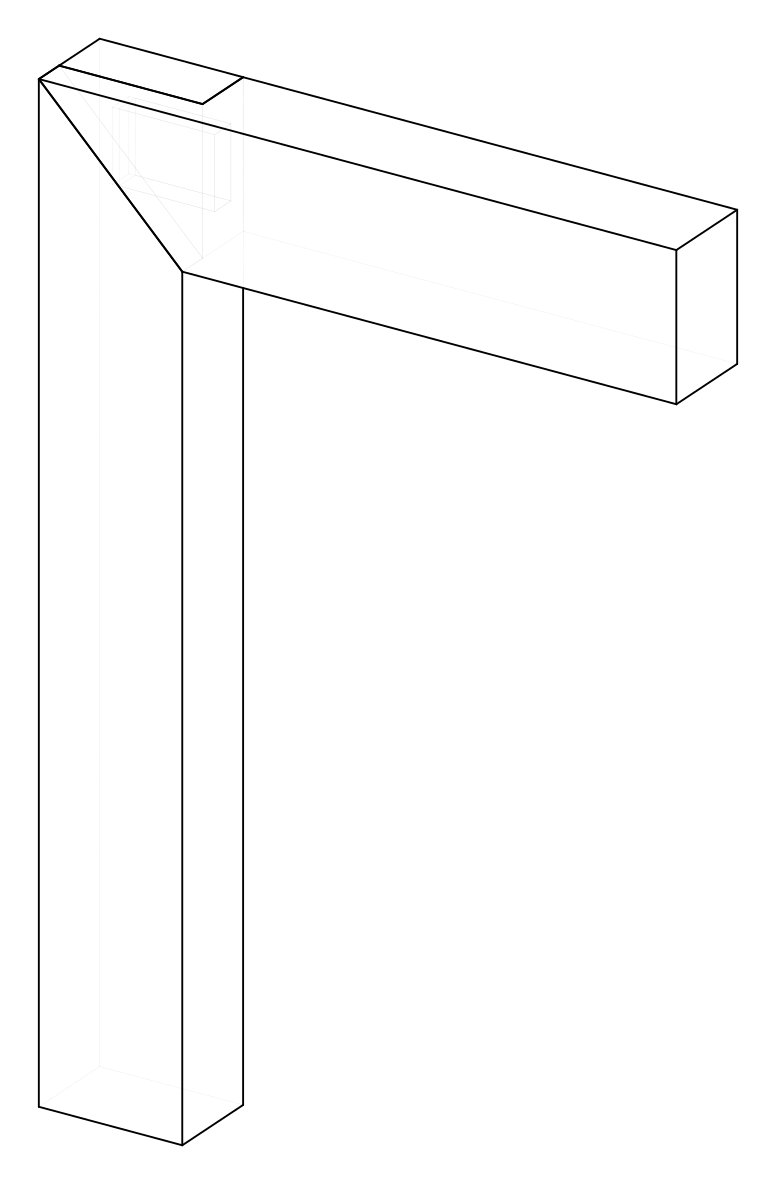
A frame corner mitred on the face, with a hidden mortise and tenon behind.
-
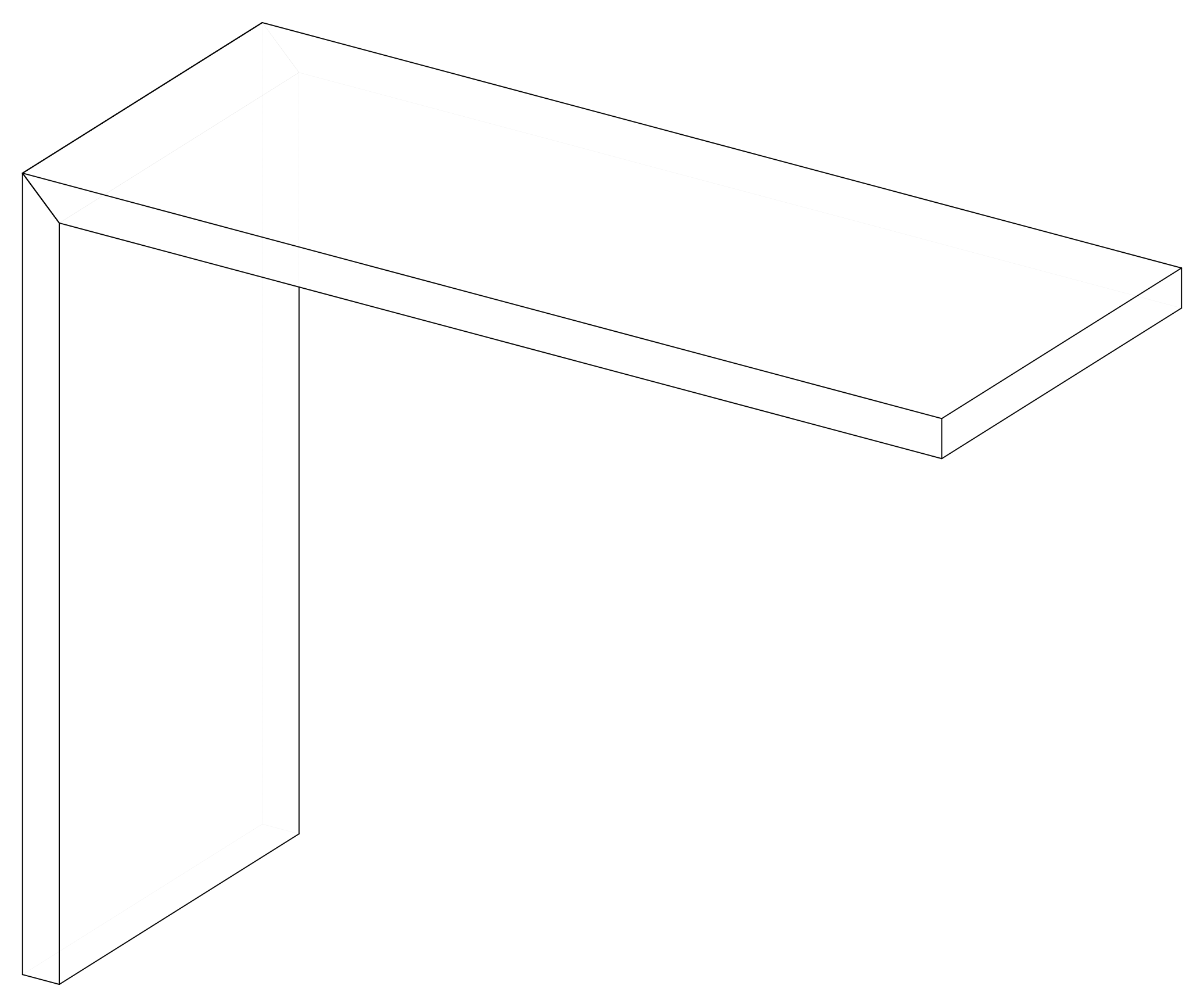
A carcase corner mitred across the edges, so no end grain shows; outside lengths.
-

A square hollow leg: four boards glued along their edges, each edge mitred at 45 degrees along the grain, so they meet on the diagonals of the corners and no edge grain shows; outside sizes.
-

Two stiles end to end, lengthened by a mitre across the face.
-
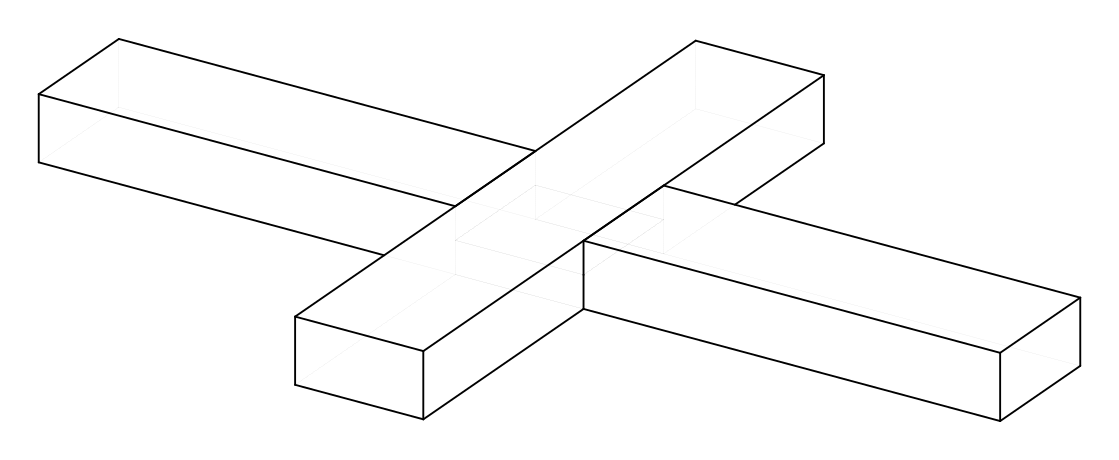
Two boards crossing in their middles, each with a dado half its thickness deep.
-
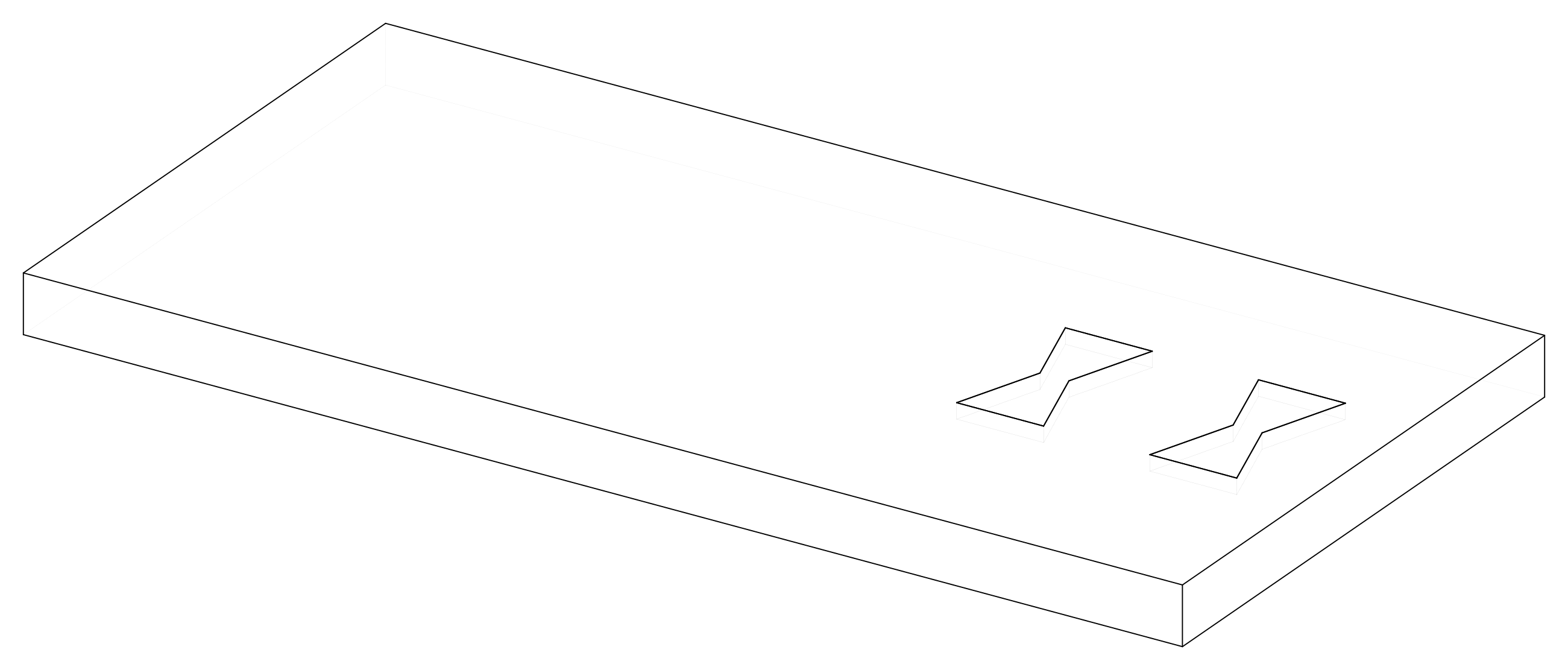
Two butterfly keys holding a crack running in from the end of a slab.
-
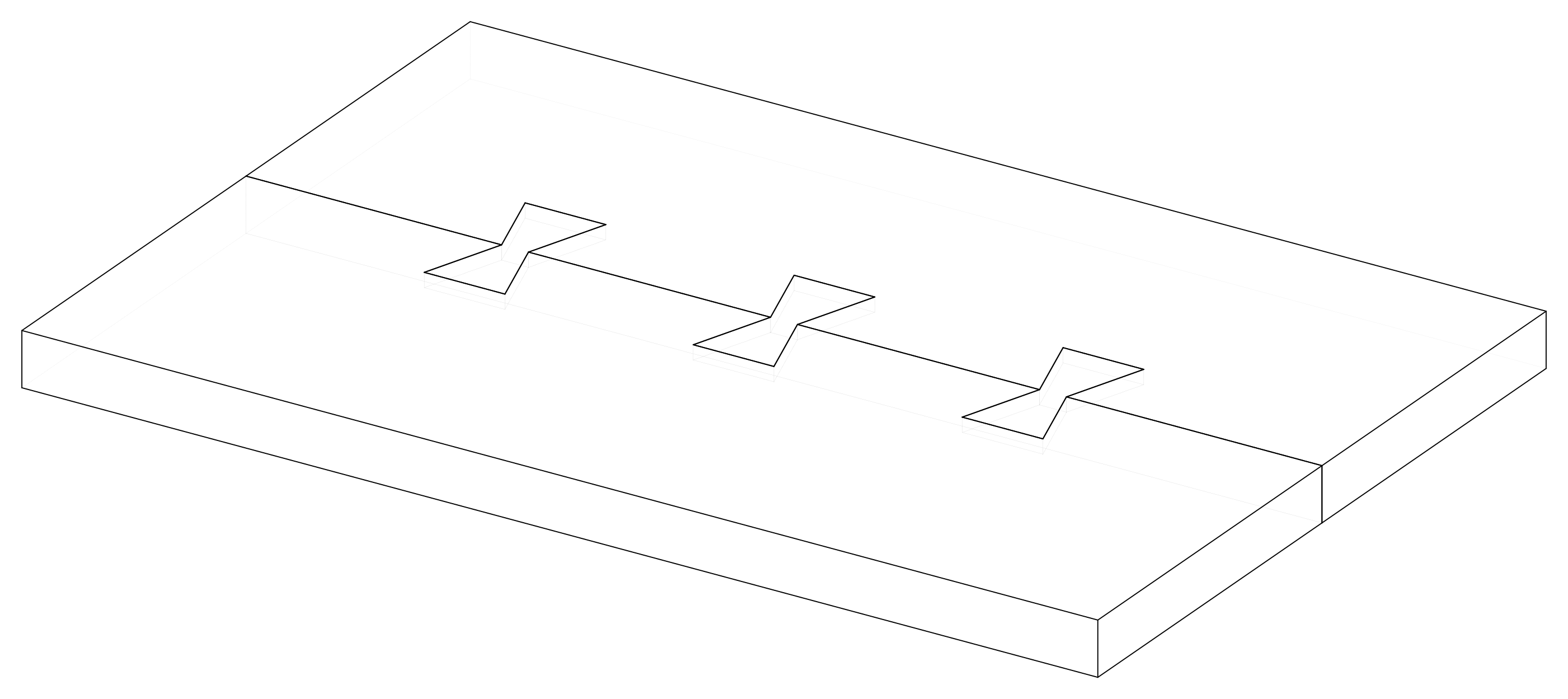
Two slabs butted edge to edge, held by three butterfly keys across the joint (as in a live-edge table top), inlaid flush into the top faces, half of each key in each slab.
-
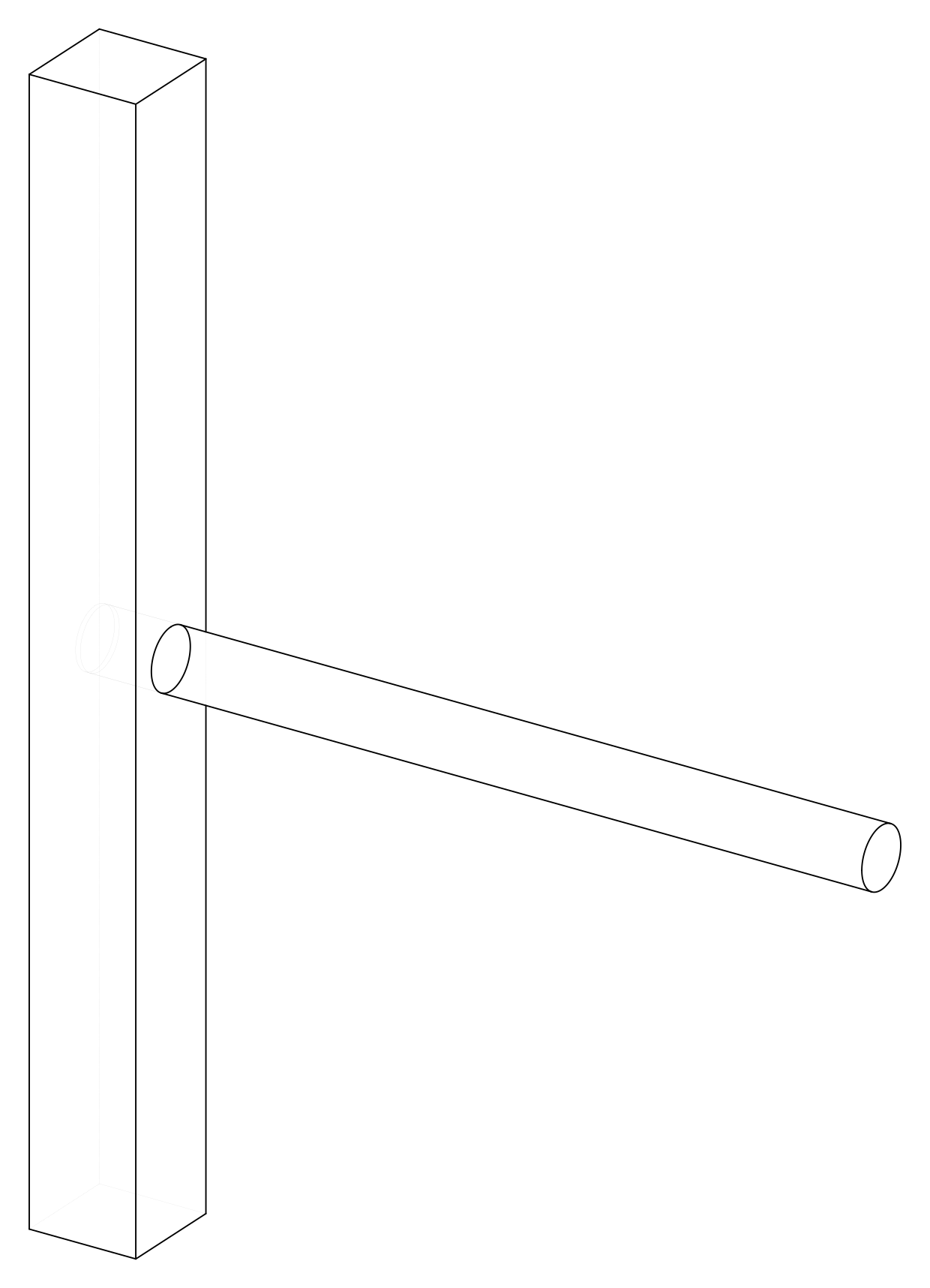
A rod (a rung, a stretcher) going with its whole cross-section into a blind hole in a square leg, two thirds of the leg deep.
-
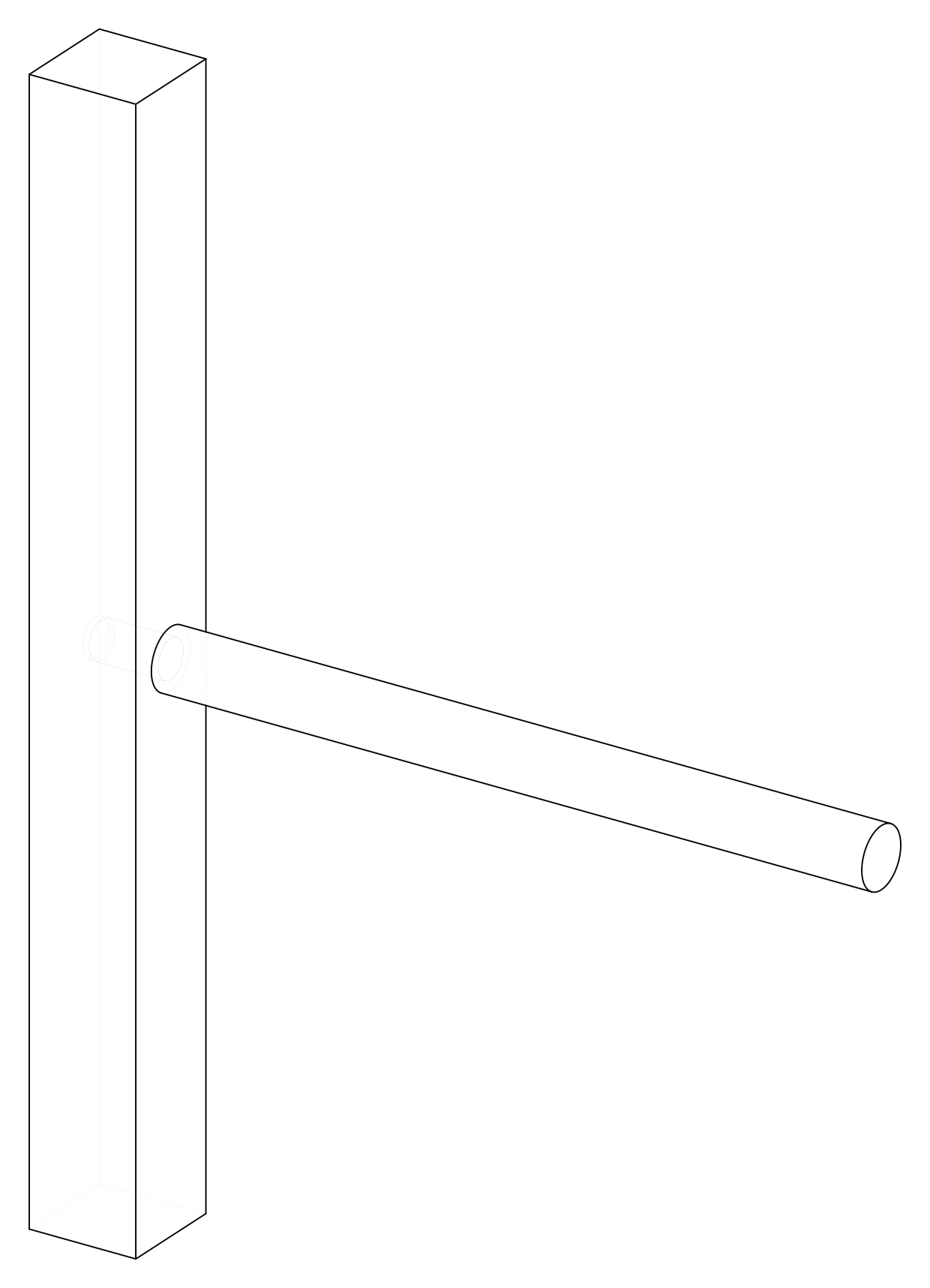
A rung with a round tenon (a shoulder all round, its end chamfered) in a blind hole in a square leg.
-
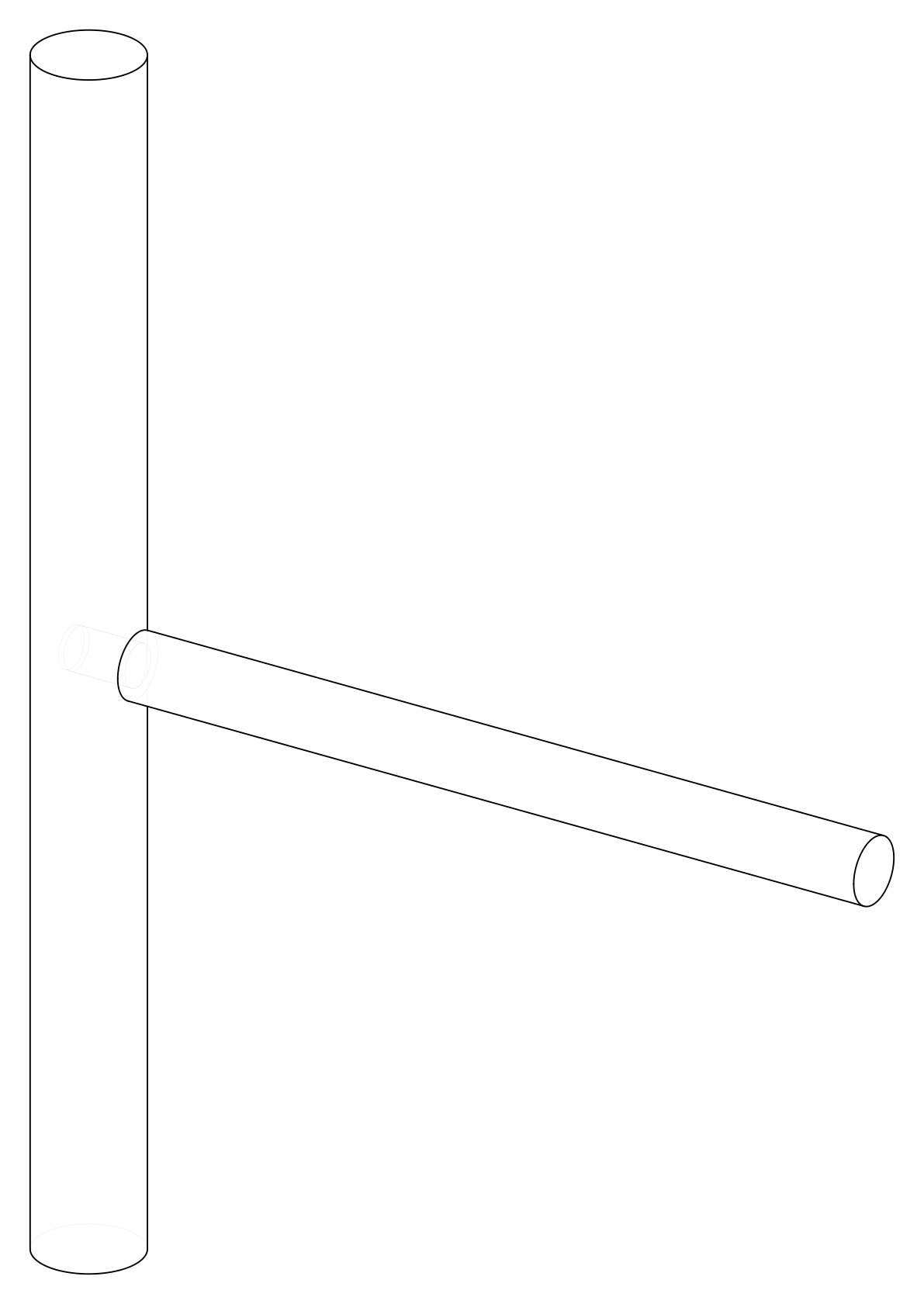
A stretcher's round tenon in a cross hole in a round leg (its shoulder meets the leg along a line, as it would before being scribed to it).
-
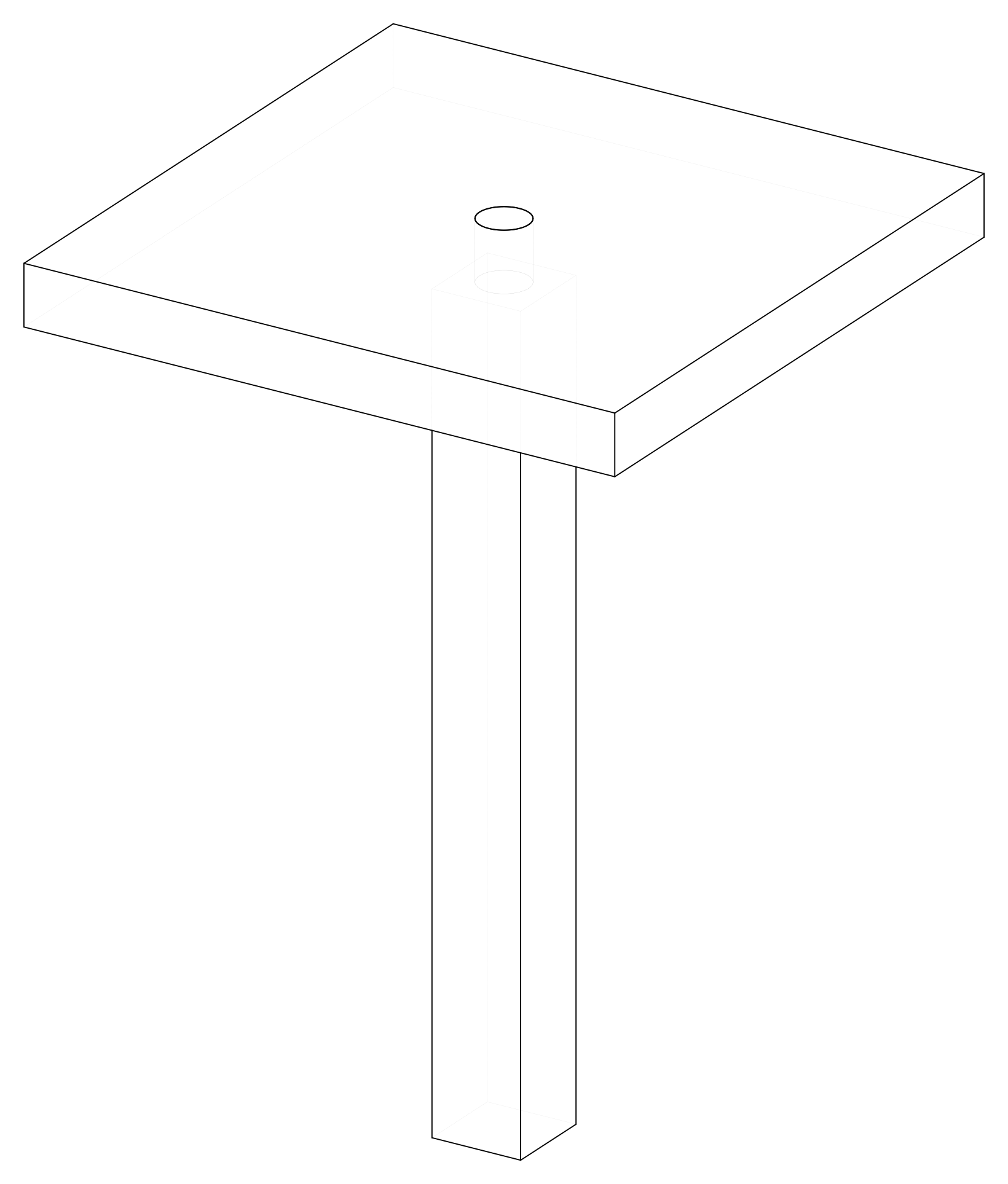
A square leg with a round tenon through a seat, flush with its top.
-
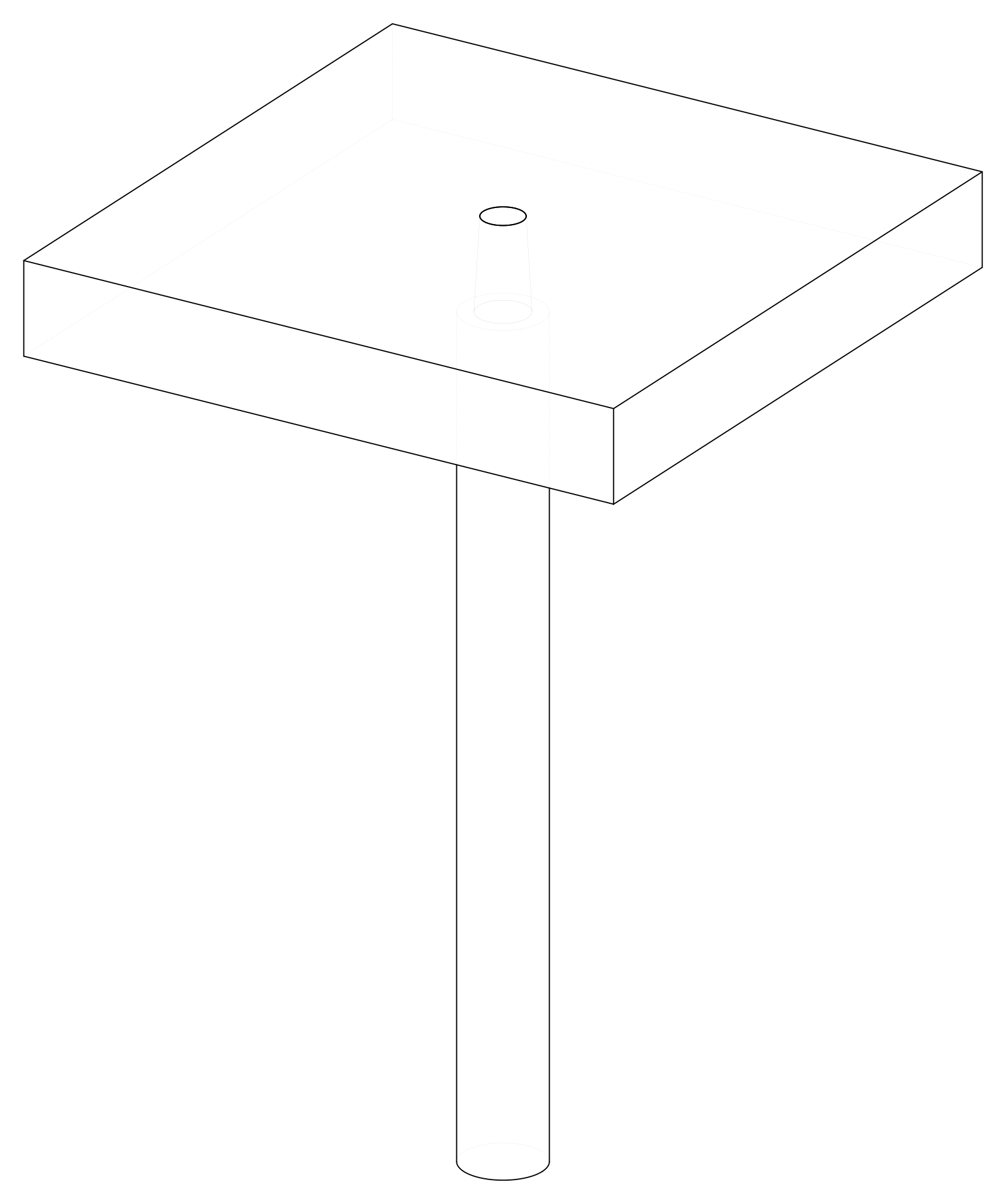
A round leg with a tapered tenon through a tapered (reamed) hole in a seat, as in a Windsor chair (not splayed yet).
-
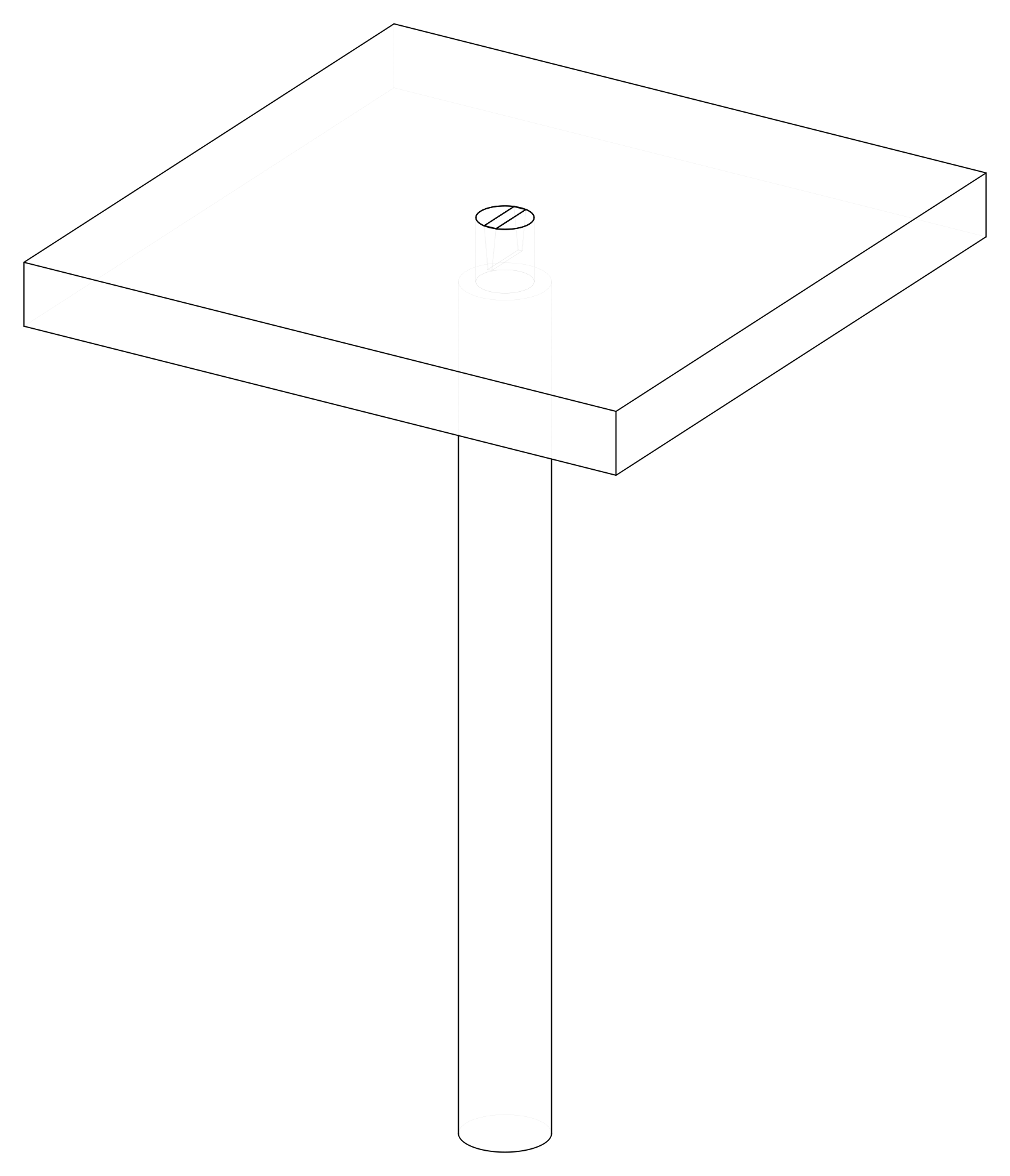
A round leg through a stool's seat, held by a wedge in a kerf across the grain of the seat.
-
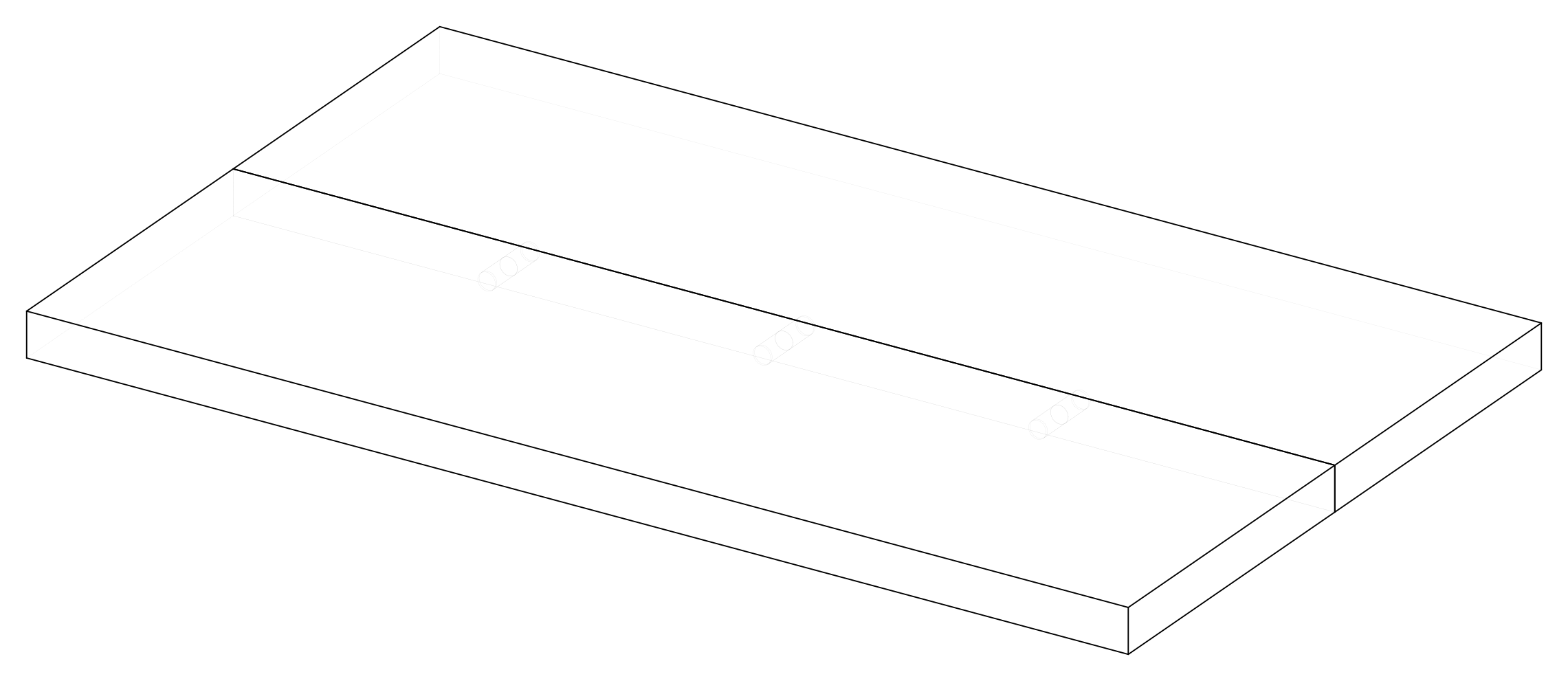
Two boards glued edge to edge, aligned by three dowels, 15 mm into each.
-
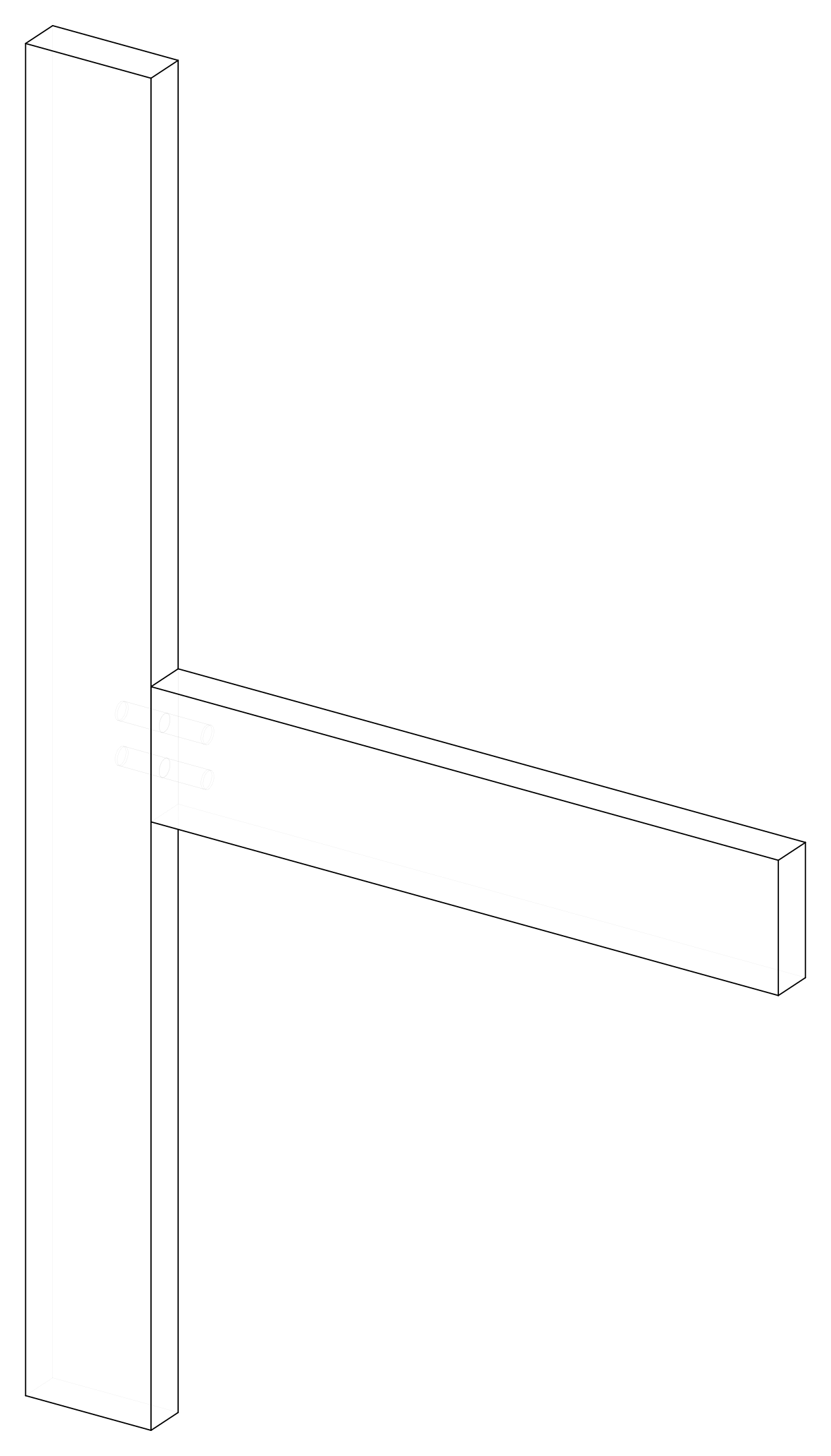
A rail butted against the edge of a stile, joined by two dowels across its width, 20 mm into each (a dowelled butt joint).
-
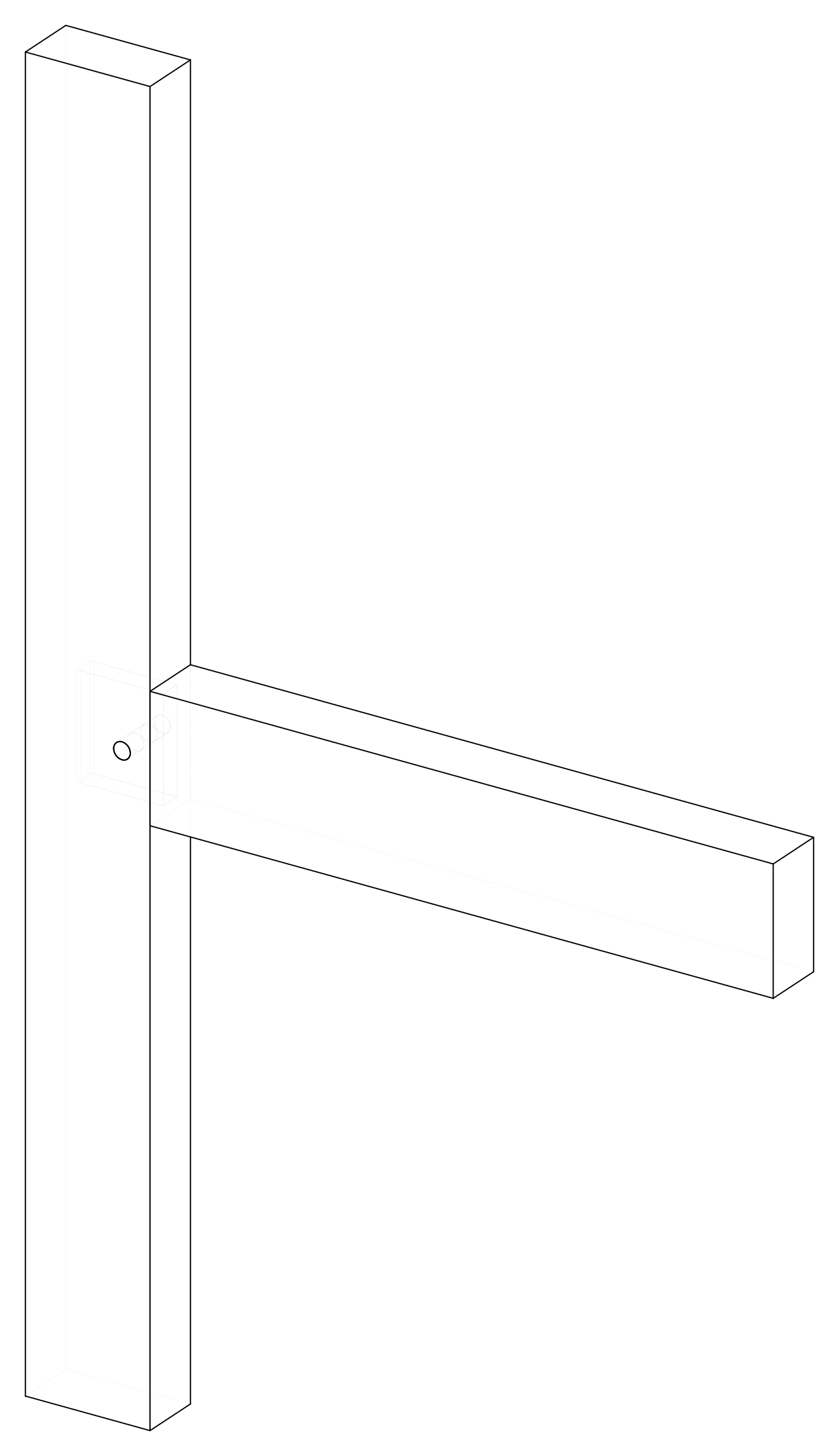
A mortise and tenon pinned by an 8 mm peg through the stile and the tenon, flush with both faces of the stile.
-
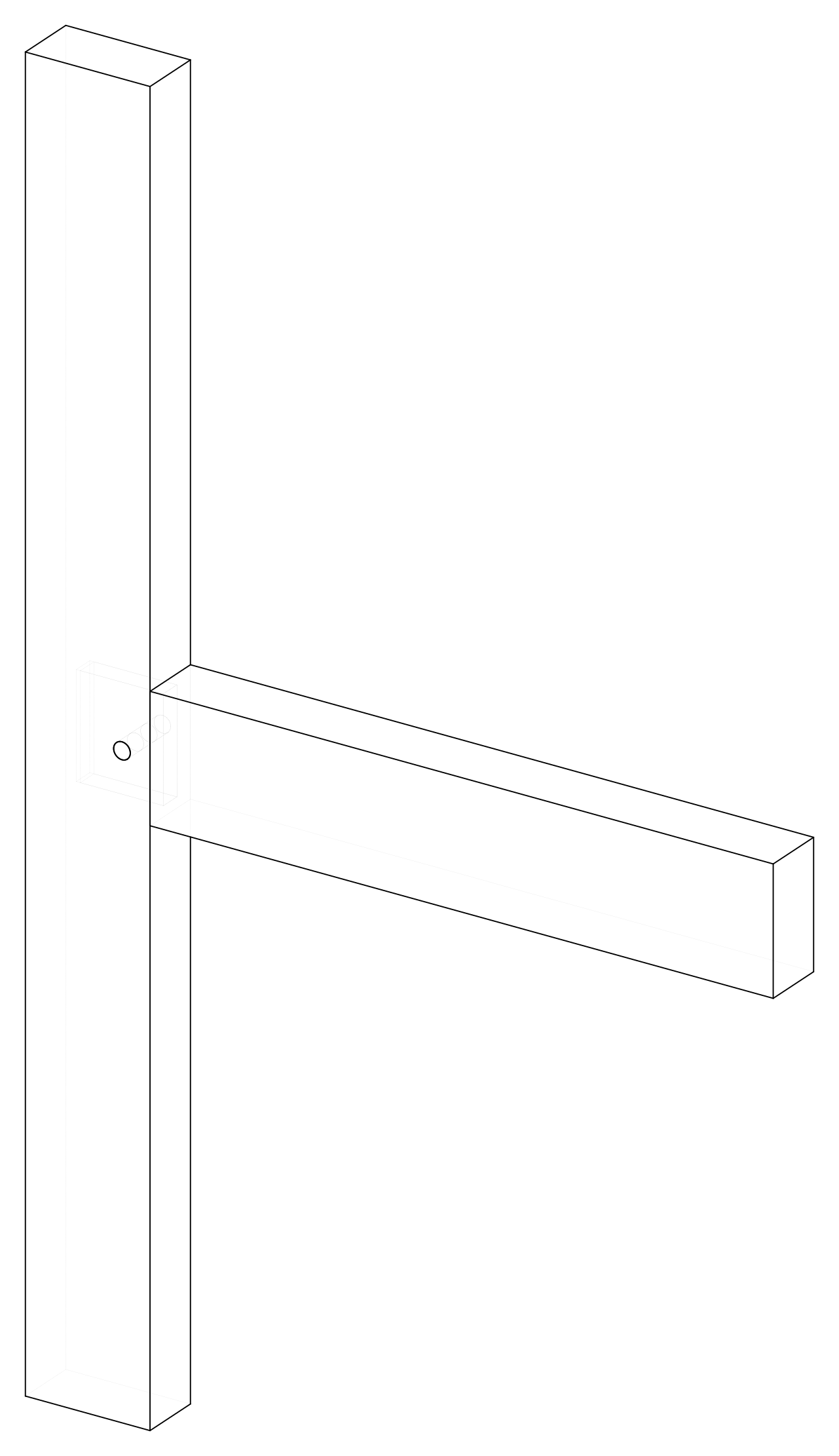
A drawbored mortise and tenon: the hole in the tenon drilled 1.5 mm closer to the shoulder, so the peg pulls the shoulders tight (shown assembled, the holes straight).
-
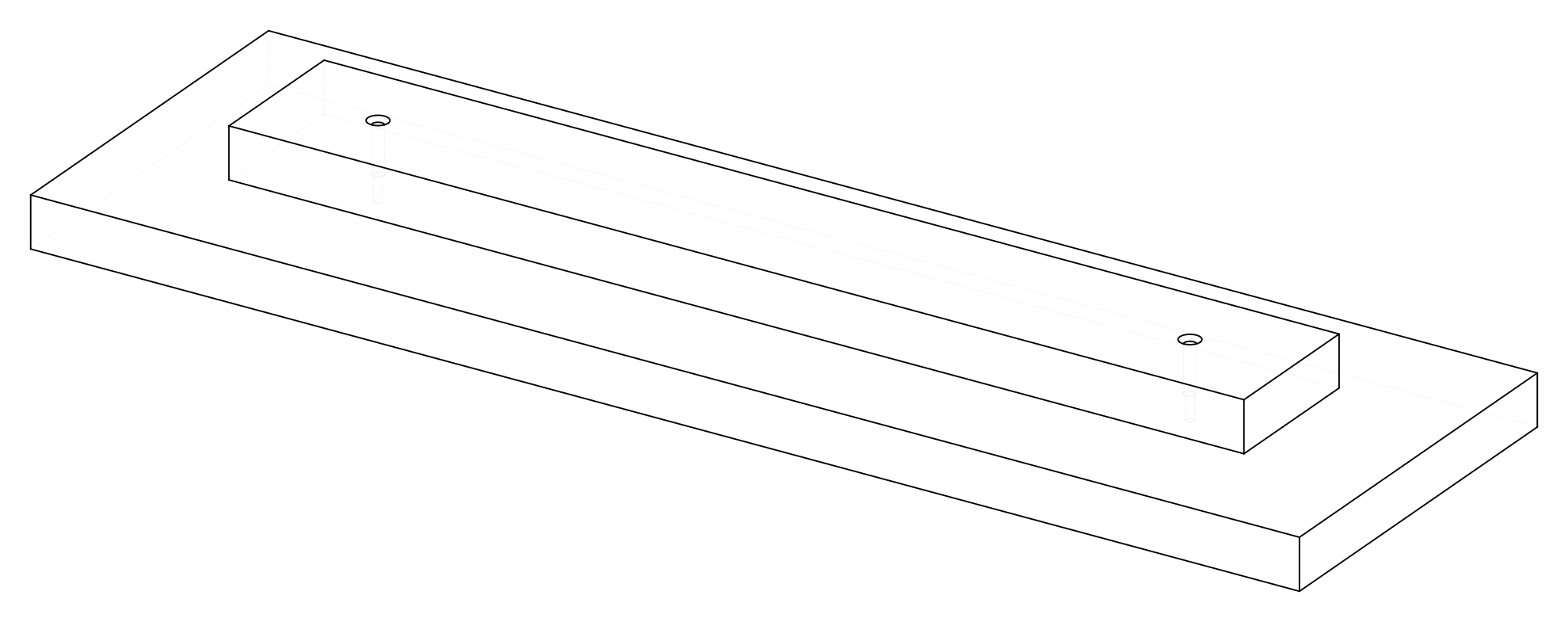
A batten screwed to a board (e.g. the ledge of a door, seen from the back), two 4 mm screws in countersunk clearance holes.
-
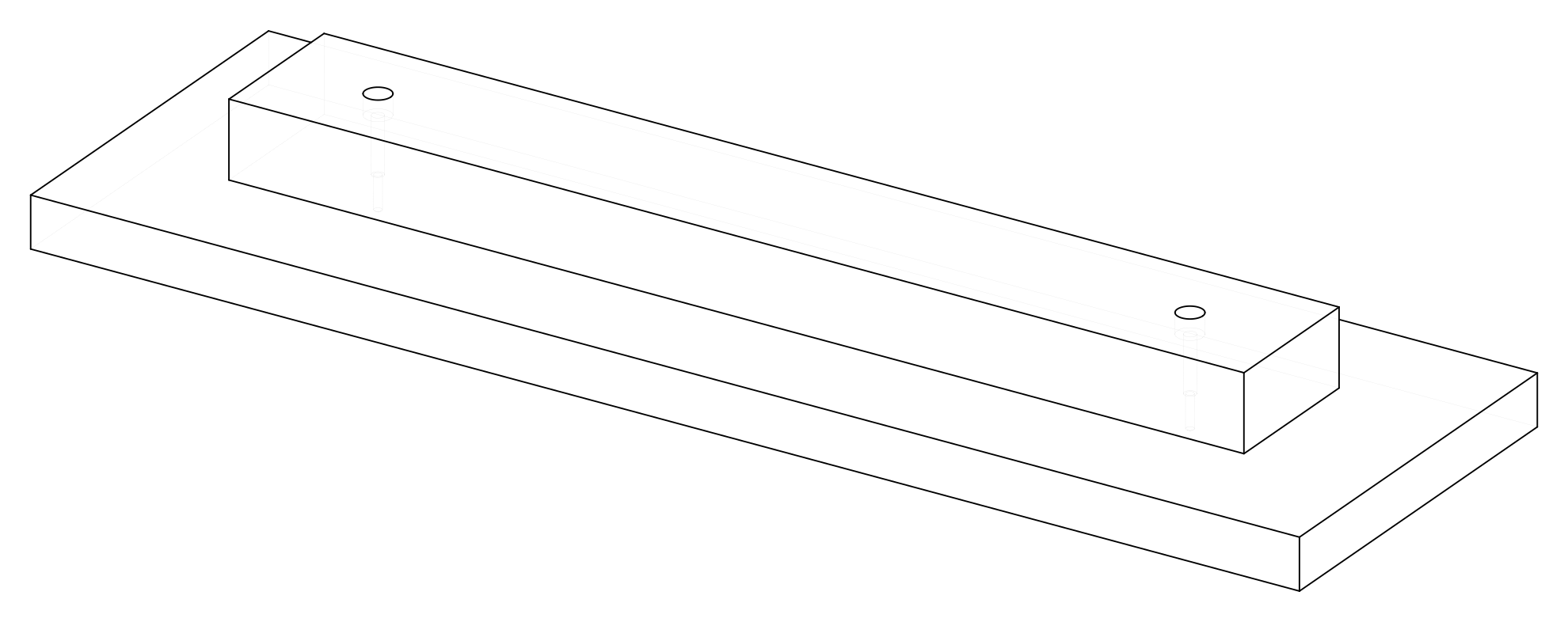
A thick batten screwed to a board, the screws' heads sunk in counterbores 8 mm deep, to be closed by plugs.
Frames
Frames of two stiles and two rails, frames with a panel, a shoji lattice.
-
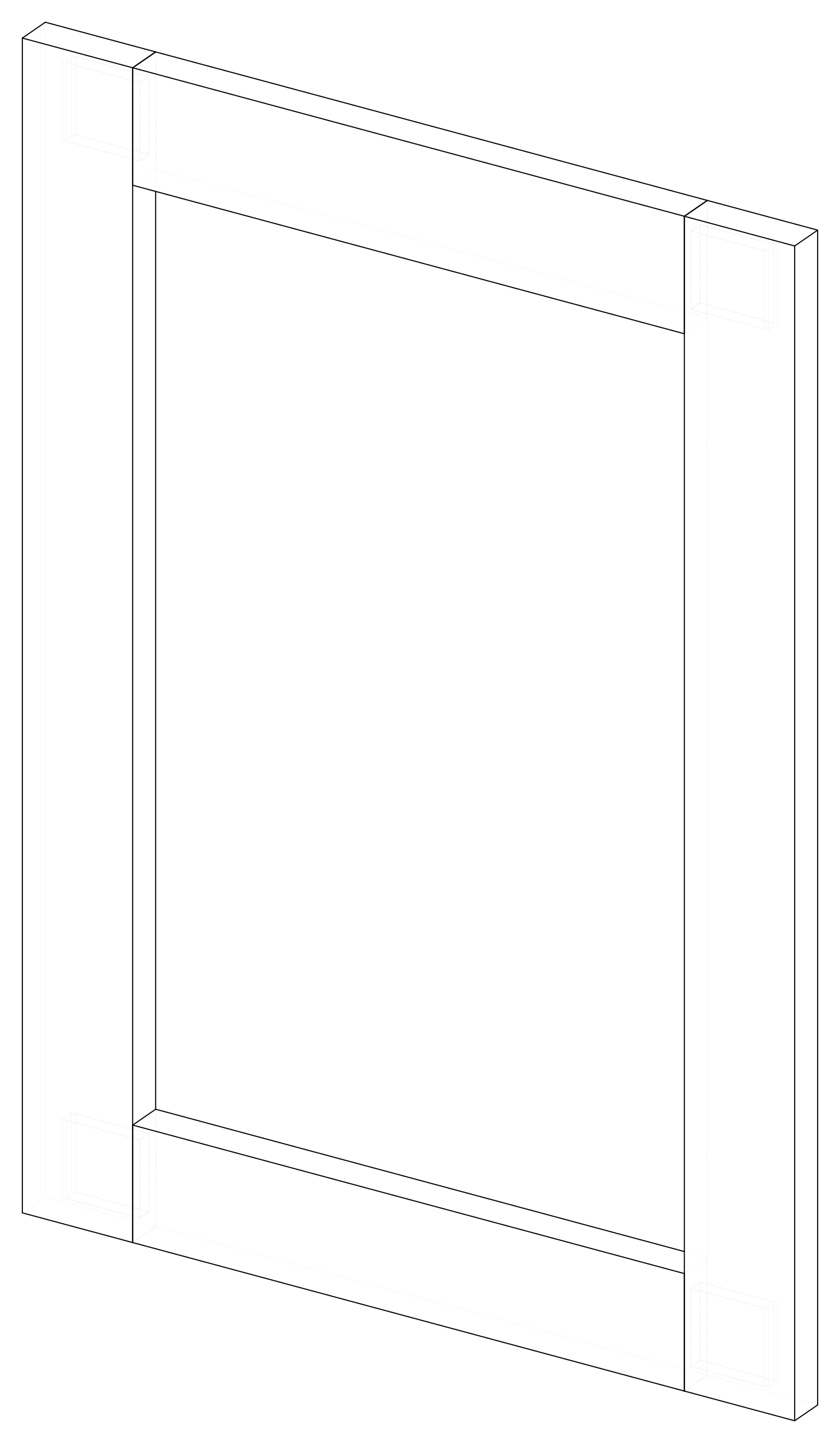
Two stiles and two rails, the rails tenoned into the stiles at their ends.
-
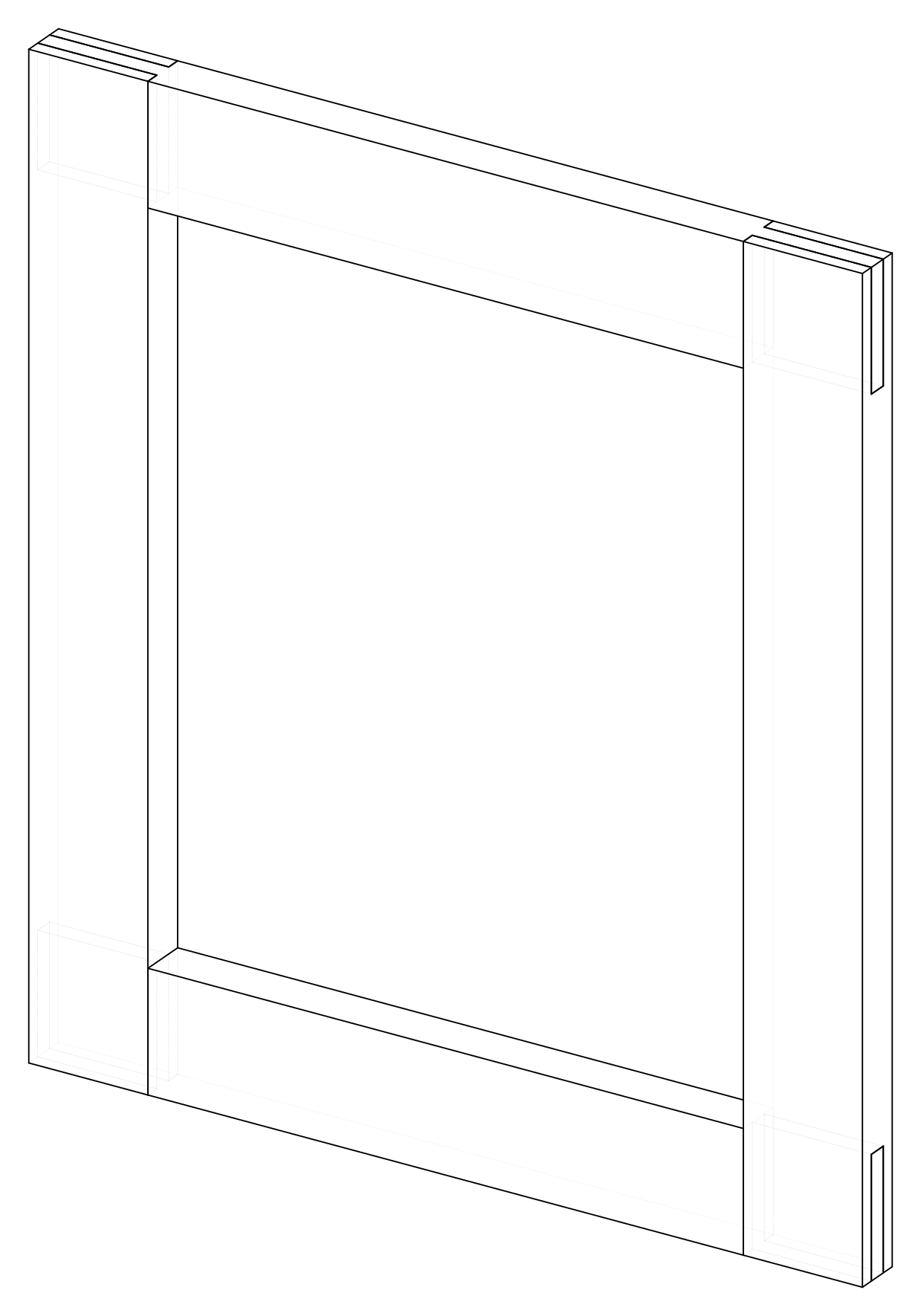
A frame with bridle joints at the corners.
-
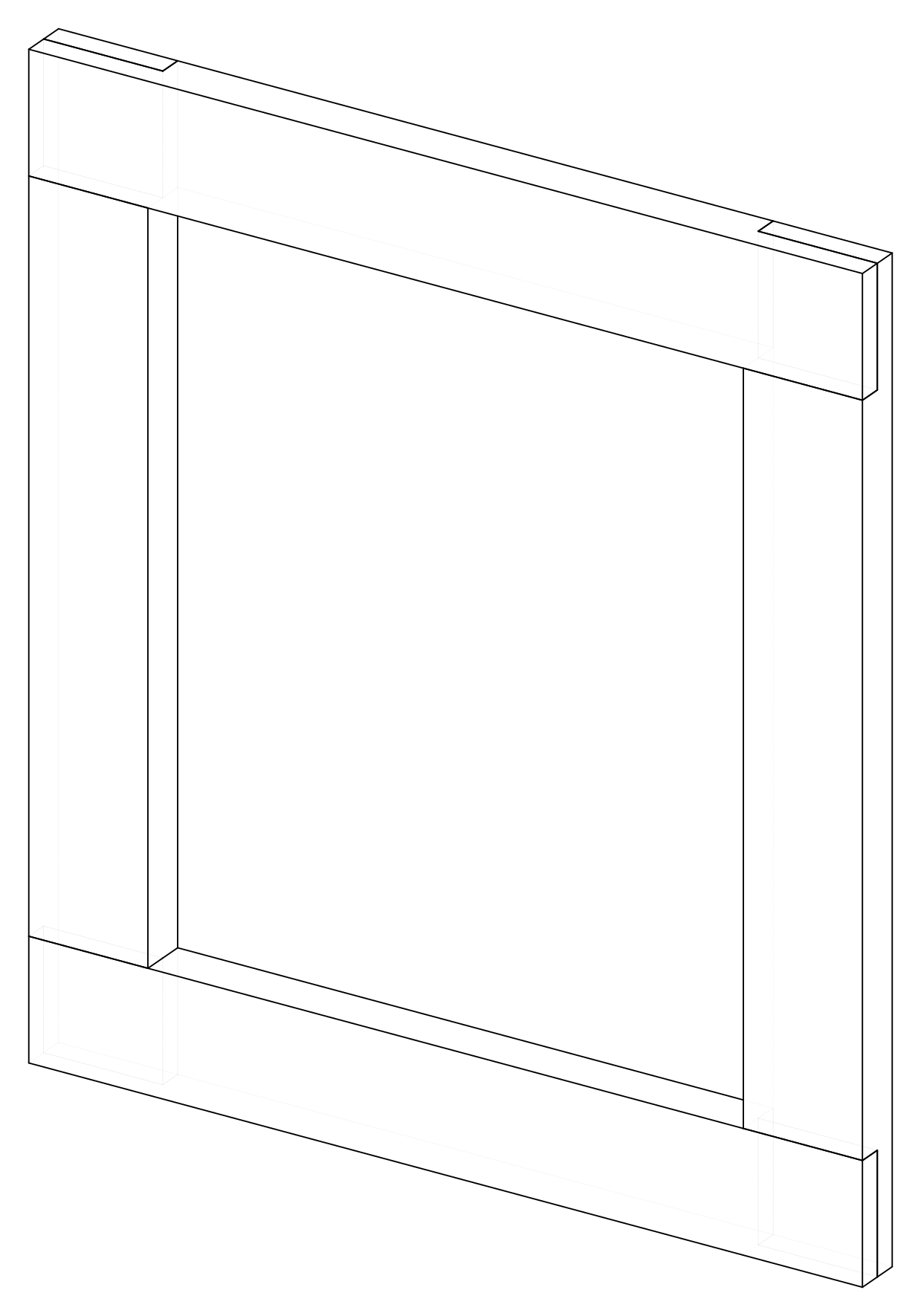
A frame with half-lap corners.
-
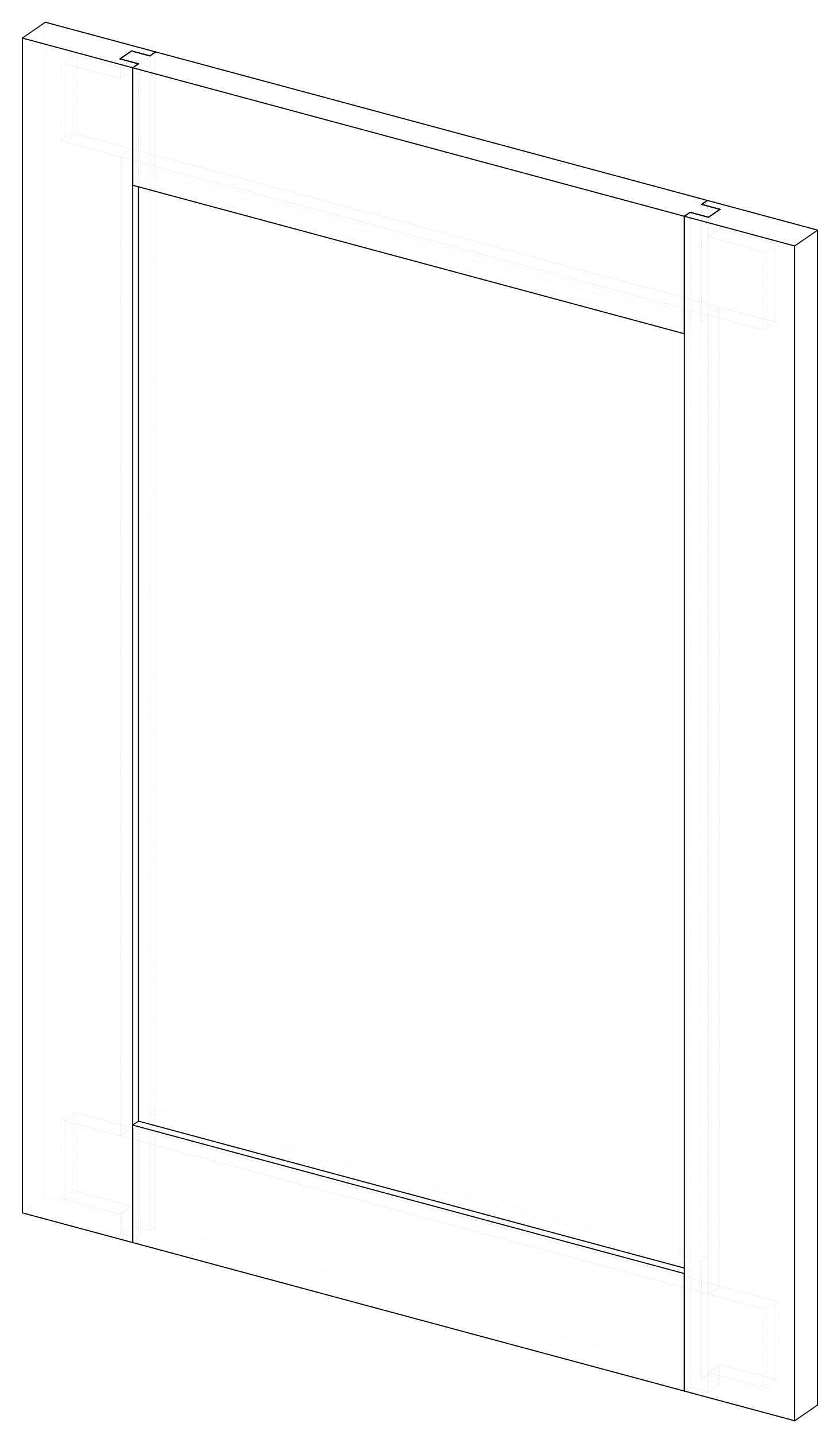
A mortise-and-tenon frame with a panel in grooves along its inside edges.
-
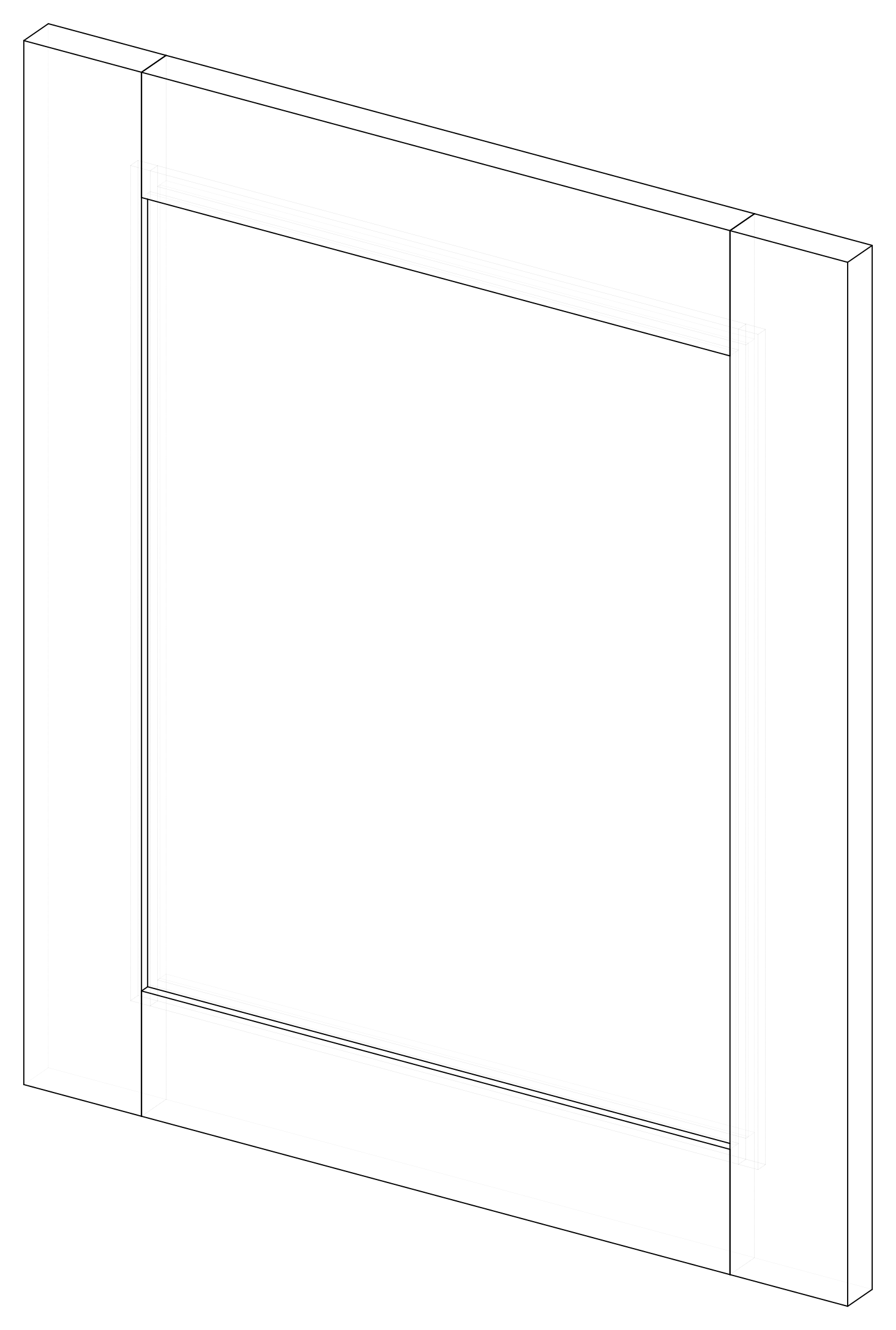
A frame butt-joined at the corners, a panel tongued on all four edges into grooves along its inside edges.
-
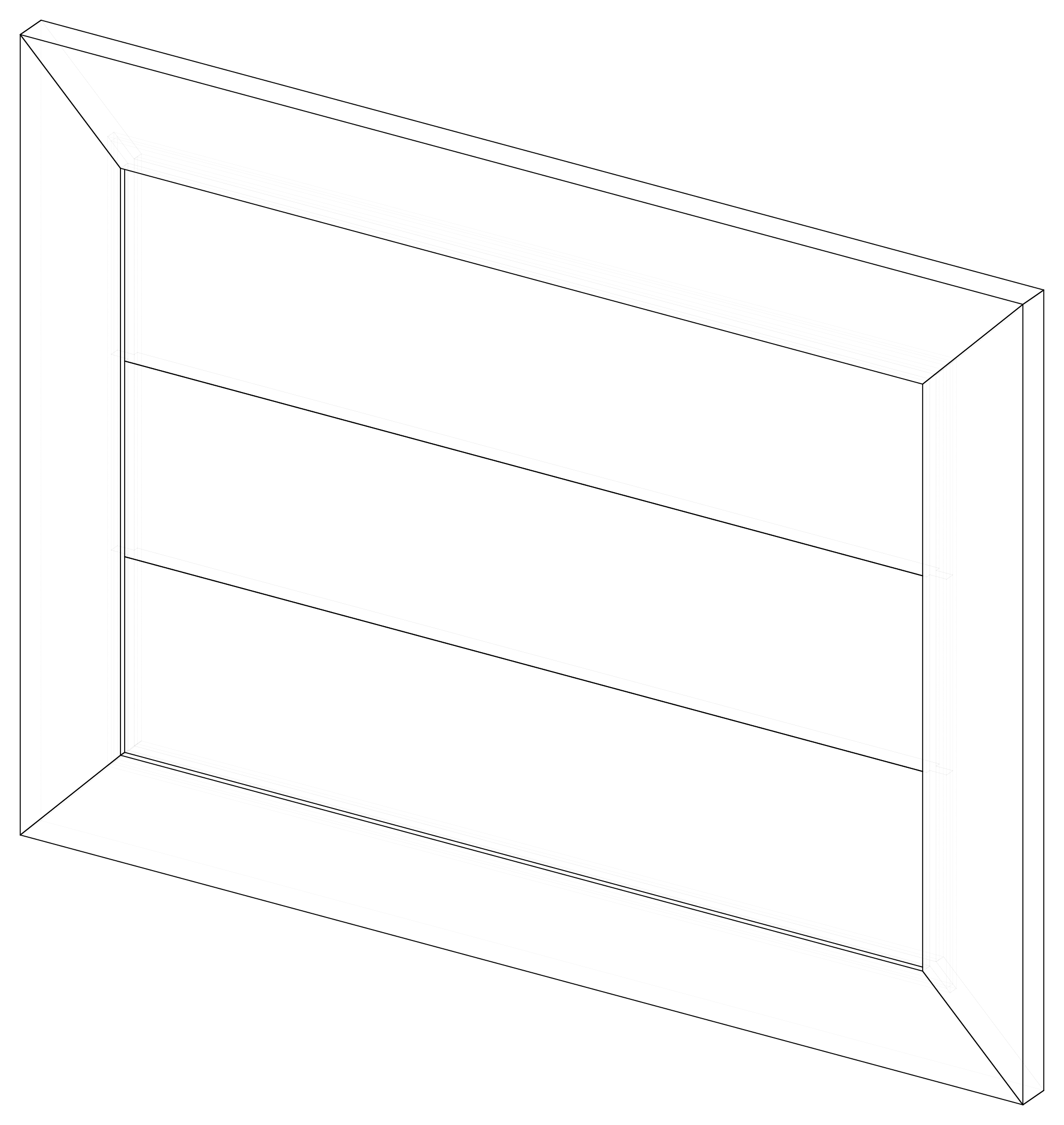
A frame mitred at the corners, a panel glued up from
boardsboards tongued into a groove along its inside edges; outside sizes. -
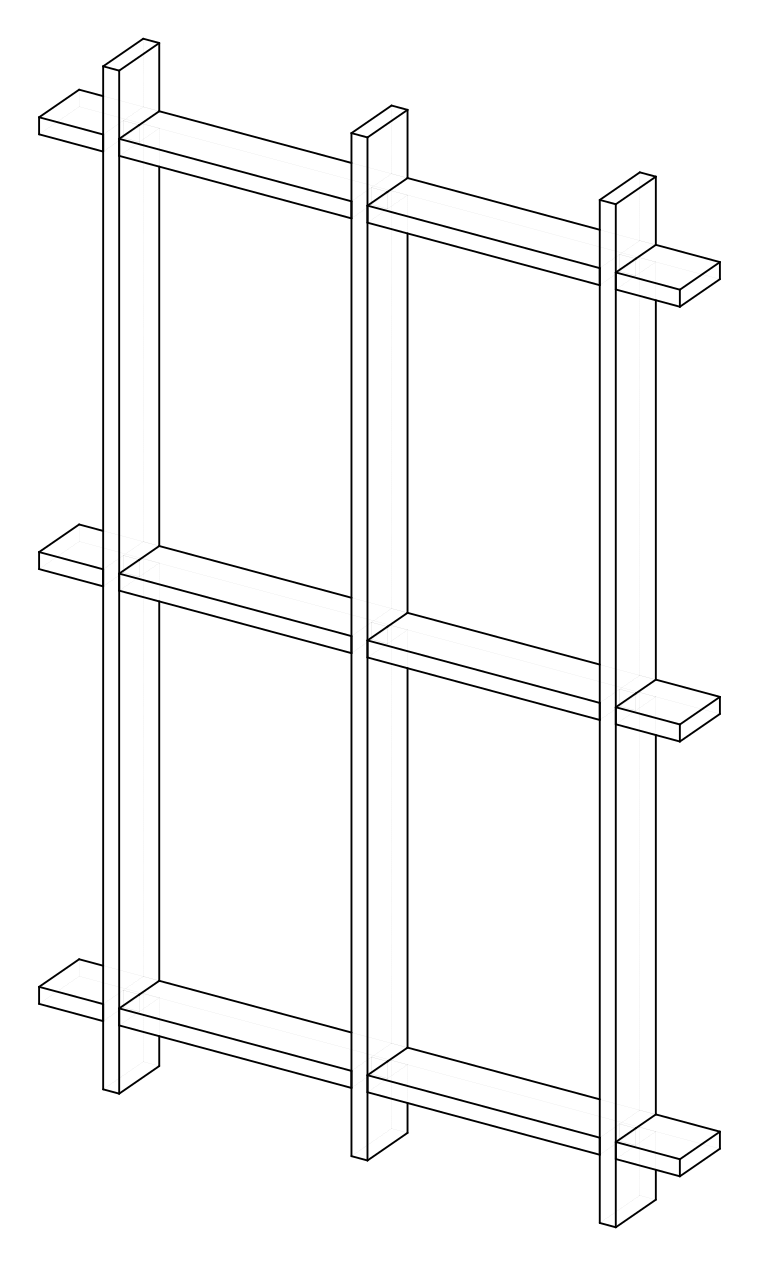
A small shoji lattice of three vertical and three horizontal bars, crossing in nine cross laps; outside sizes.
-
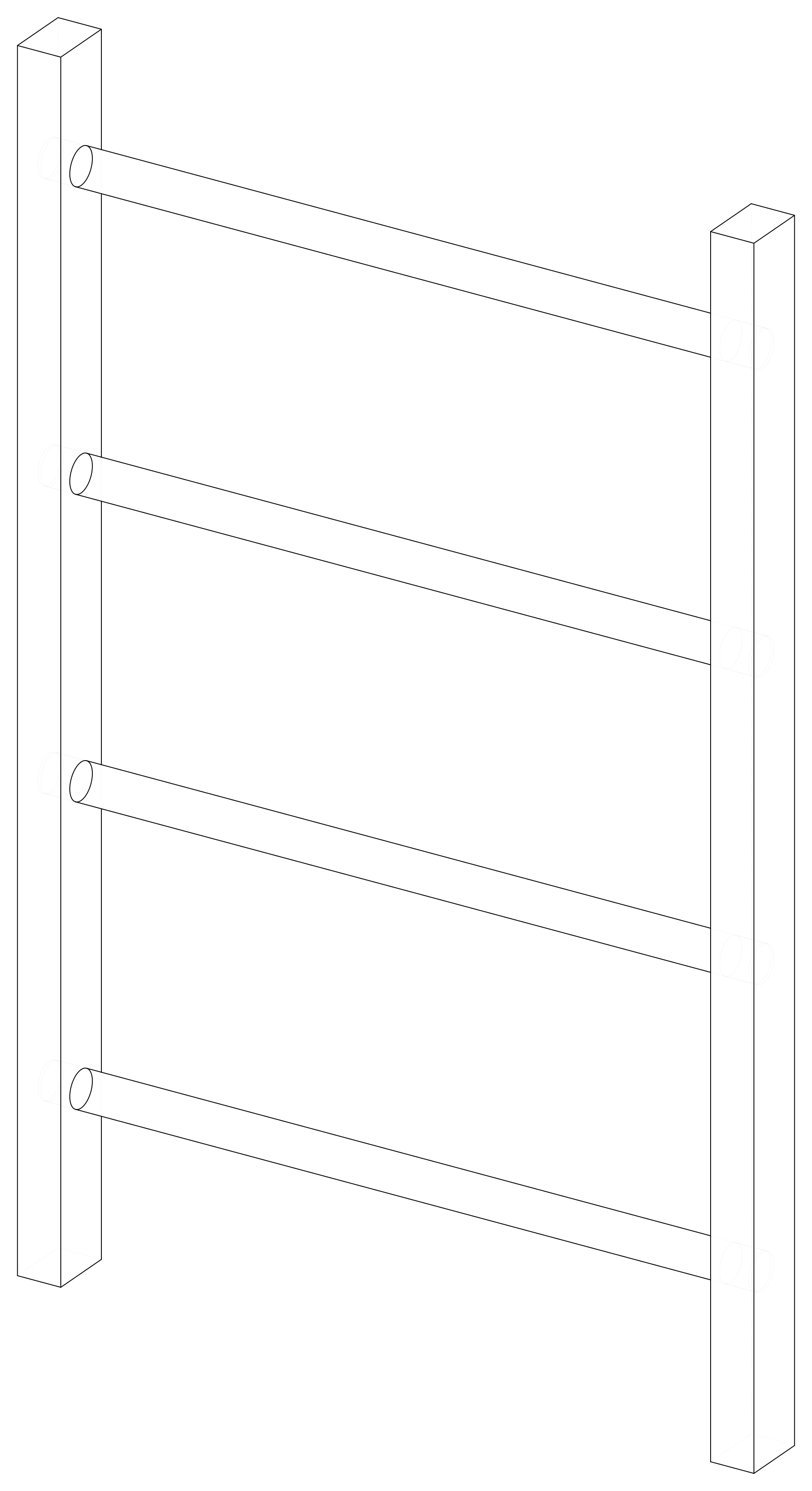
A towel rail (a short ladder): rods in blind holes in the inside faces of two stiles, from 120 above their feet, evenly up to 80 below their tops.
Projects
Small practical projects: shop tools, boxes, shelves, drawers, frames, tables, a chair, stools, a coat rack and a workbench.
-
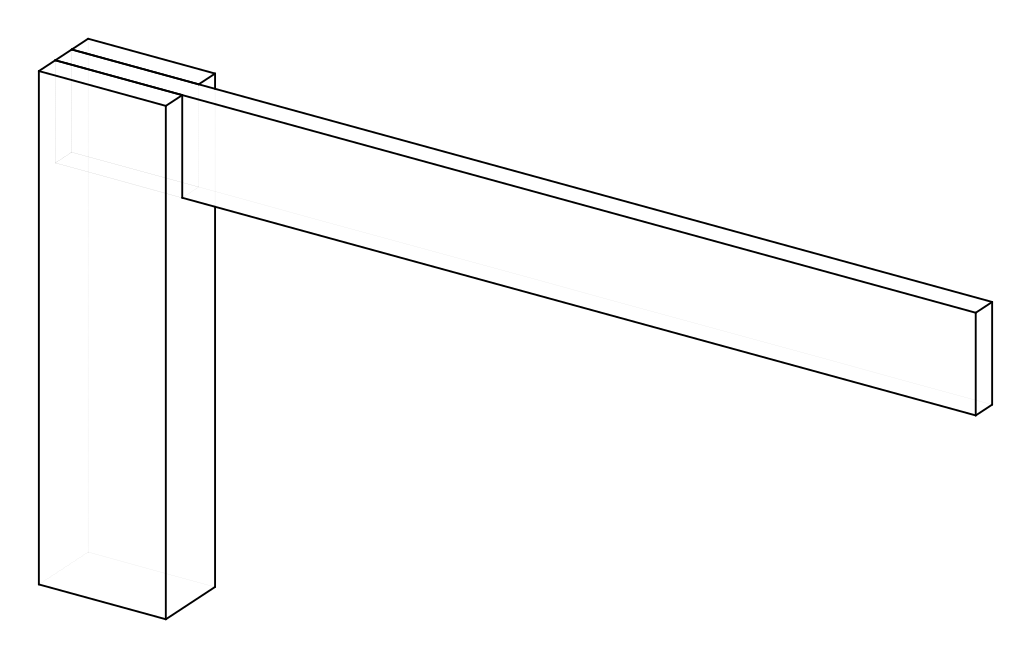
A try square: a thin blade in a bridle slot at the end of a thick stock.
-
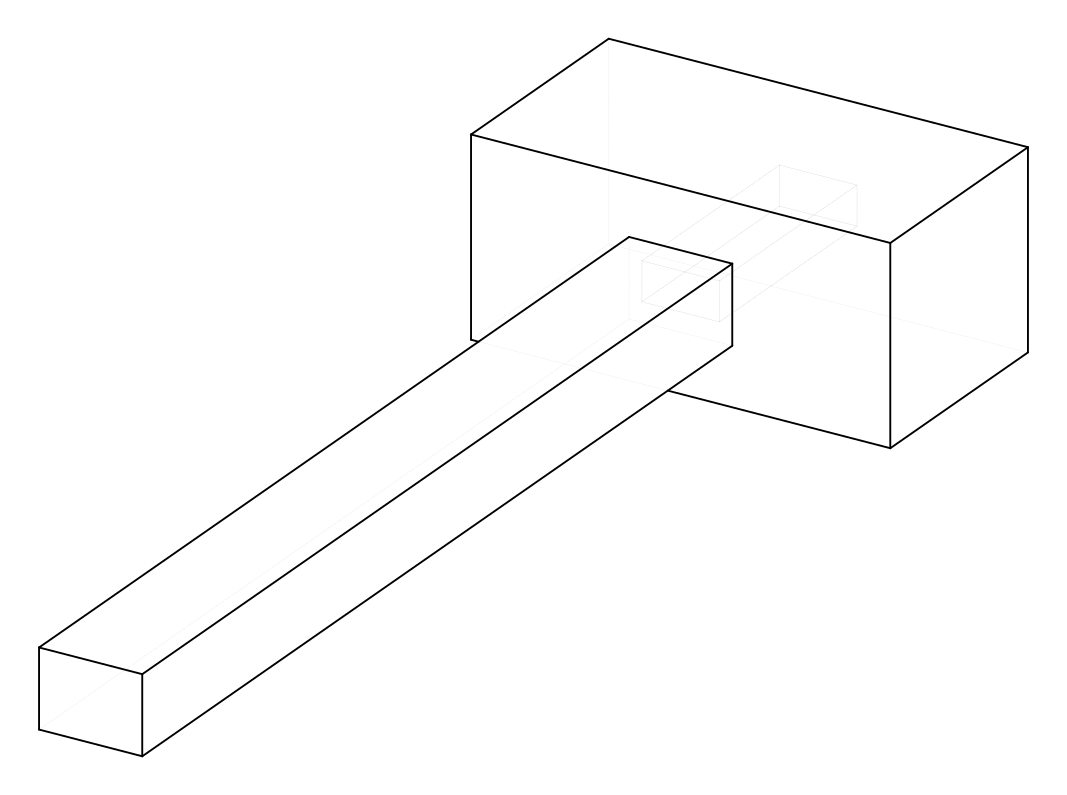
A mallet: a long handle tenoned through the middle of a big head.
-
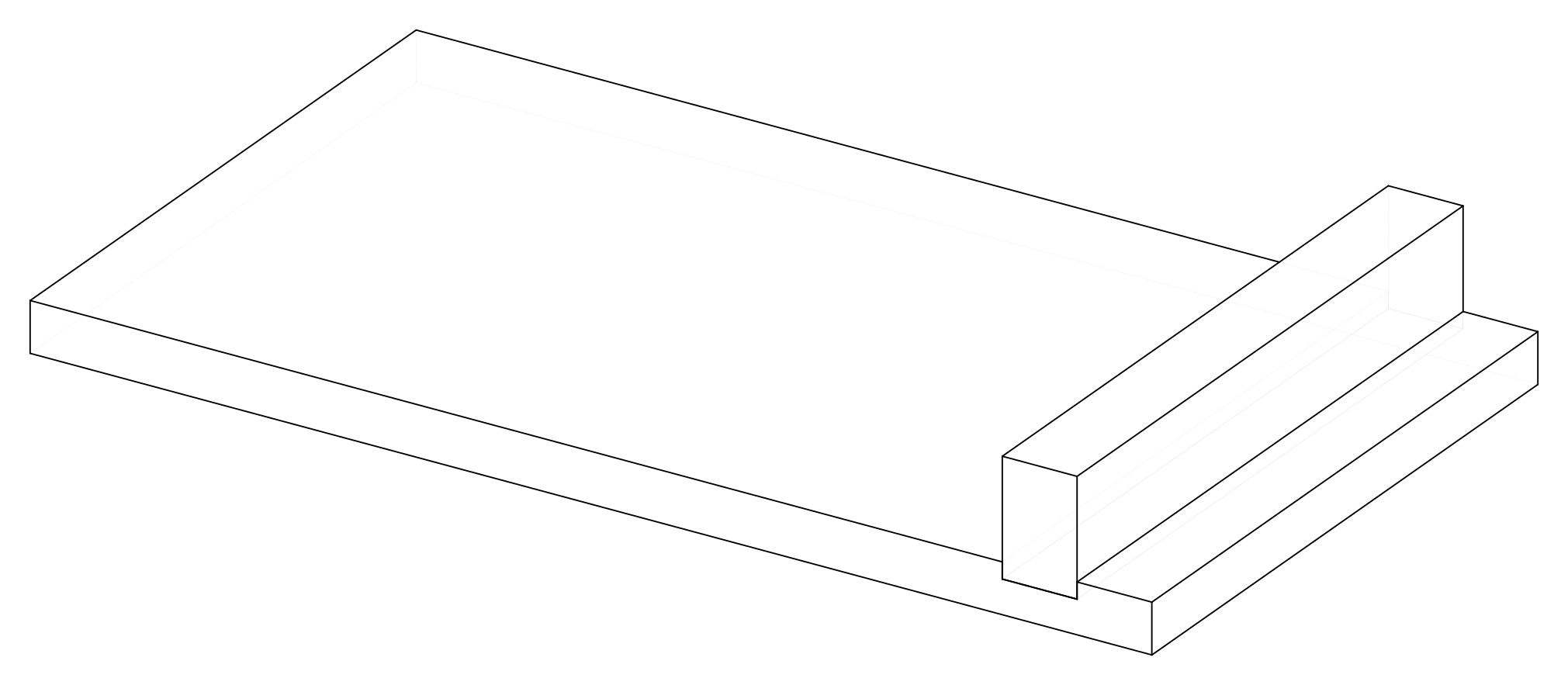
A base board with a stop block across it, housed in a dado near one end.
-
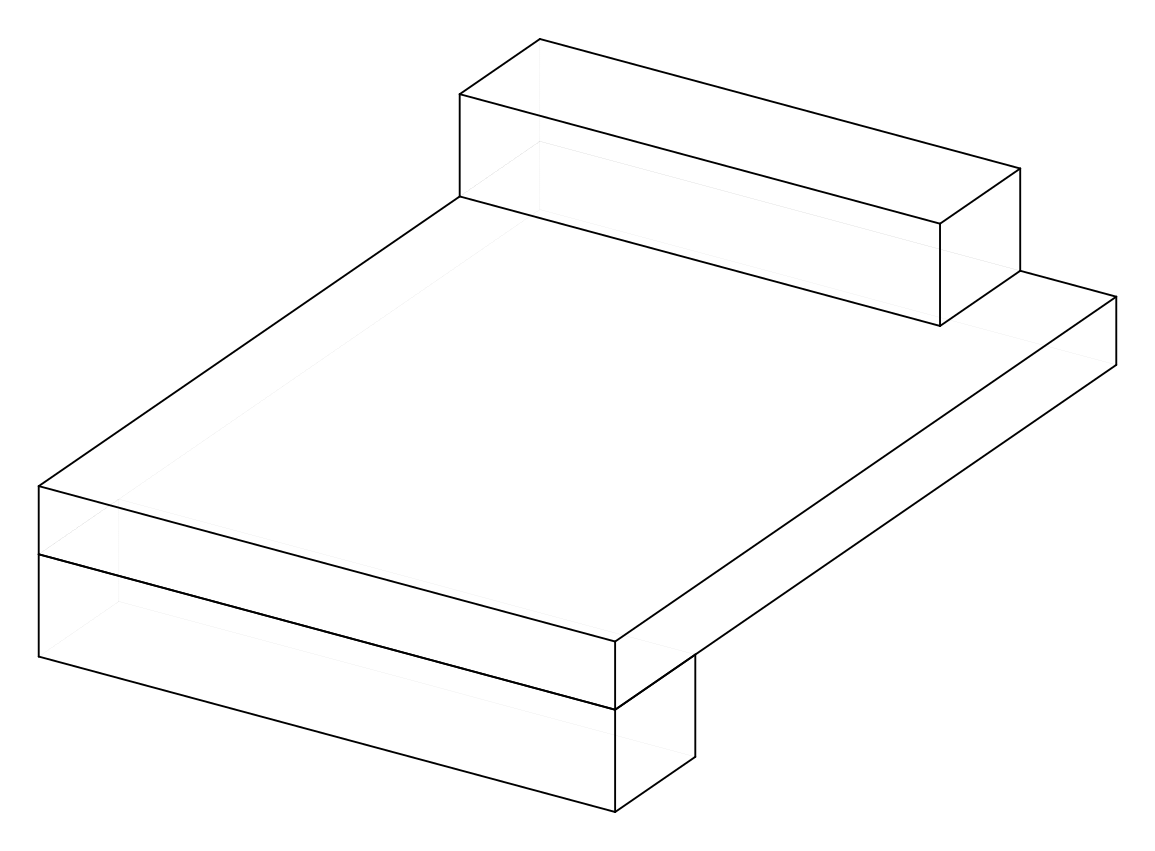
A bench hook: a base with a fence on top at the back and a hook below at the front, glued face to face across the grain.
-
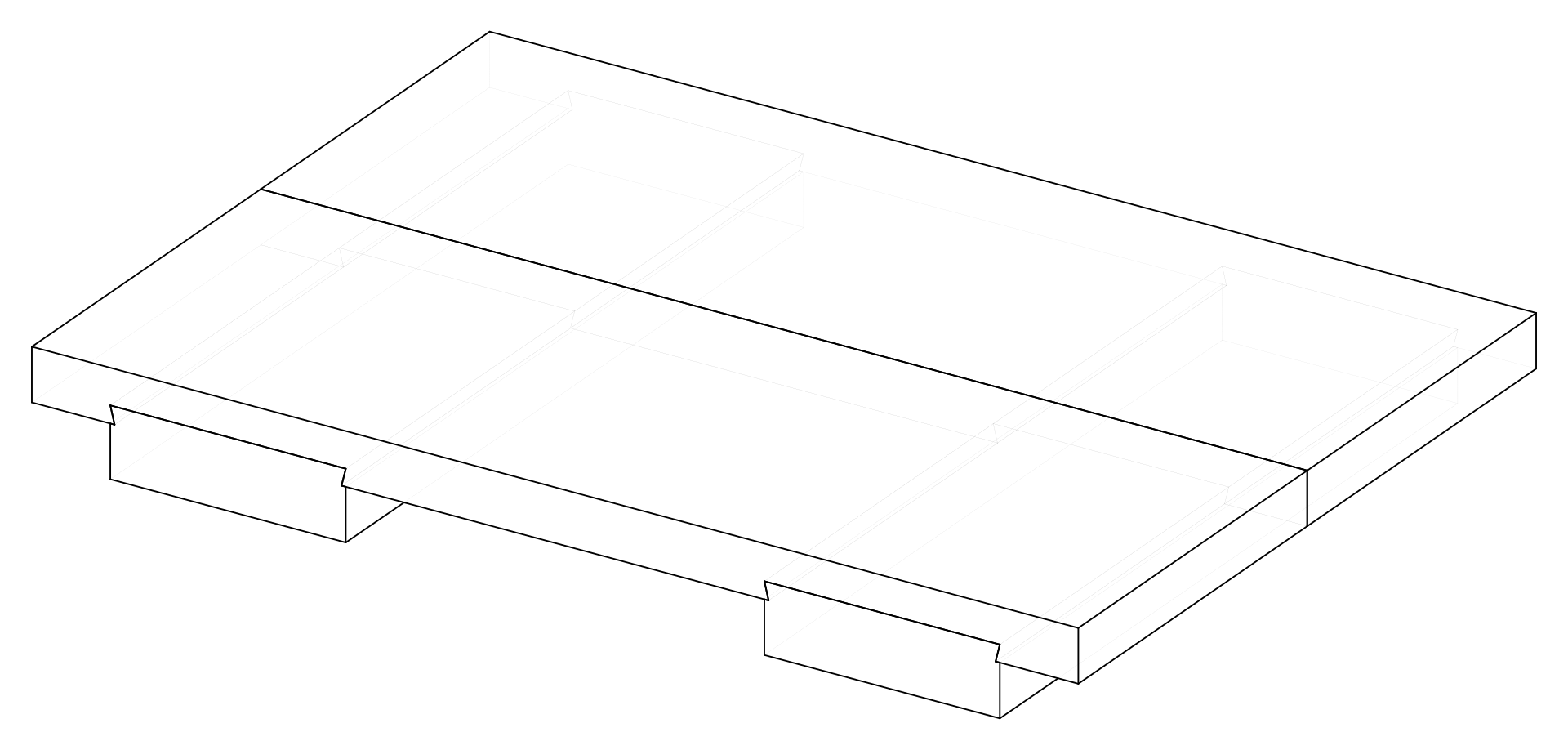
The seat of a stepstool: boards edge to edge, two battens underneath across the grain, in wide, shallow sliding dovetail housings.
-
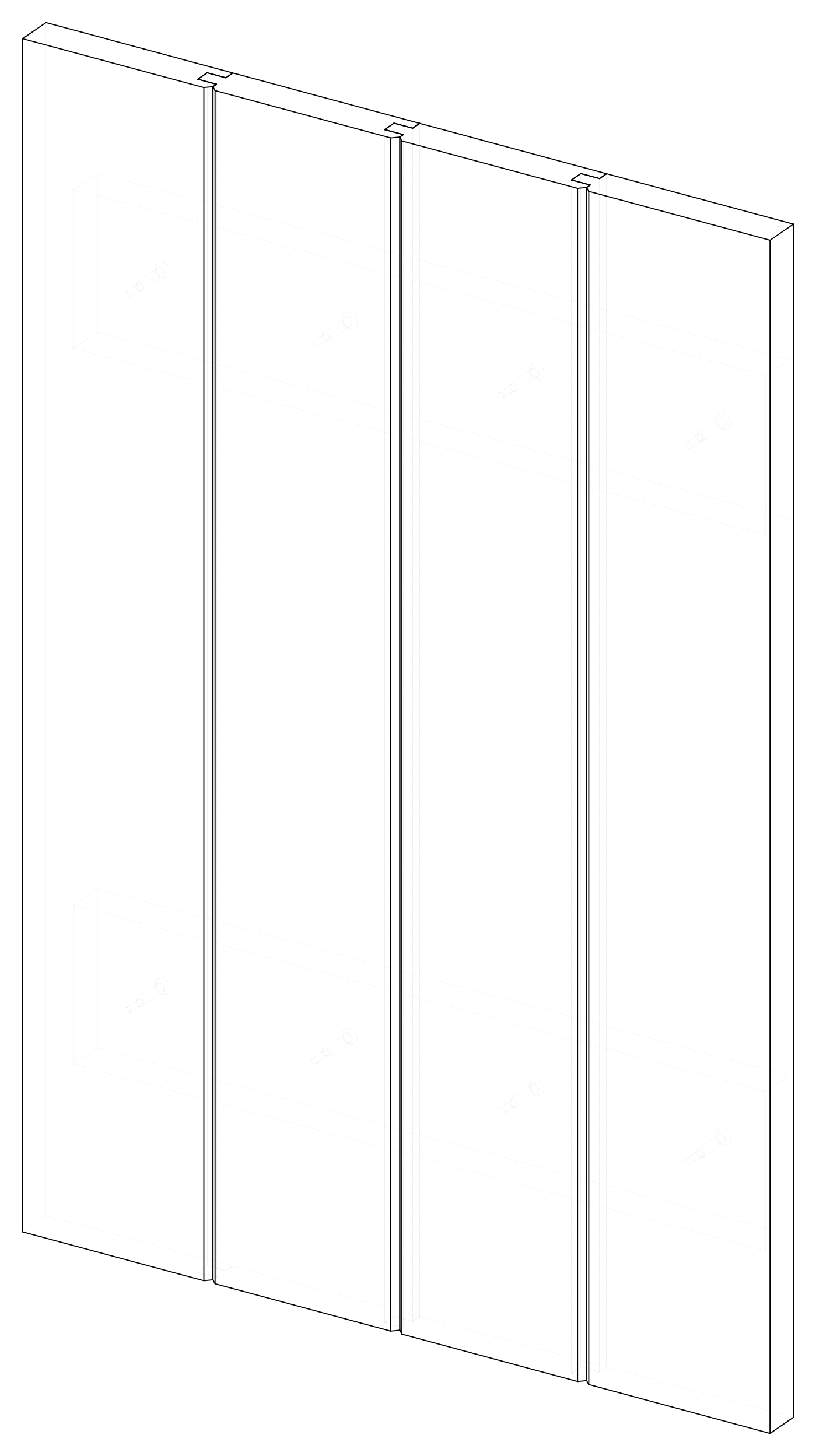
A ledged cupboard door: tongue-and-groove boards on two ledges across the back.
-
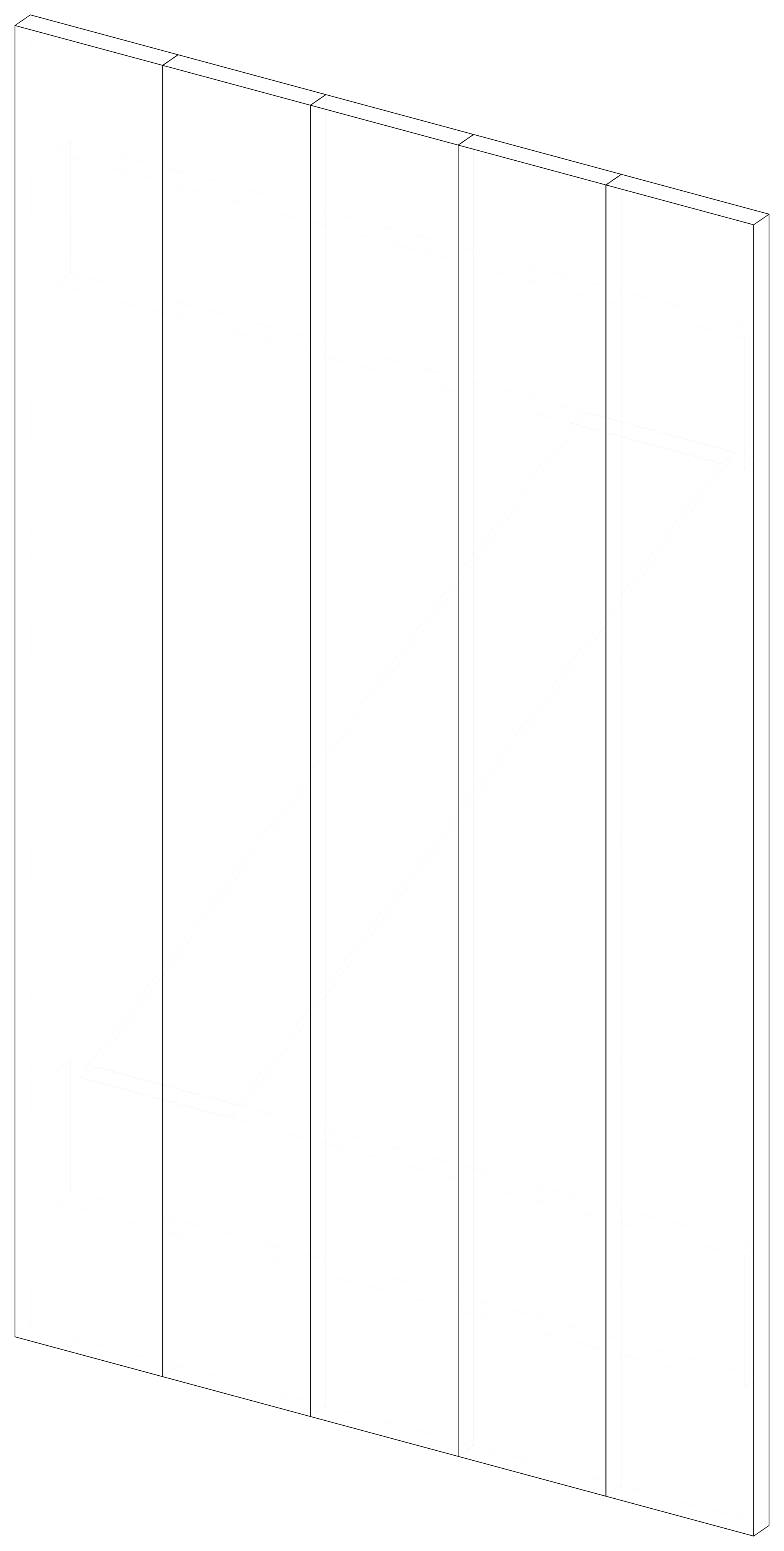
A ledged and braced door, e.g. for a shed: boards butted edge to edge on two ledges and a diagonal brace across the back.
-
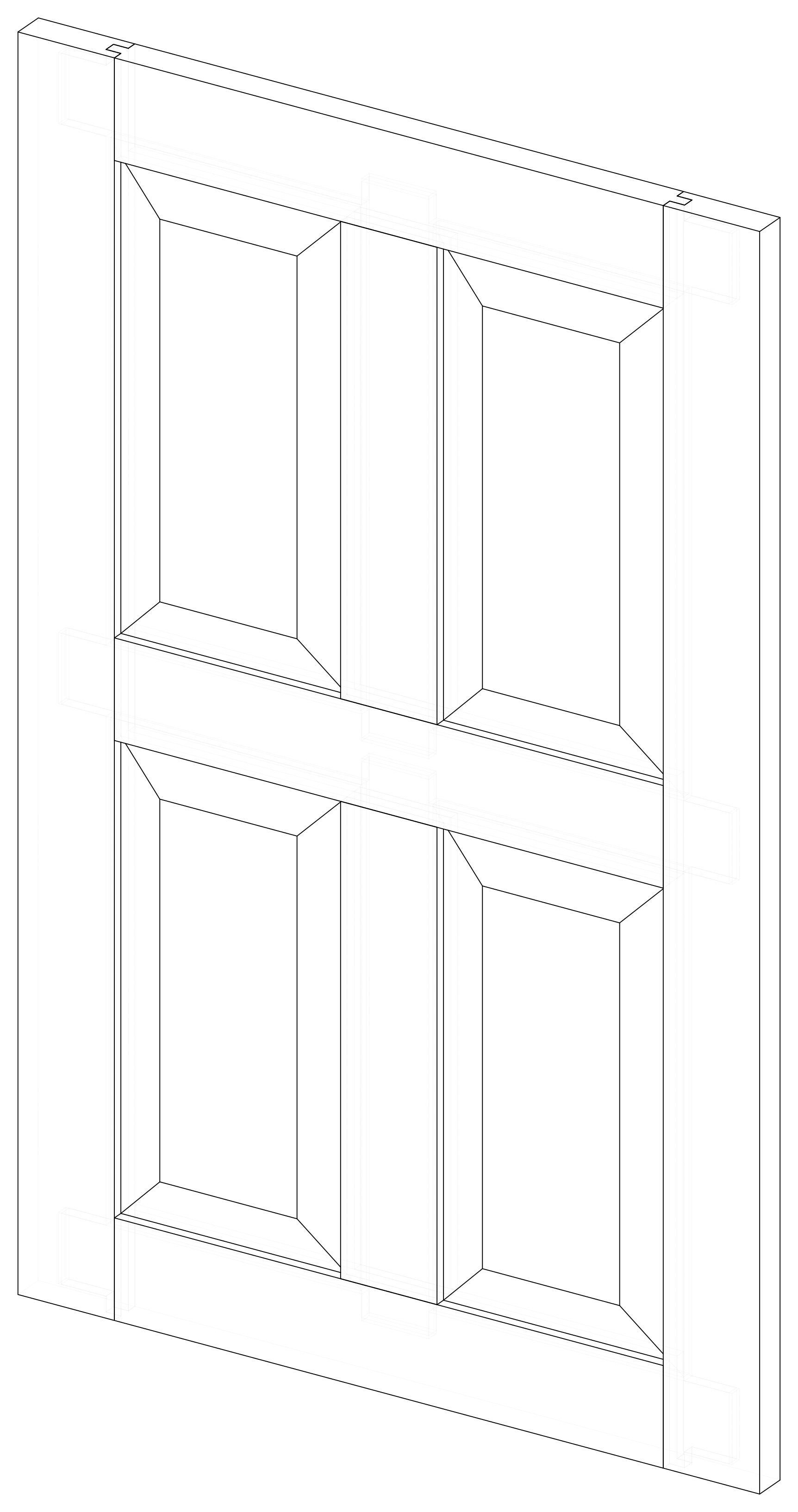
A door of four raised panels in a mortise-and-tenon frame; outside sizes.
-
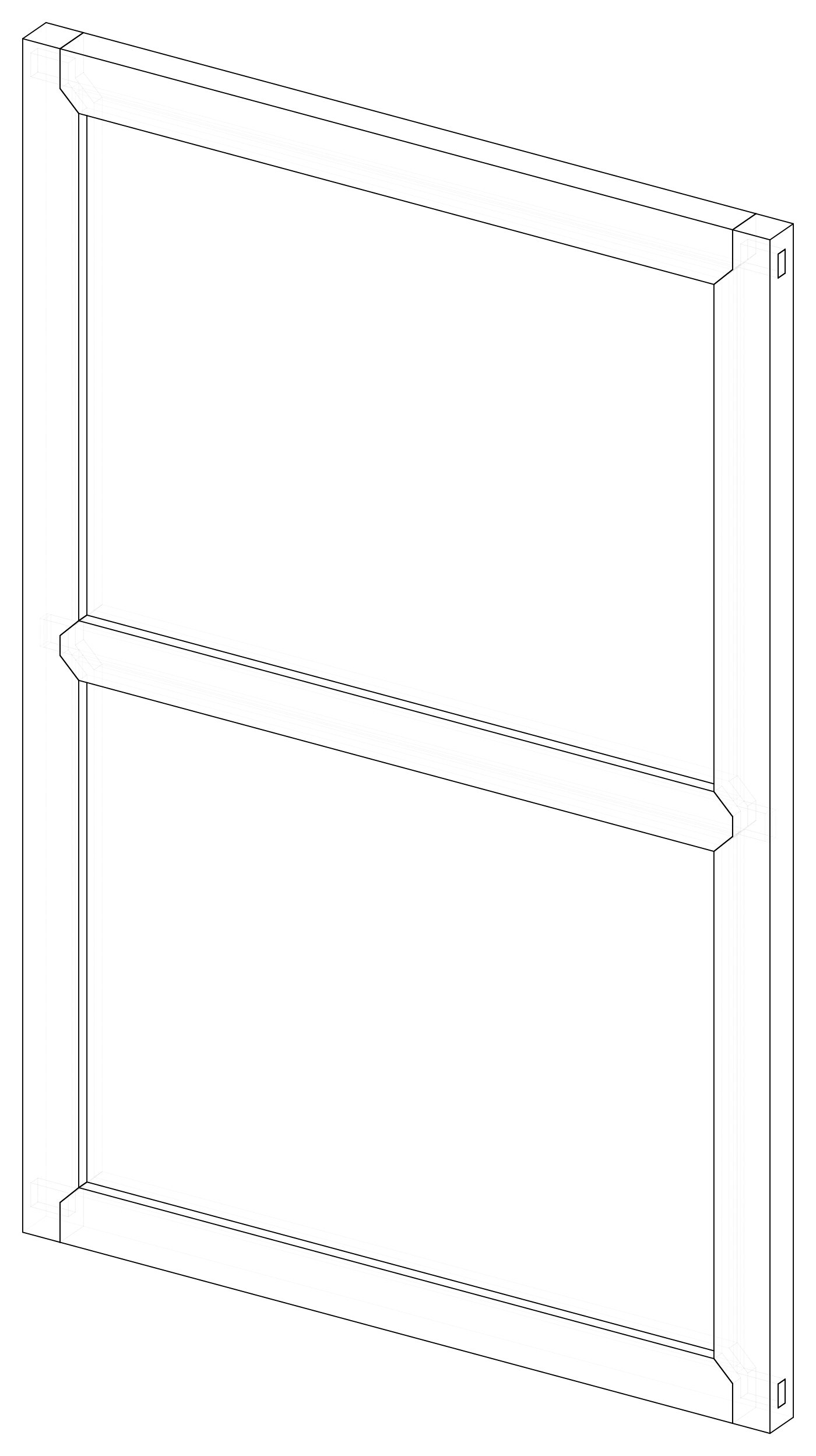
A small cabinet door of 2 x 3 cm stock with mitred shoulder tenons, a plywood panel below the middle rail and a glass one above; outside sizes.
-
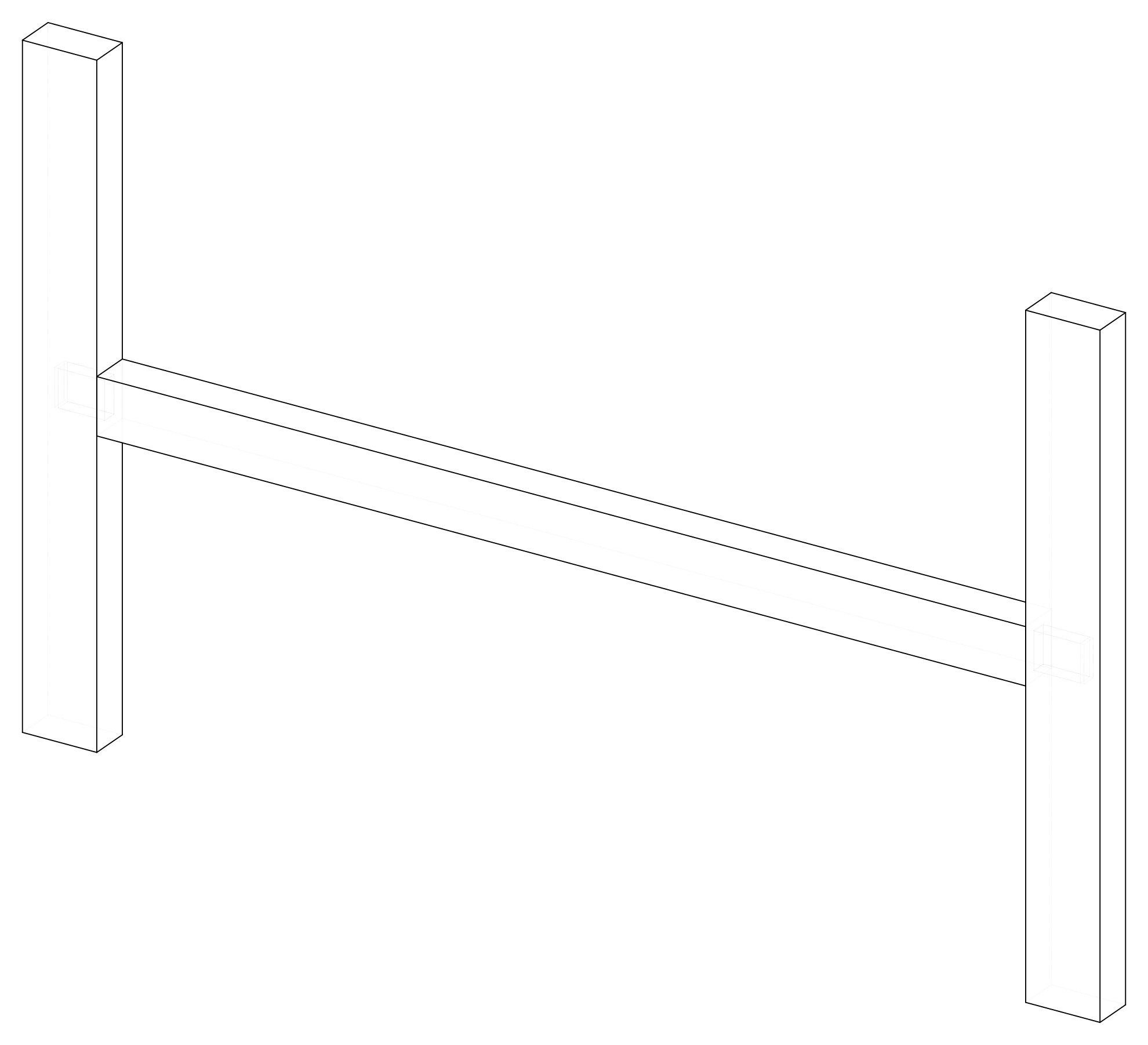
The frame of a bow saw: two arms and a stretcher between their middles, tenoned into their inner edges.
-
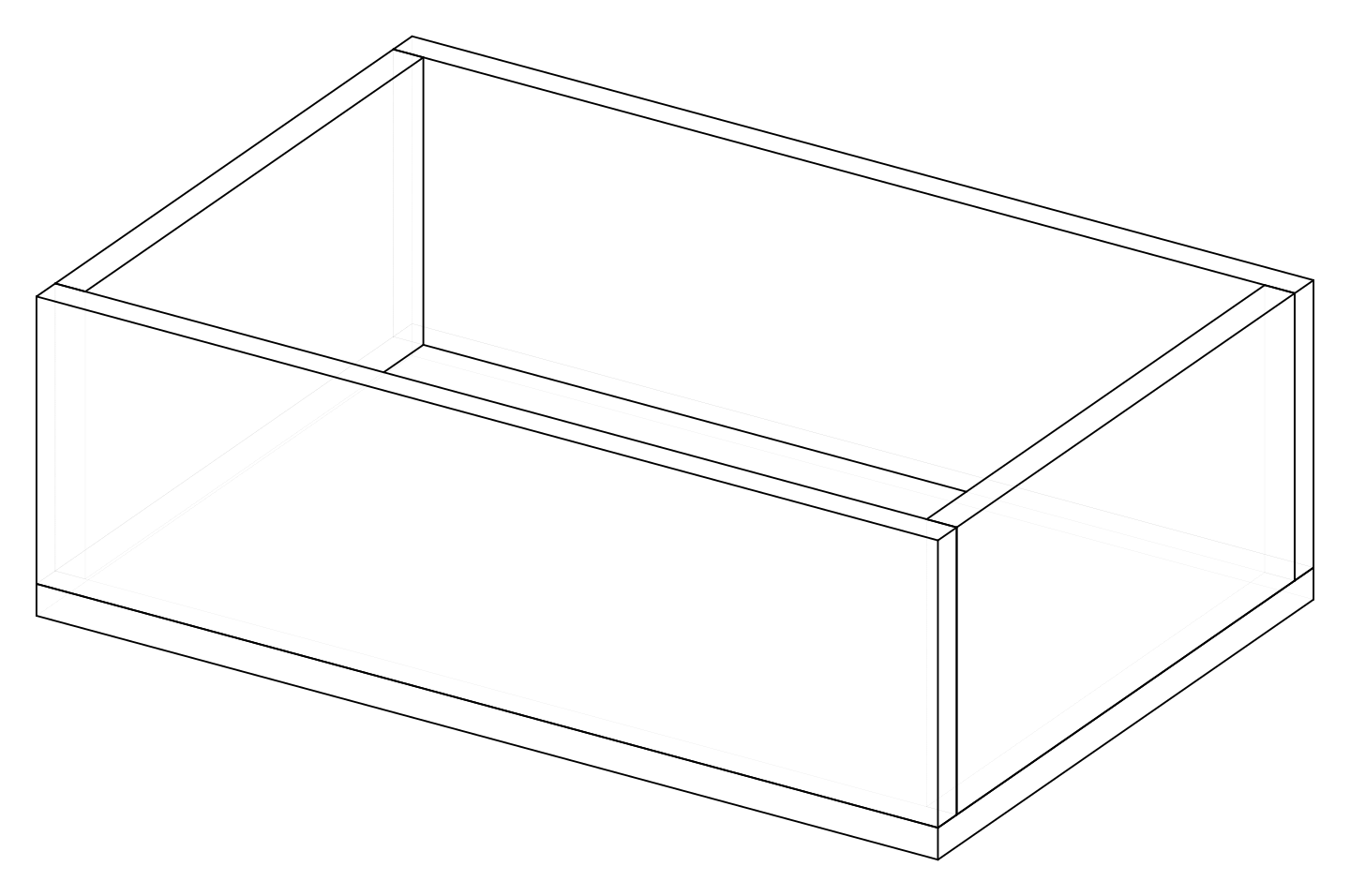
An open box: four walls butt-jointed at the corners on a bottom; outside sizes.
-
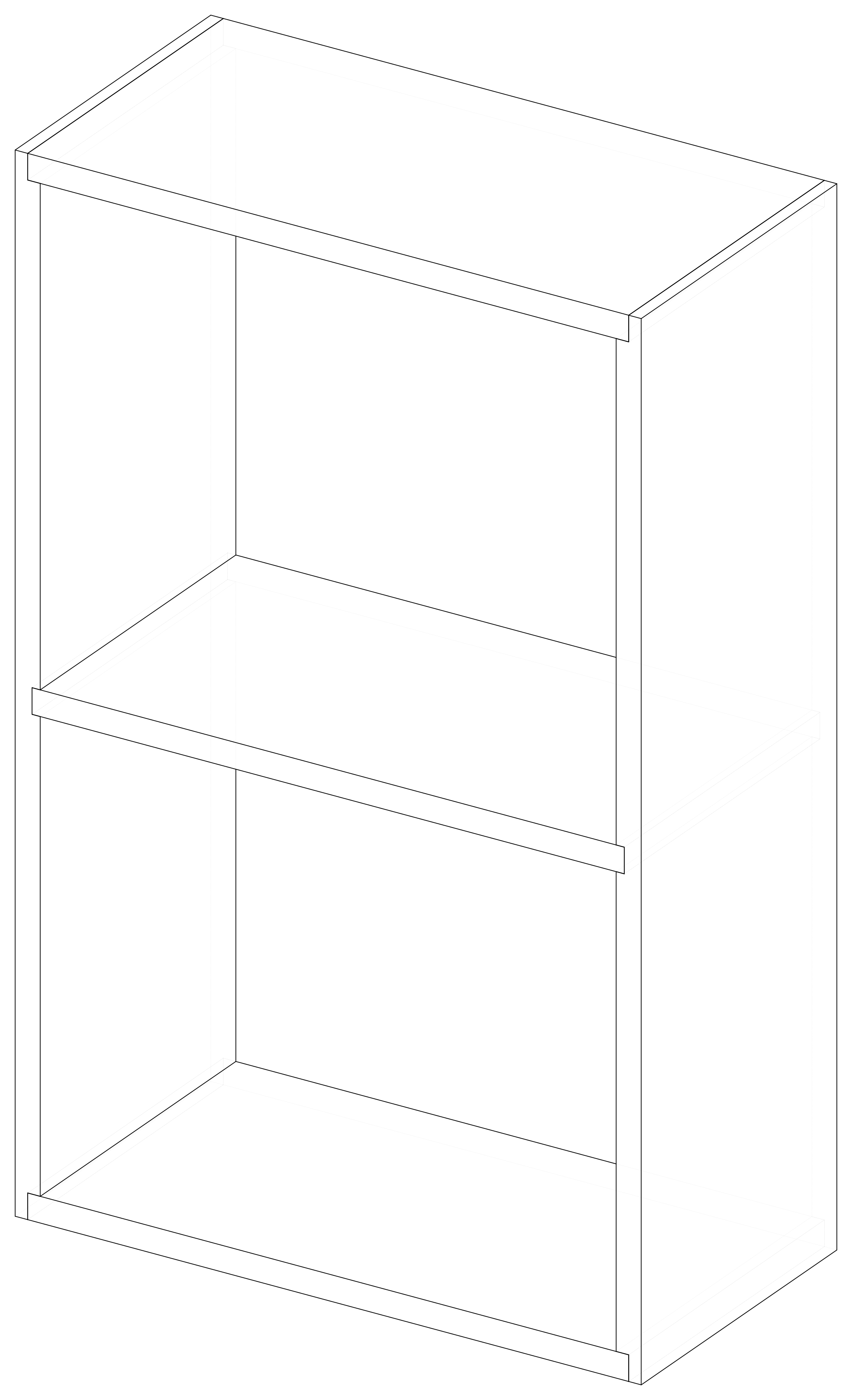
Two sides with a top and a bottom in rabbets and a middle shelf in dados.
-
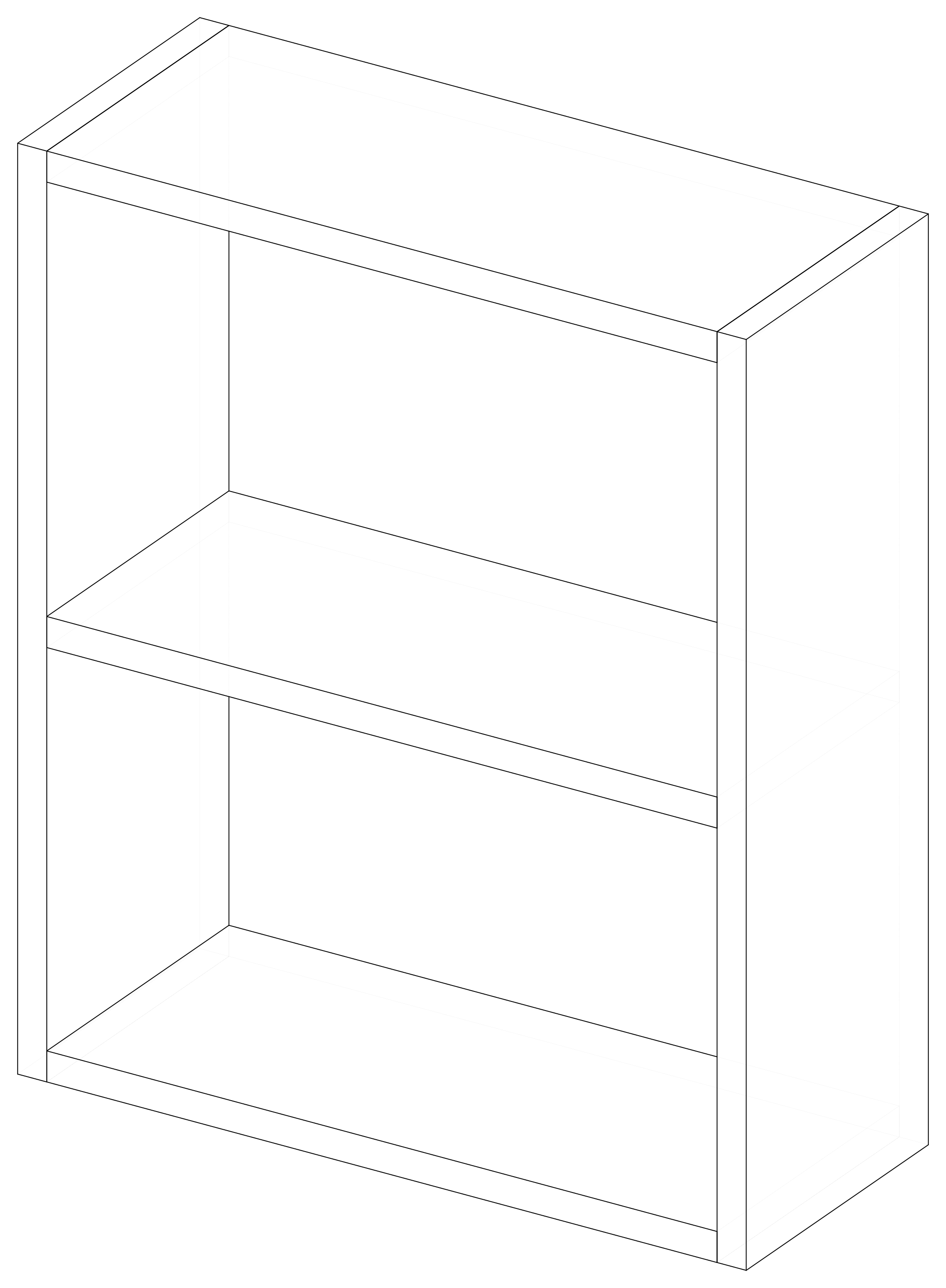
Two sides with a top, a bottom and a middle shelf butted between them, e.g. to be screwed through the sides (the screws aren't modelled).
-
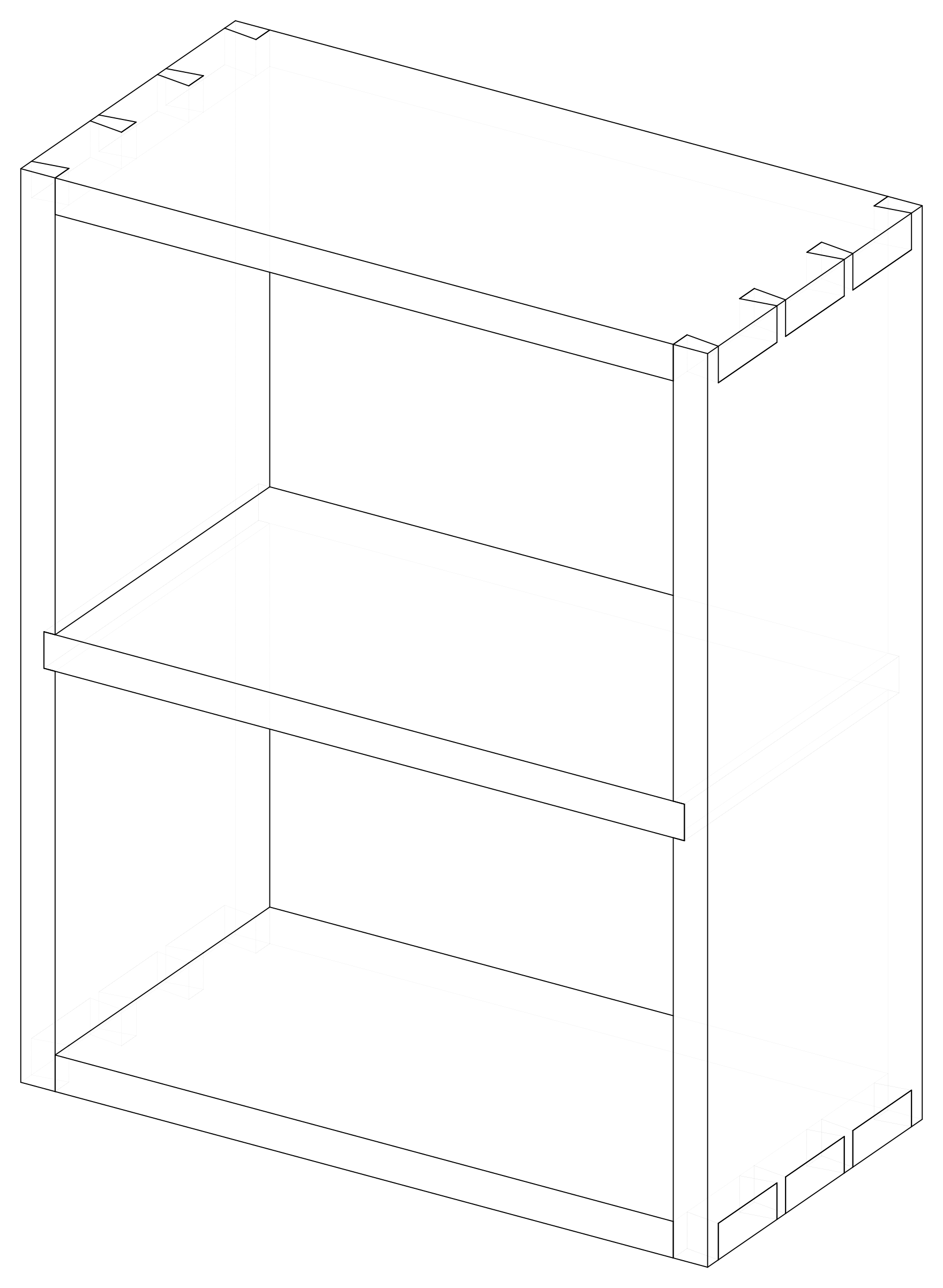
A shelf of two stories: a case through-dovetailed at its four corners and a middle shelf in dados; outside sizes.
-
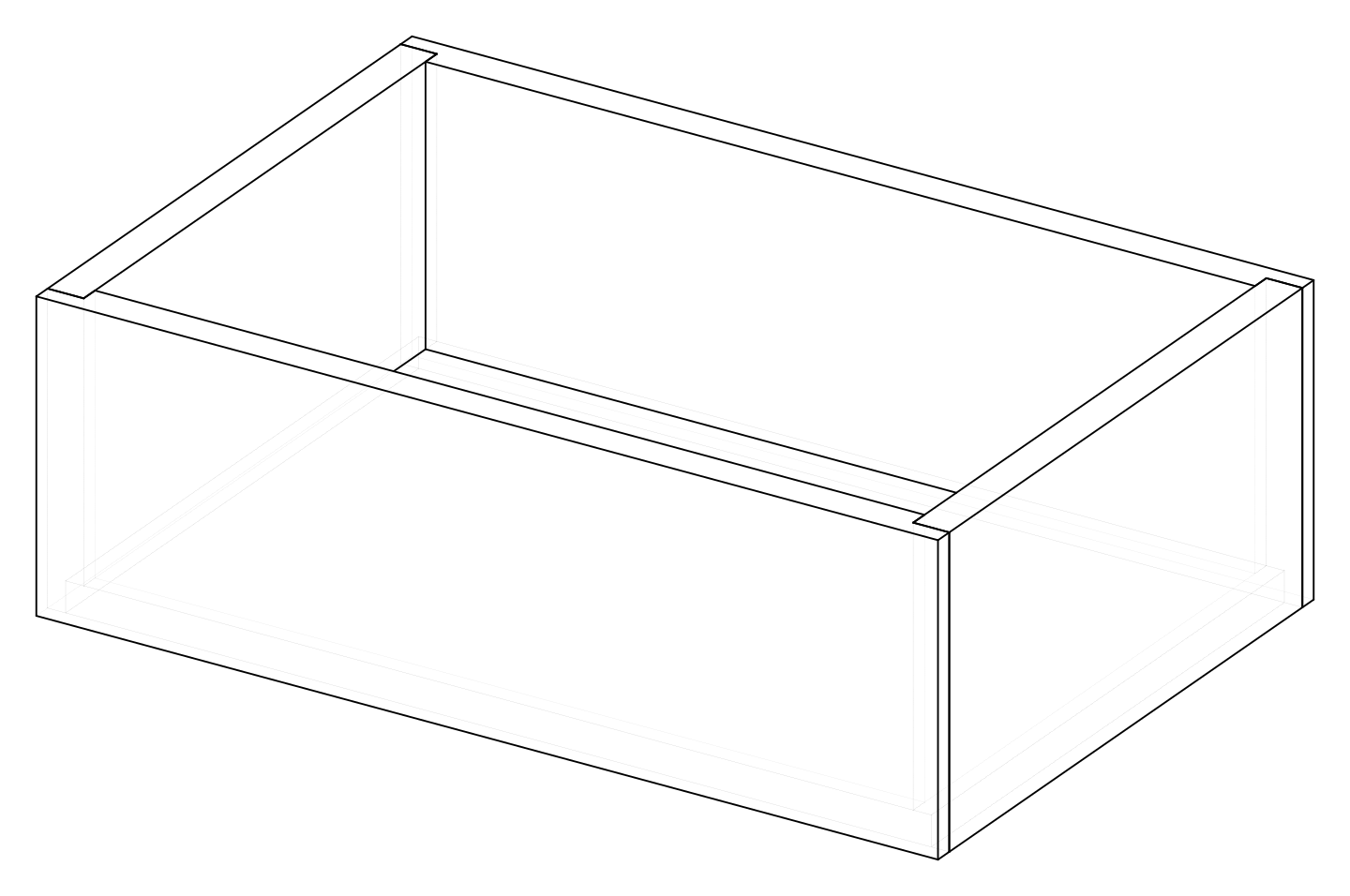
An open box: the sides' ends in rabbets at the ends of the front and the back, the bottom in rabbets along the inside of the walls' bottom edges, flush with them; outside sizes.
-
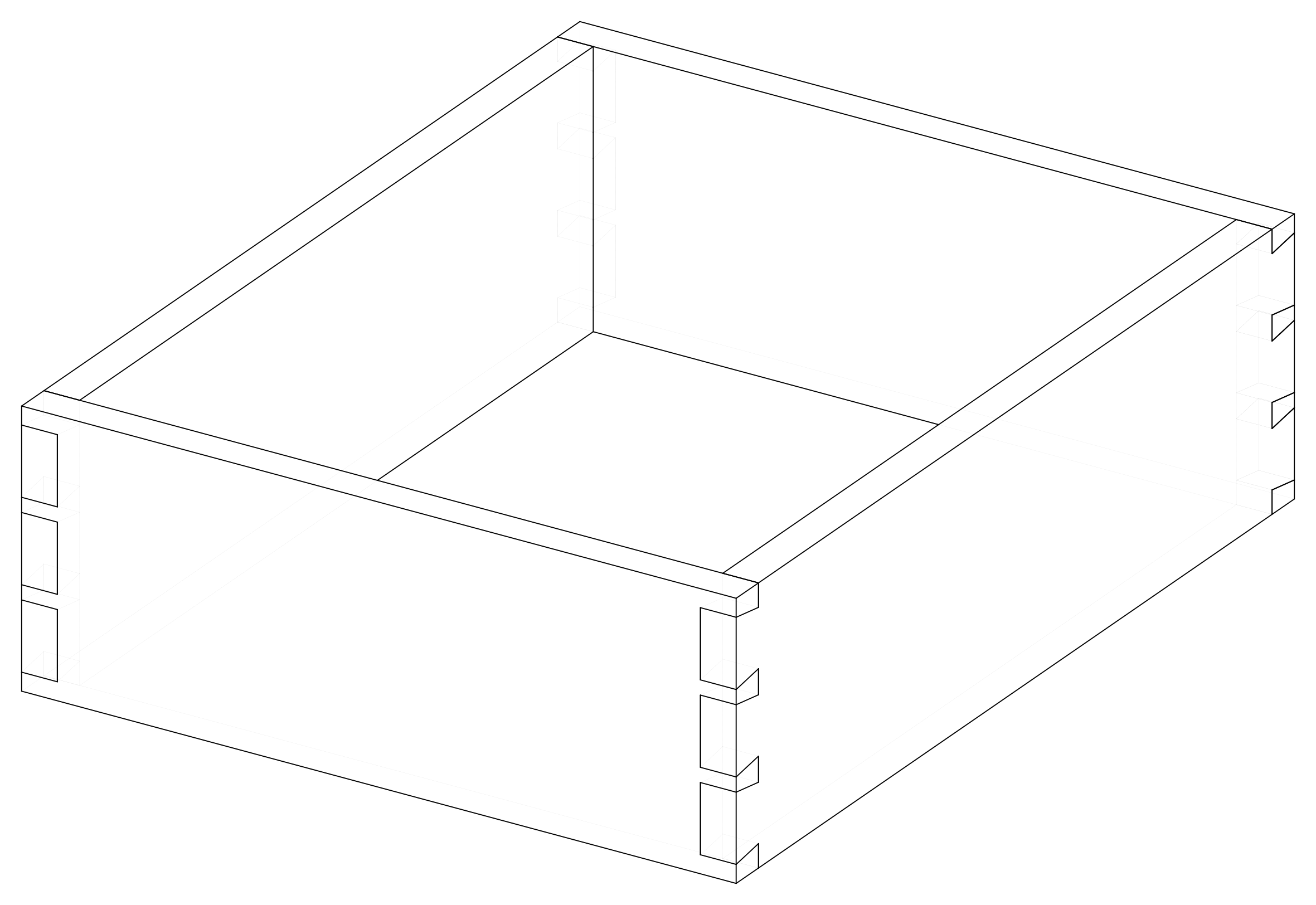
A drawer box with through dovetails at all four corners (no bottom); outside sizes.
-
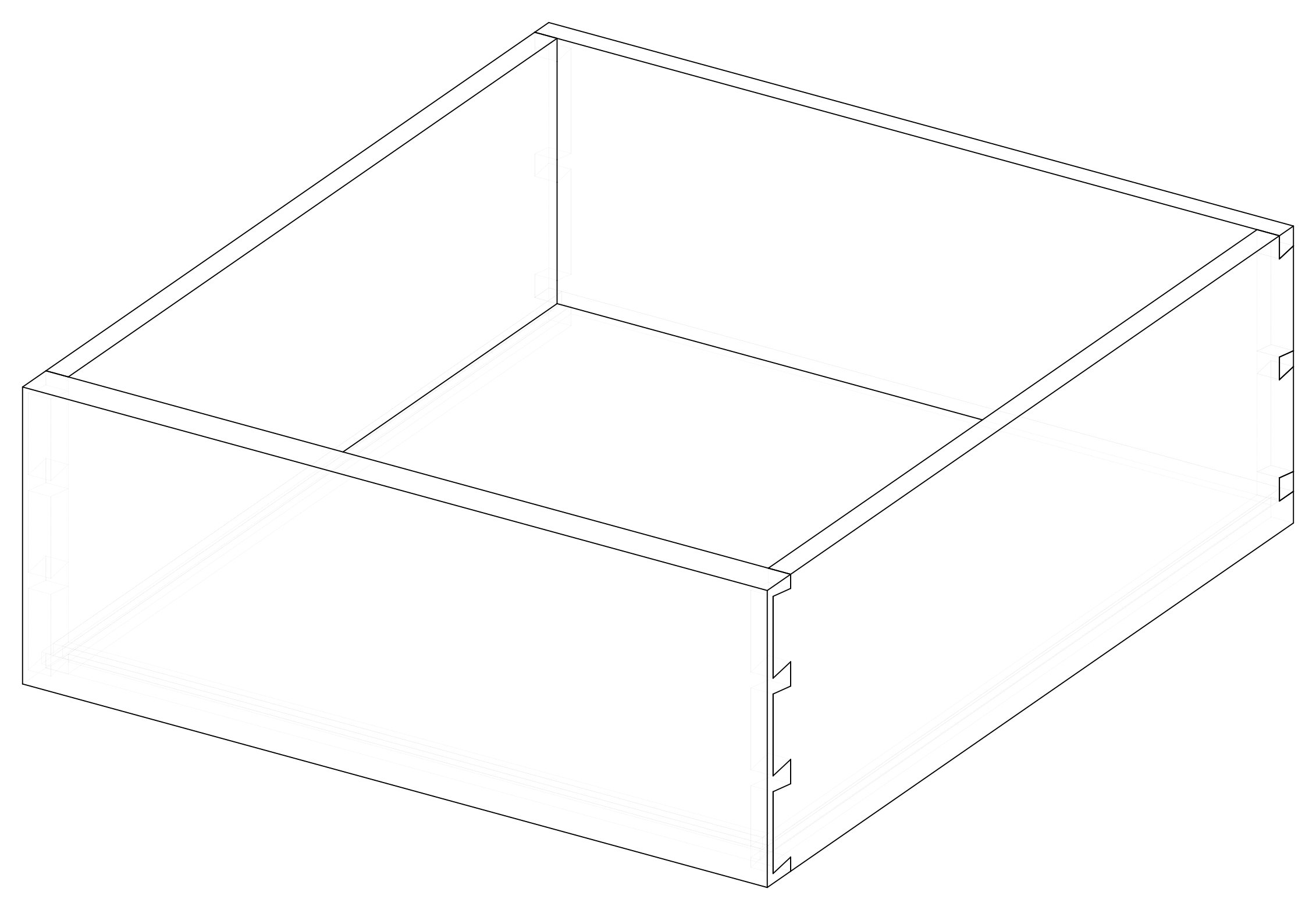
A classic drawer with a bottom; outside sizes.
-
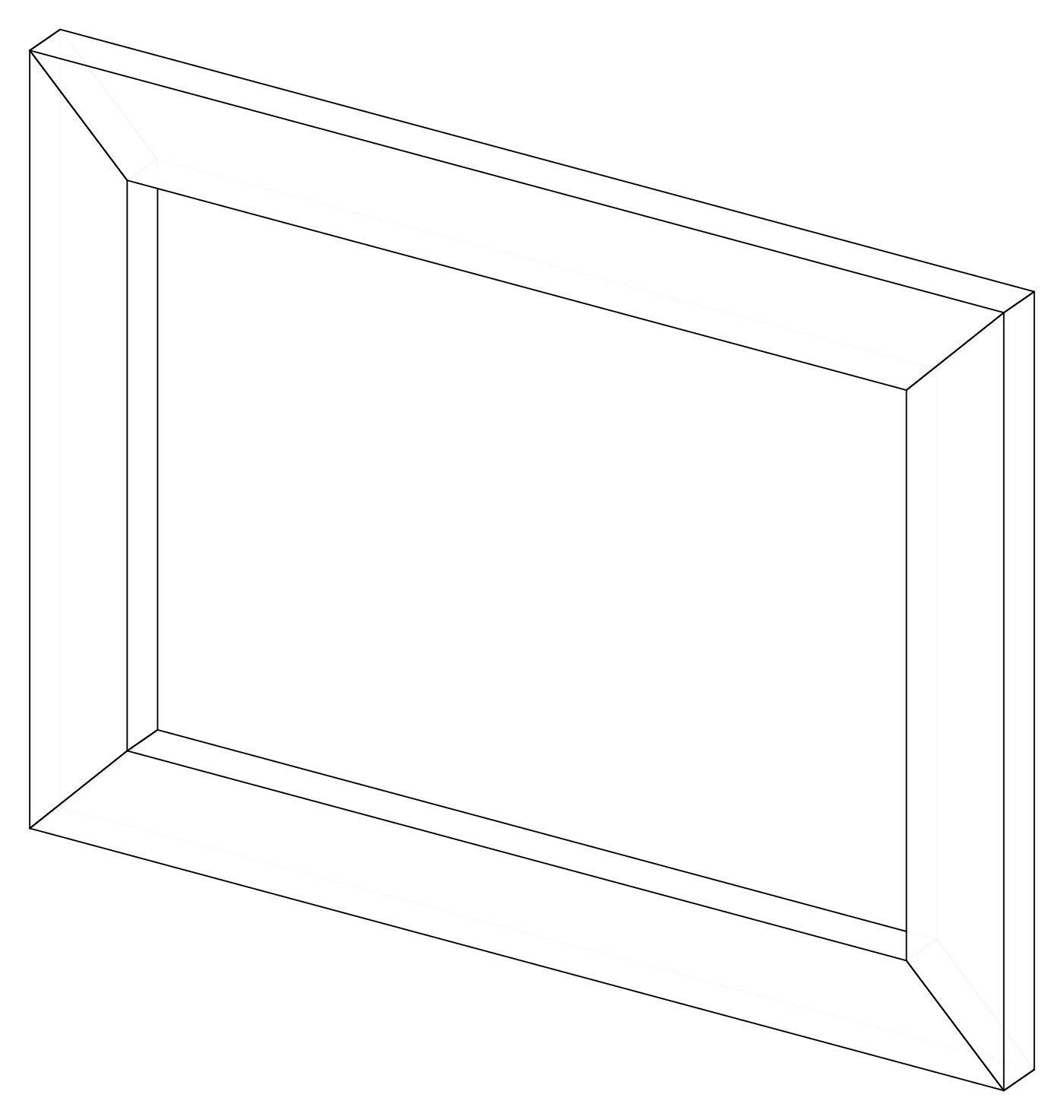
A frame mitred at all four corners; outside sizes.
-
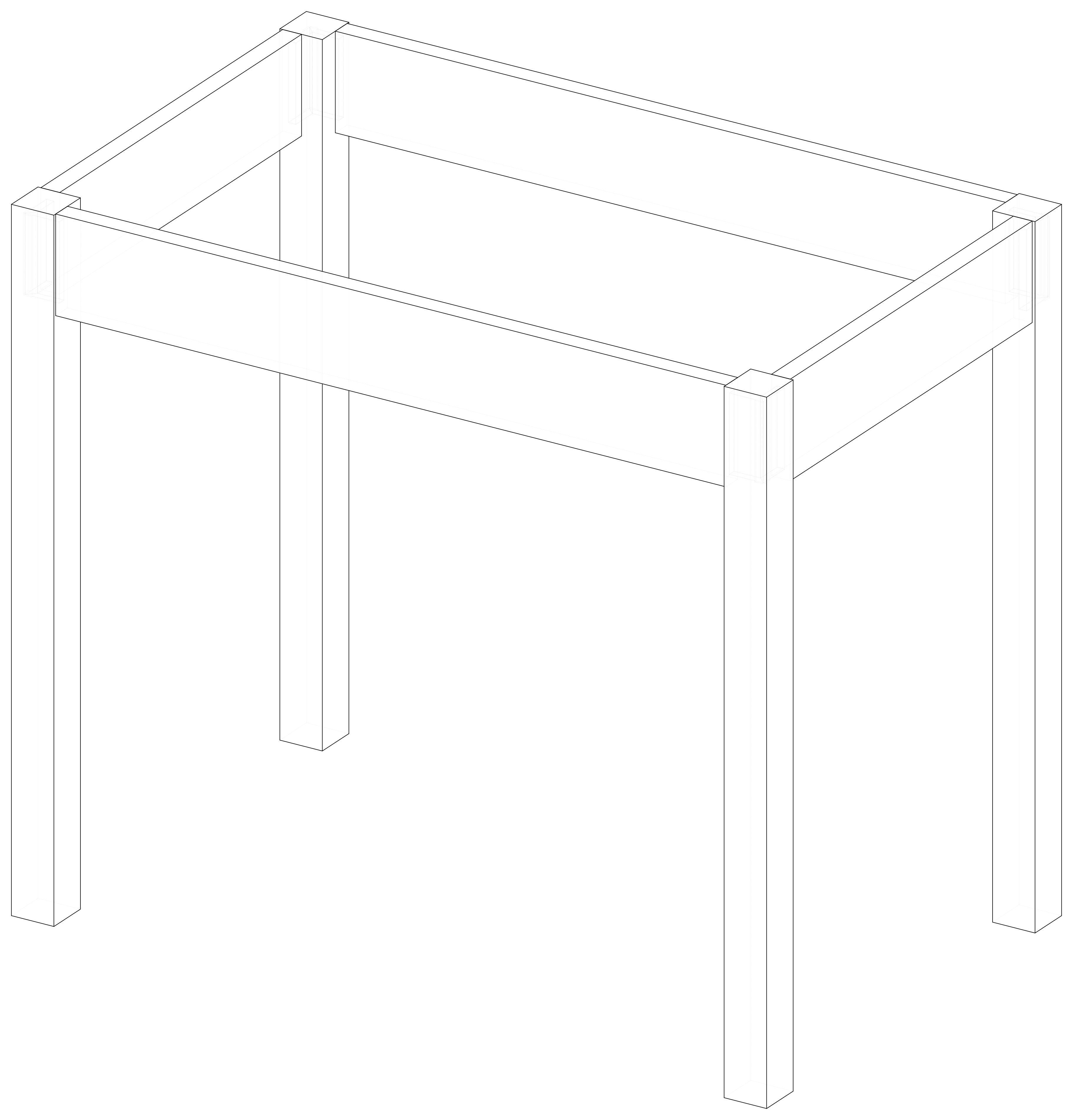
Four legs and four aprons tenoned into them, without a top; outside sizes.
-
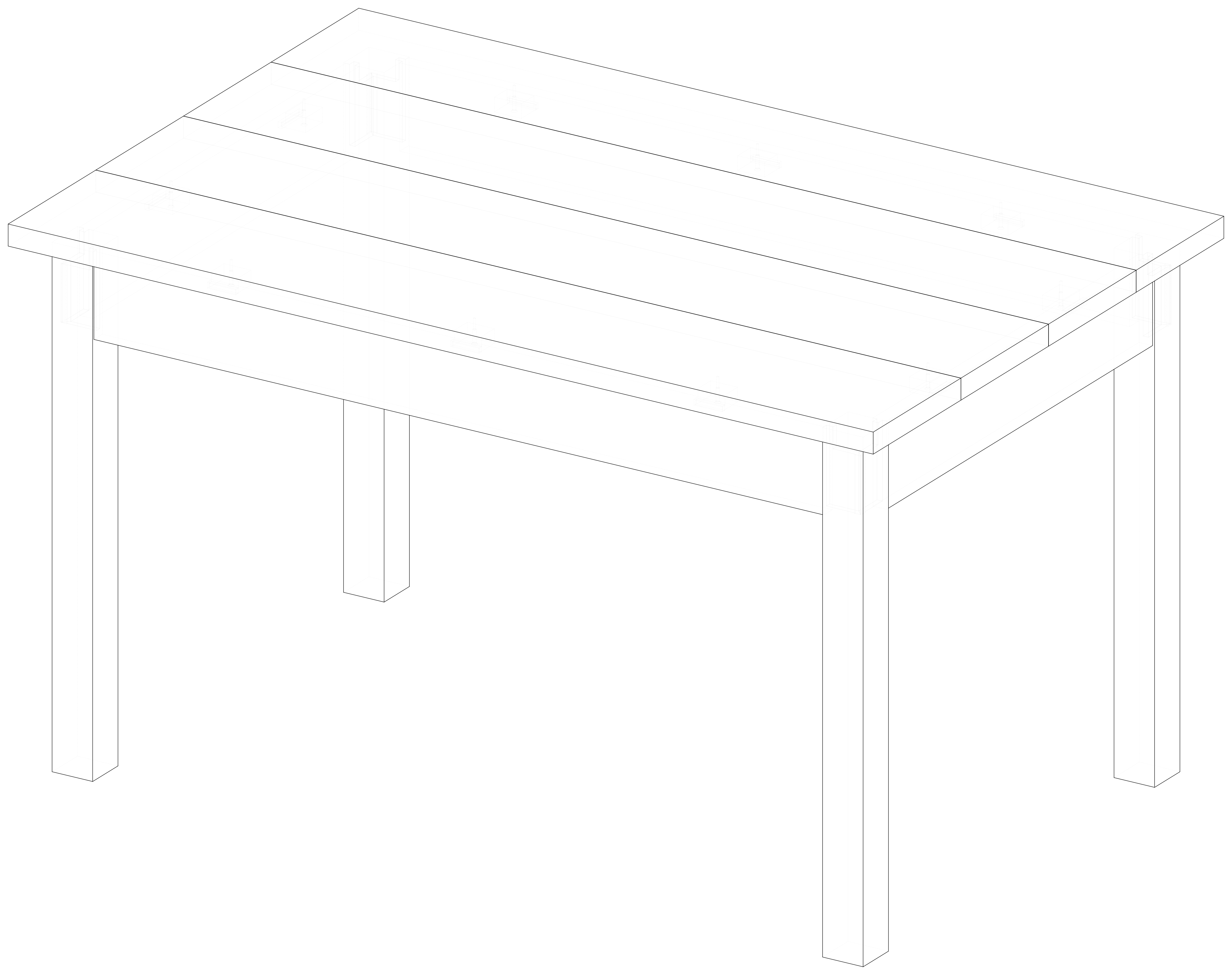
A table: legs and wide aprons, a solid top held down by buttons; outside sizes.
-
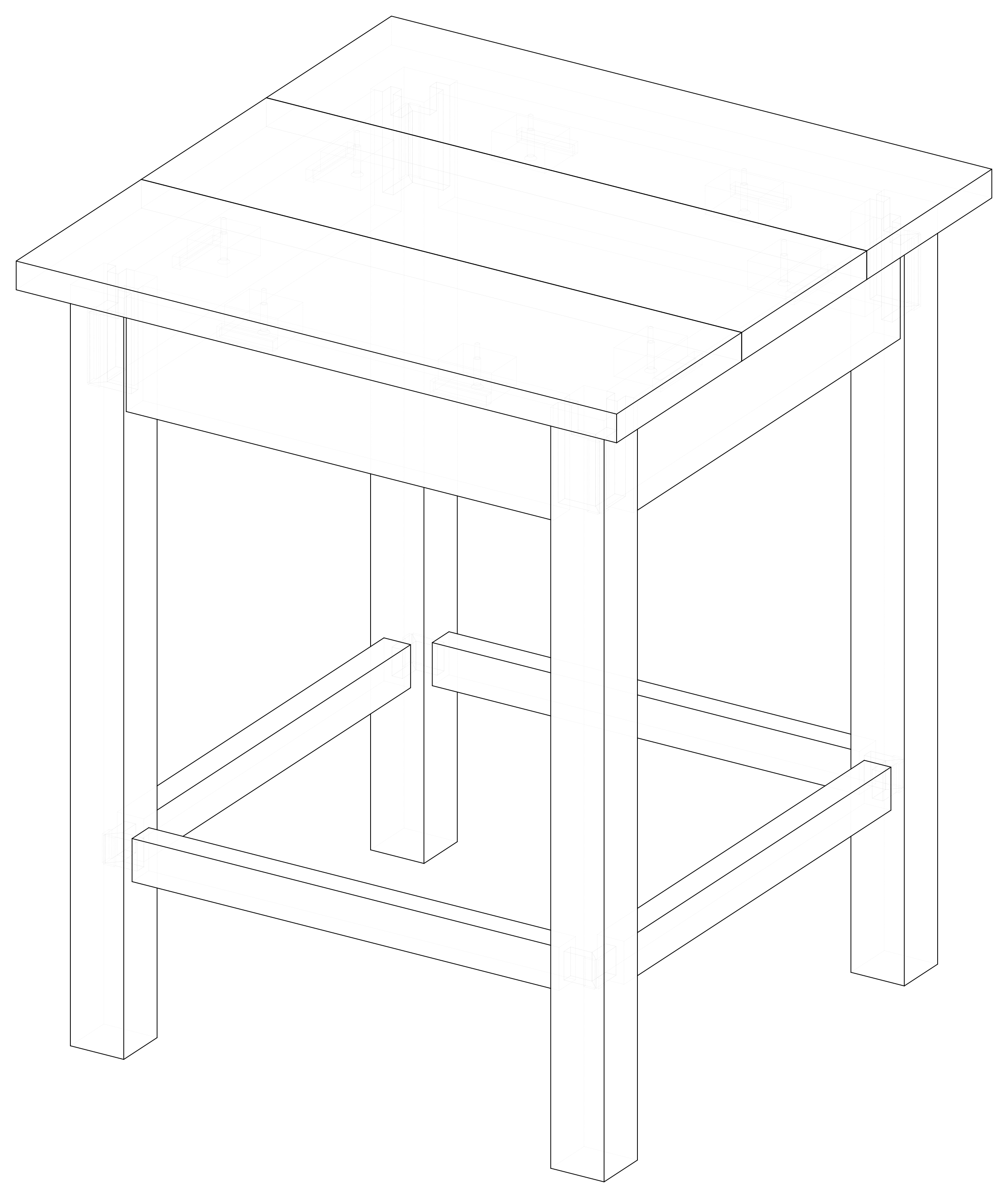
A side table: legs, aprons and stretchers, a solid top held down by buttons; outside sizes.
-
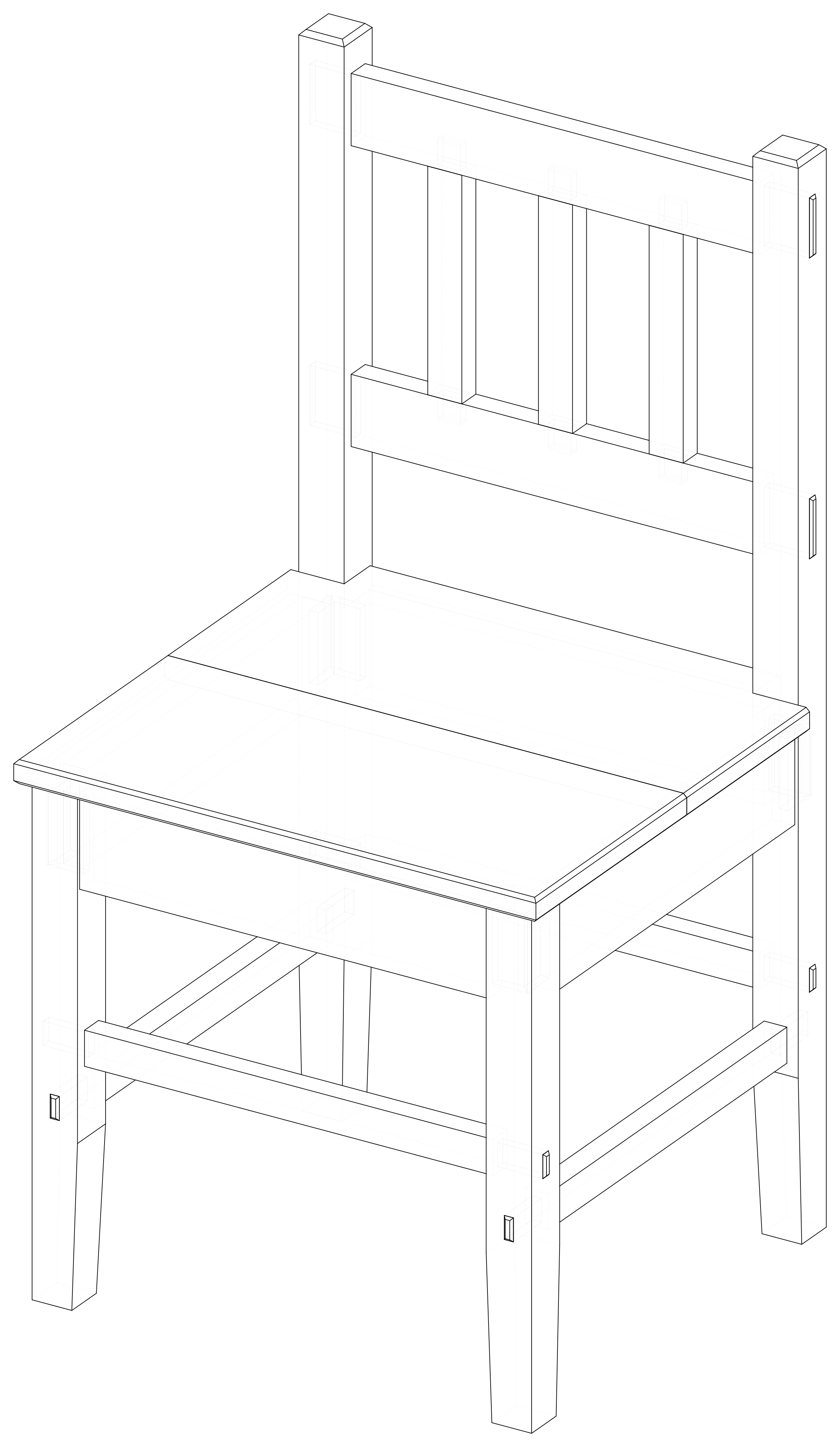
A simple chair, all square; outside sizes of the frame.
-
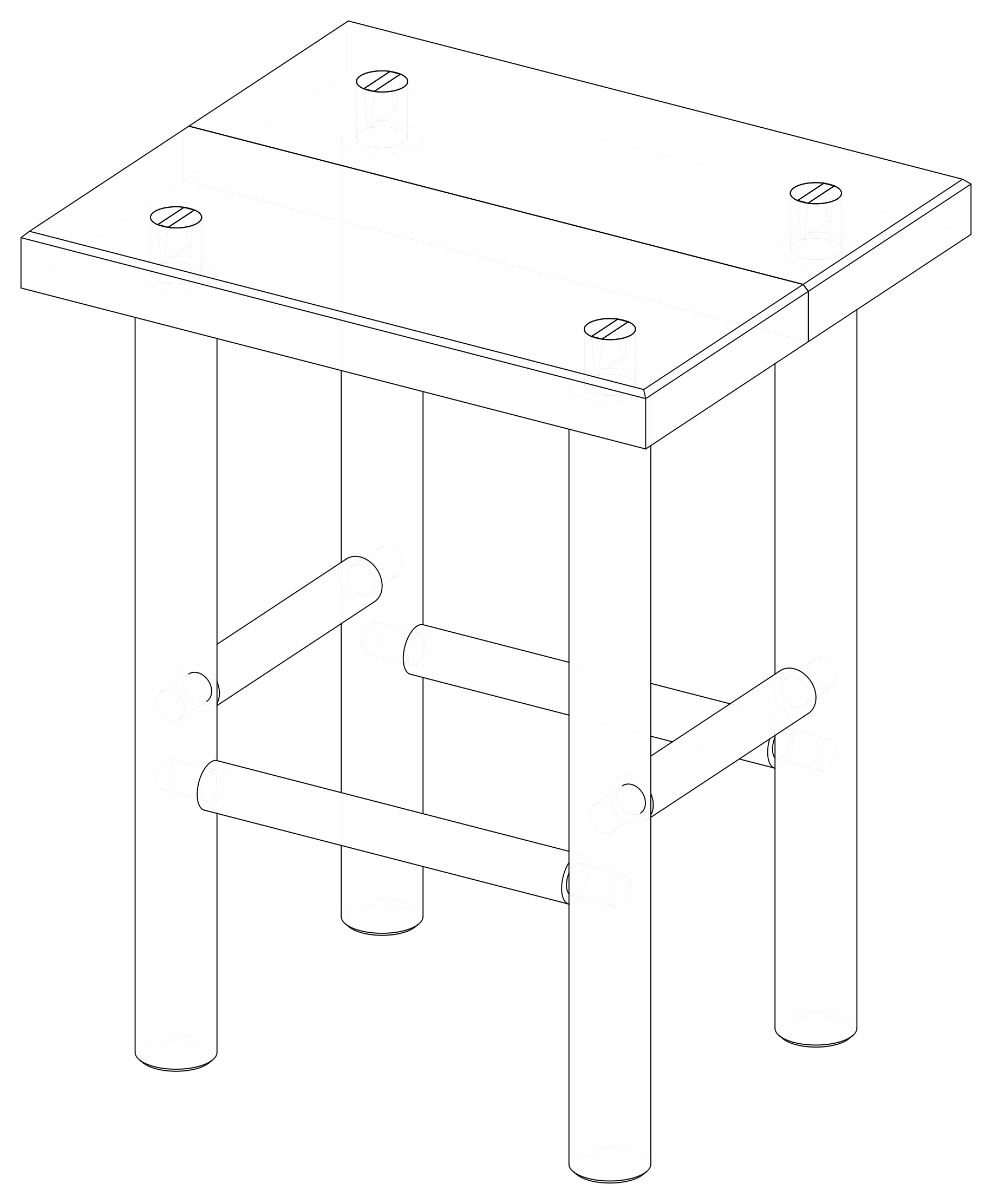
A stool: four round legs wedged through a solid seat, round stretchers between them; straight legs (splayed ones come later).
-
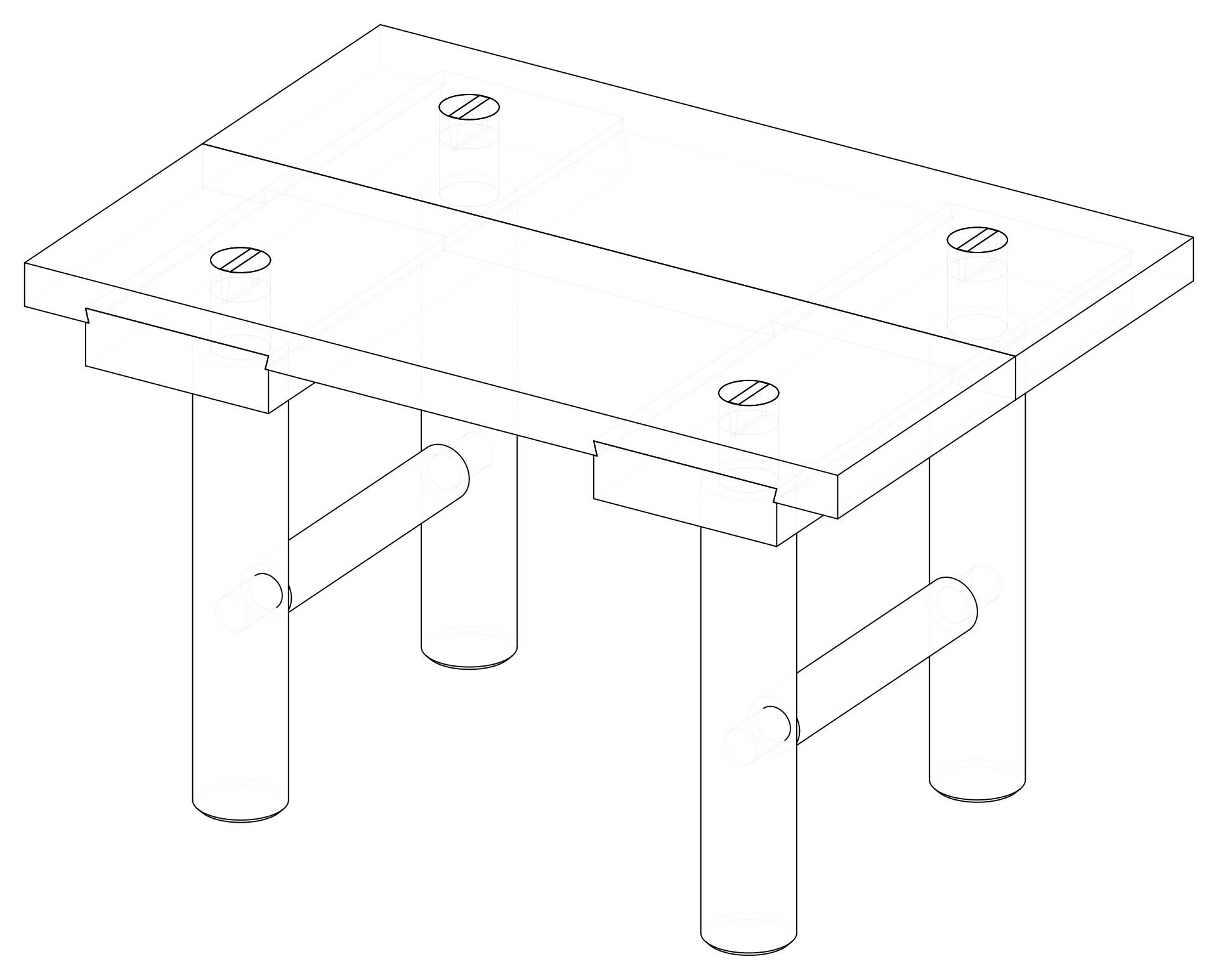
A step stool: the seat of
stepstool_seaton four round legs, which go through the battens and the seat, wedged; straight legs (splayed ones come later). -
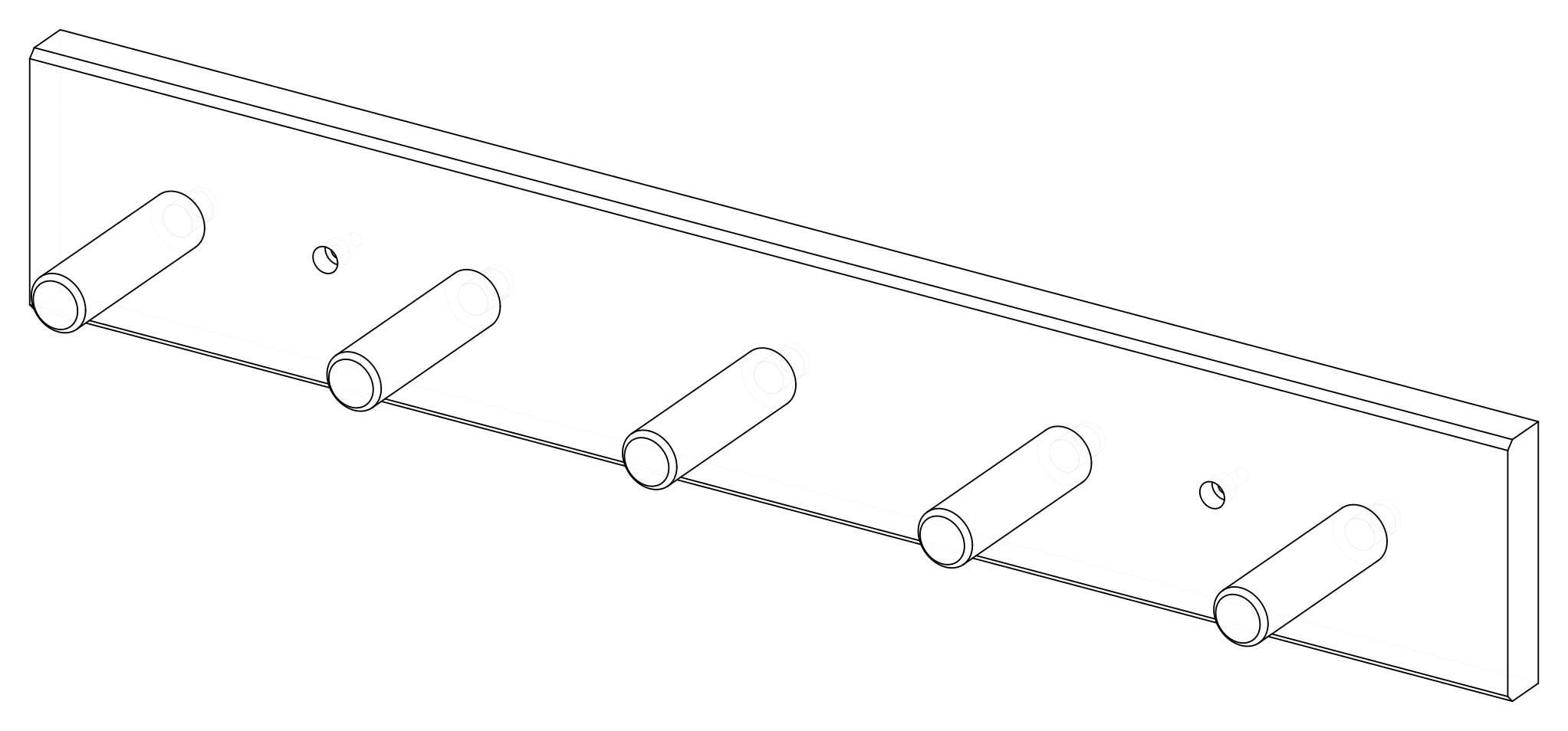
A coat rack: a board on the wall with
pegsround pegs, evenly spaced. -
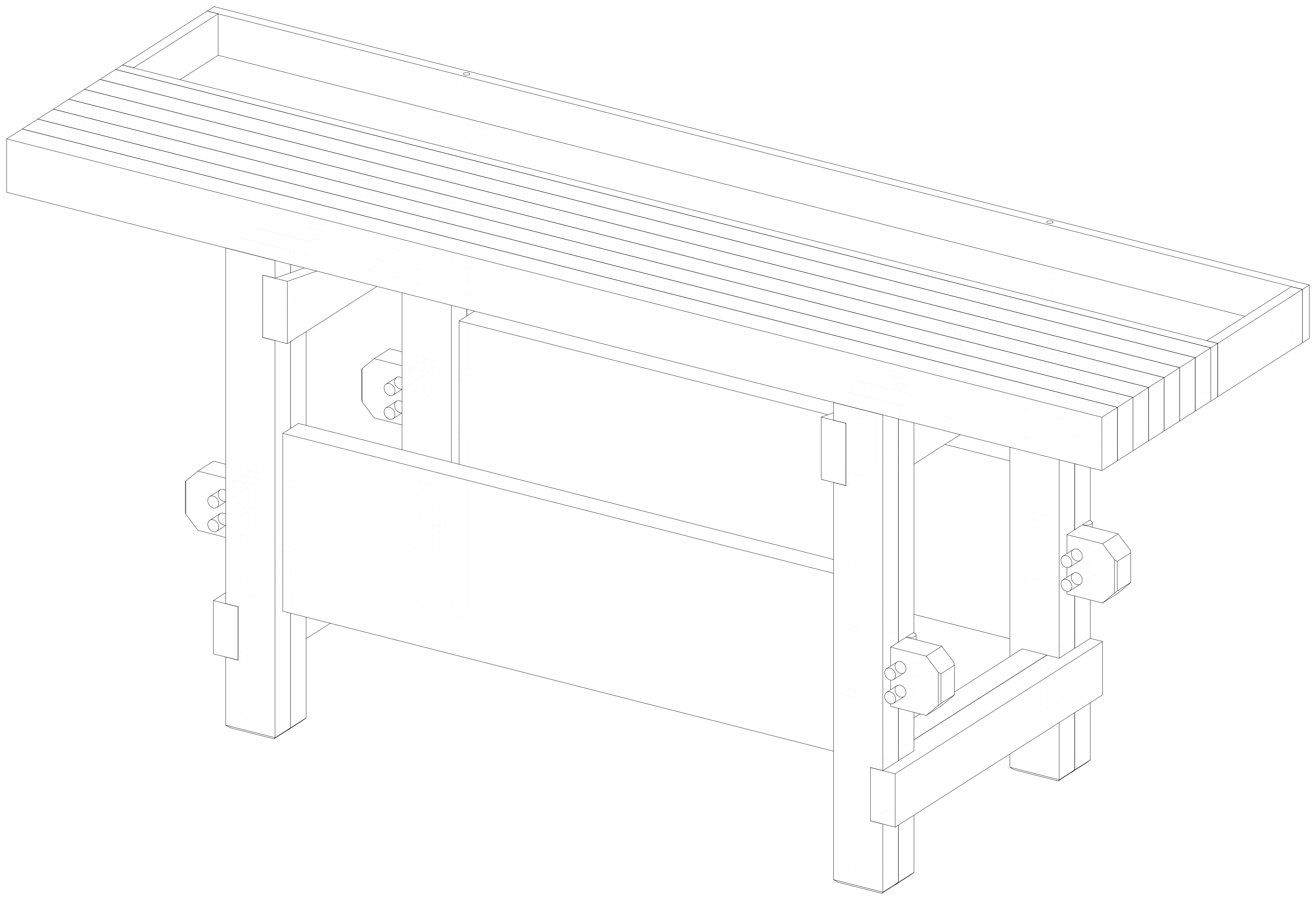
A knock-down workbench, an approximation of Rex Krueger's Quick Stack workbench (get his plans for the real thing, at rexkrueger.com).