Tusk tenon flat
joints.tusk_tenon_flat
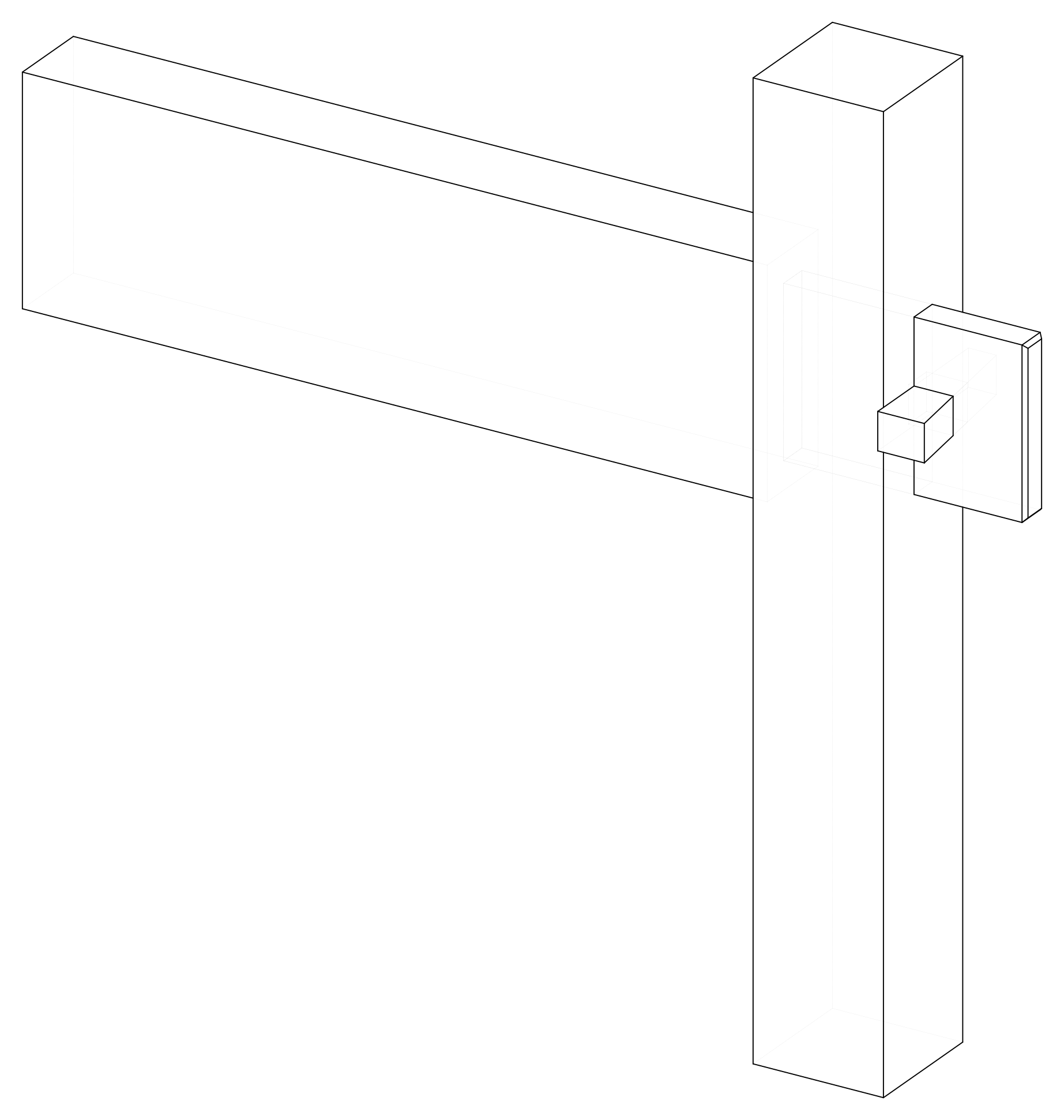
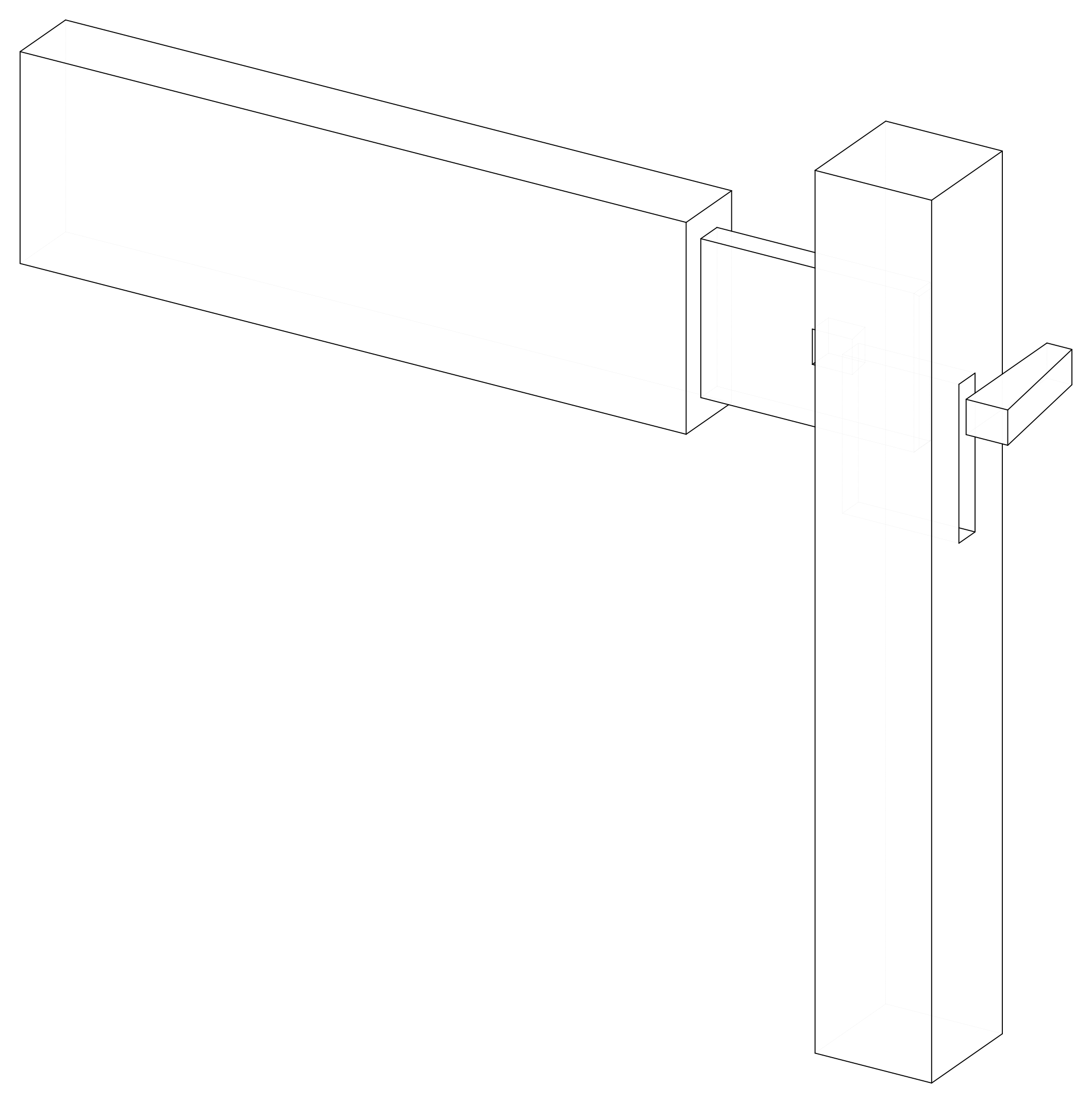
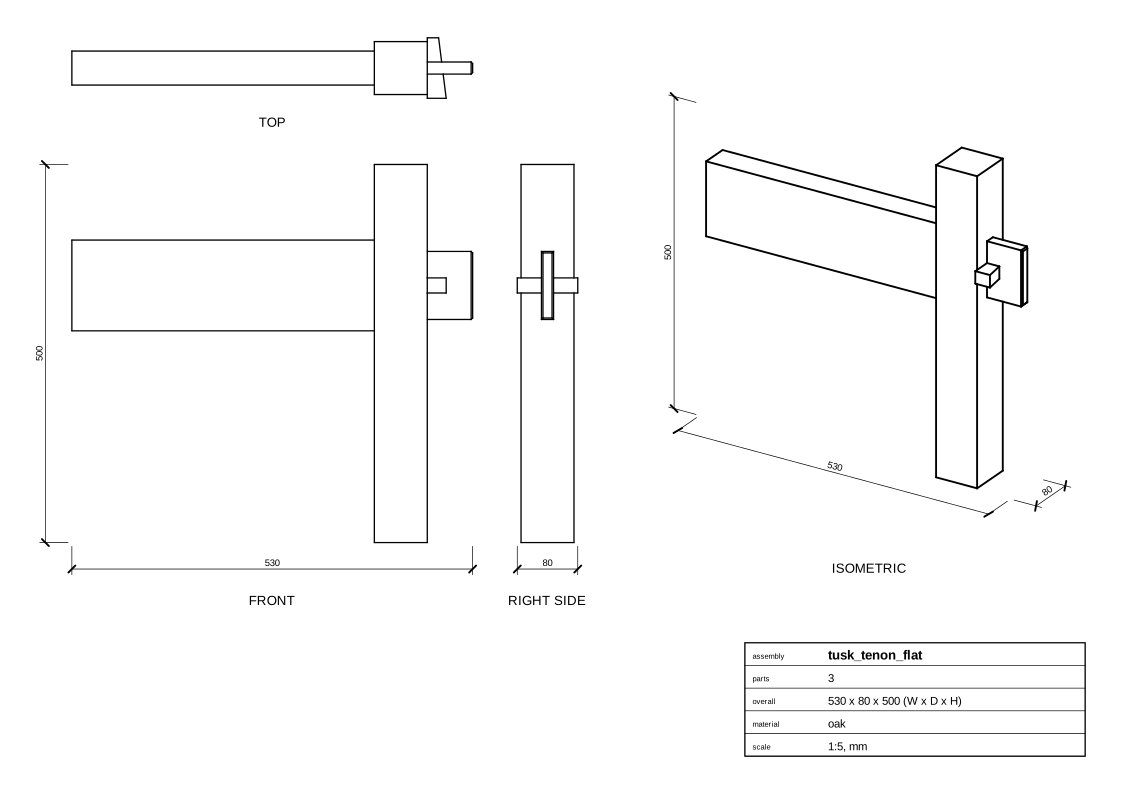
A tusk tenon with the wedge perpendicular to the stile: the wedge lies level, through the tenon's thickness, its head towards the viewer.
As tusk_tenon, but the tenon is a usual third of the stretcher thick
(16 mm), and the wedge, 20 mm thick, 80 long and 25 wide at its head,
tapered 1:8, goes through a mortise from one cheek of the tenon to the
other, in the middle of its width.
Parameters
| Parameter | Default |
|---|---|
leg_length |
500 |
stretcher_length |
400 |
width |
120 |
protrusion |
60 |
Change them in a design file (see Change an example):
Drawings
The plans in one PDF: plans.pdf.
Assembly
Parts
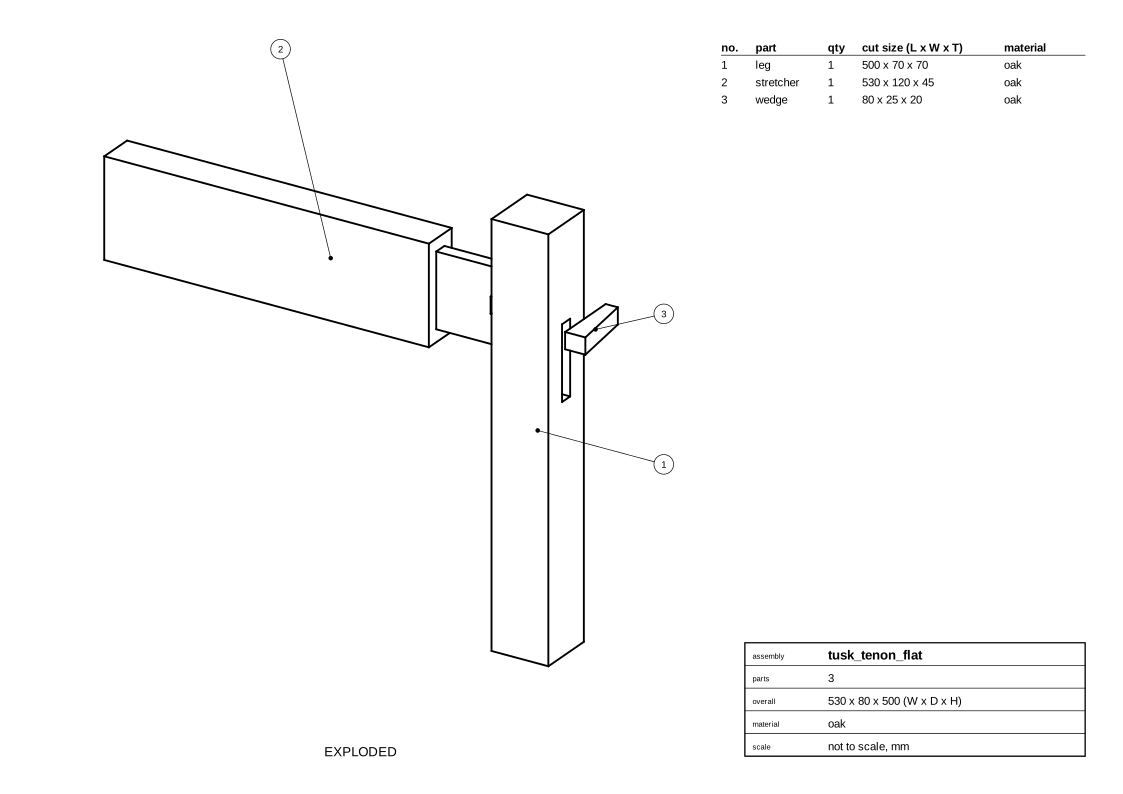
Leg
Stretcher
Wedge
Cut list
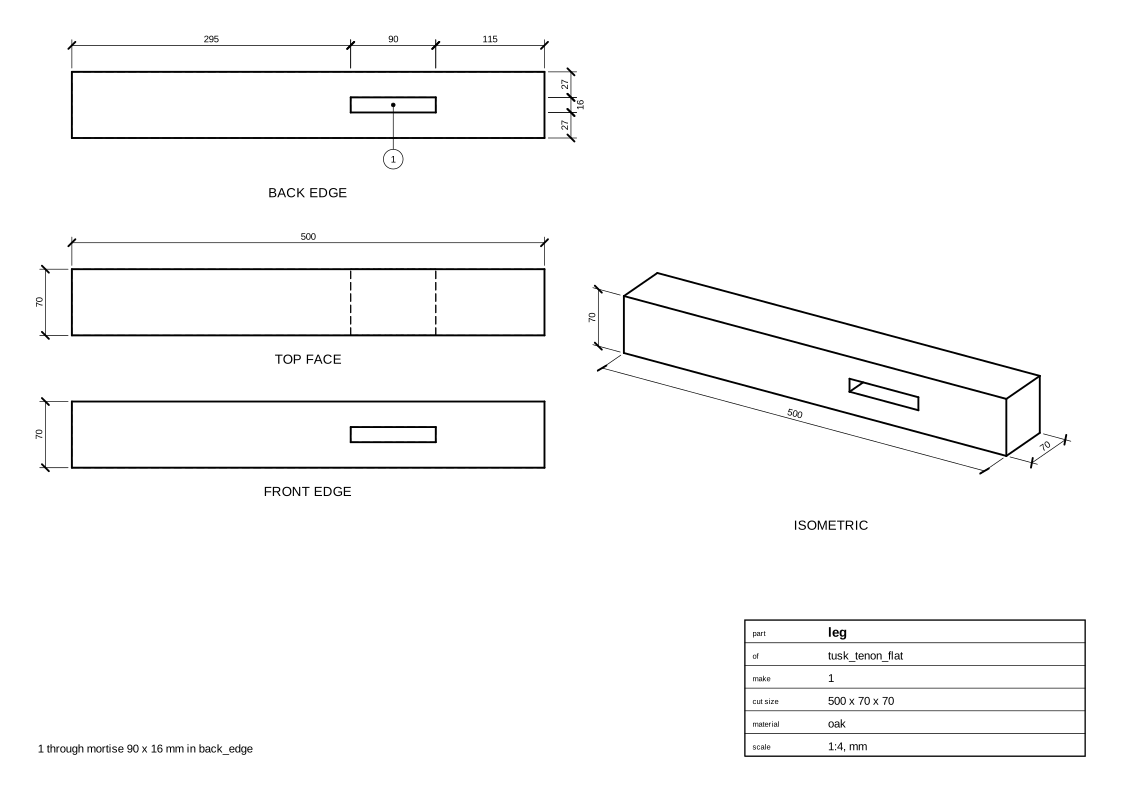
leg        500 x 70 x 70 mm  oak
           - through mortise 90 x 16 mm in back_edge
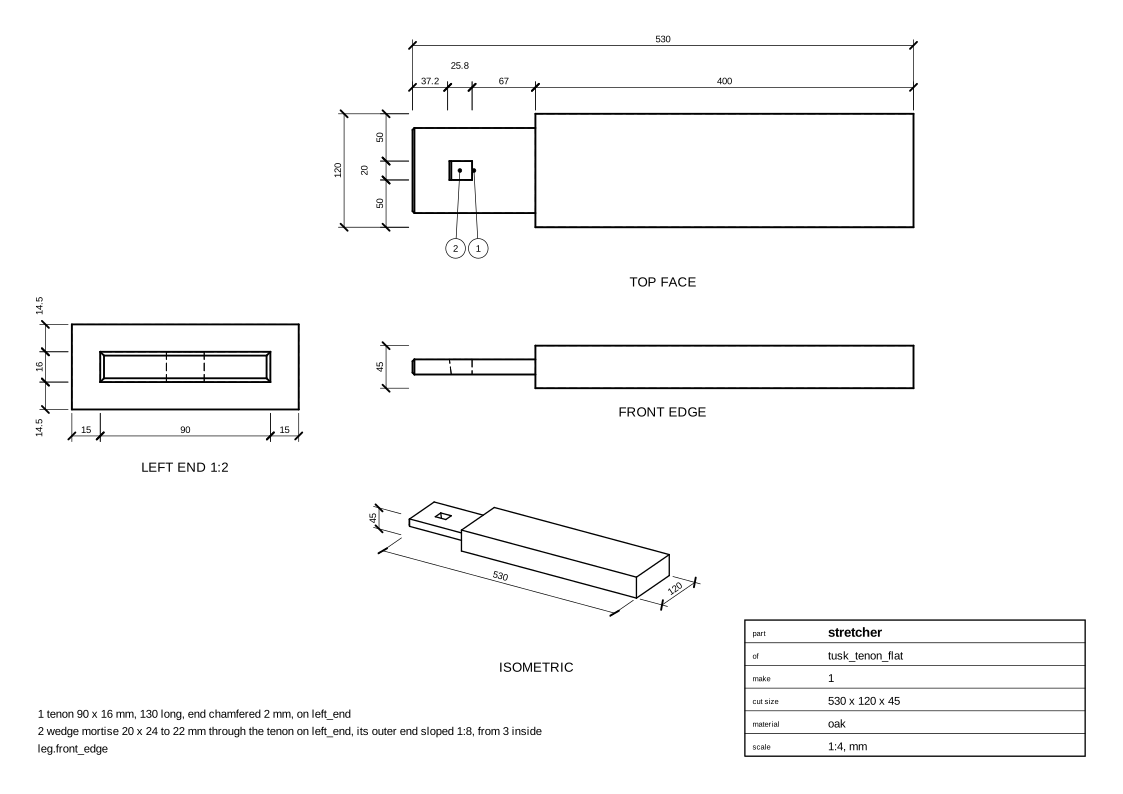
stretcher  530 x 120 x 45 mm  oak
           - tenon 90 x 16 mm, 130 long, end chamfered 2 mm, on left_end
           - wedge mortise 20 x 24 to 22 mm through the tenon on left_end, its outer end sloped 1:8, from 3 inside leg.front_edge
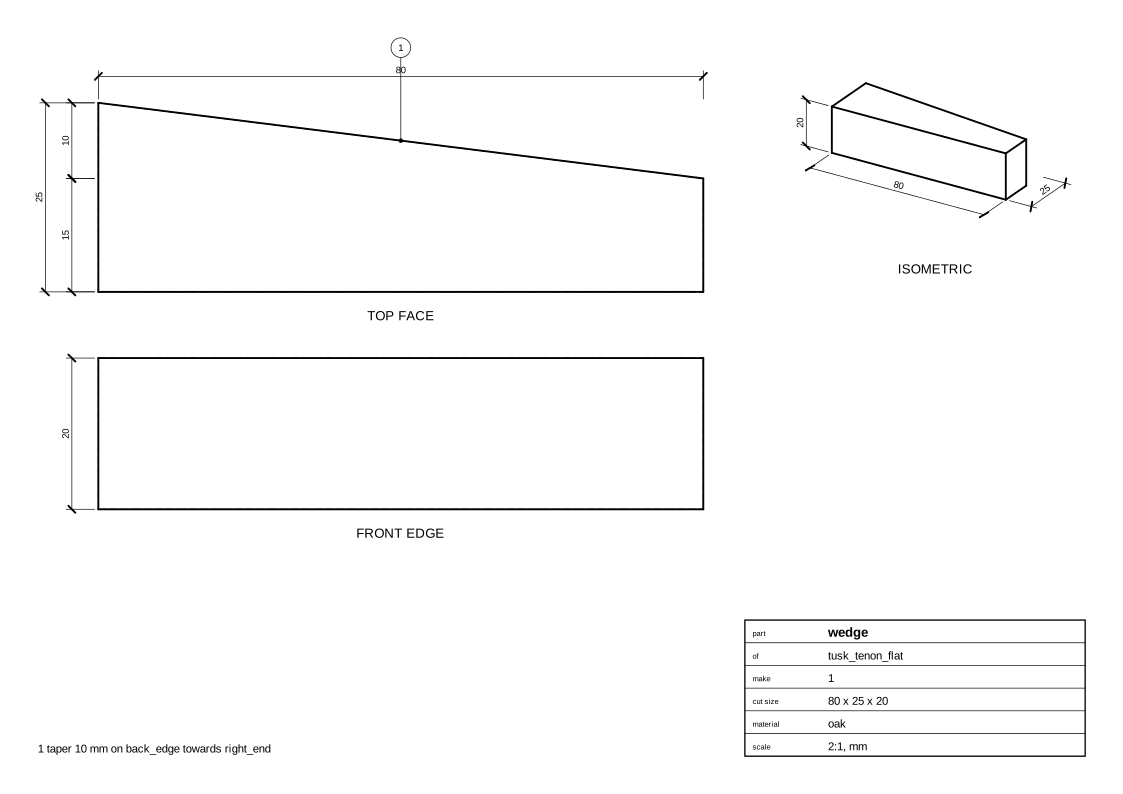
wedge      80 x 25 x 20 mm  oak
           - taper 10 mm on back_edge towards right_end
Code
From woodwright/examples/joints.py, which imports the names it uses (see From an example to your own design):
def tusk_tenon_flat(
    leg_length: float = 500,
    stretcher_length: float = 400,
    width: float = 120,
    protrusion: float = 60,
) -> Assembly:
    """A tusk tenon with the wedge perpendicular to the stile: the wedge lies
    level, through the tenon's thickness, its head towards the viewer.

    As `tusk_tenon`, but the tenon is a usual third of the stretcher thick
    (16 mm), and the wedge, 20 mm thick, 80 long and 25 wide at its head,
    tapered 1:8, goes through a mortise from one cheek of the tenon to the
    other, in the middle of its width.
    """
    return _tusk_tenon(
        "tusk_tenon_flat",
        leg_length,
        stretcher_length,
        width,
        protrusion,
        tenon_thickness=16,
        wedge_head="top_face",
        wedge_size=(80, 25, 20),
        wedge_slope=8,
    )
Exported with woodwright 0.9.0 on 2026-10-25.