Shiplap panel
joints.shiplap_panel
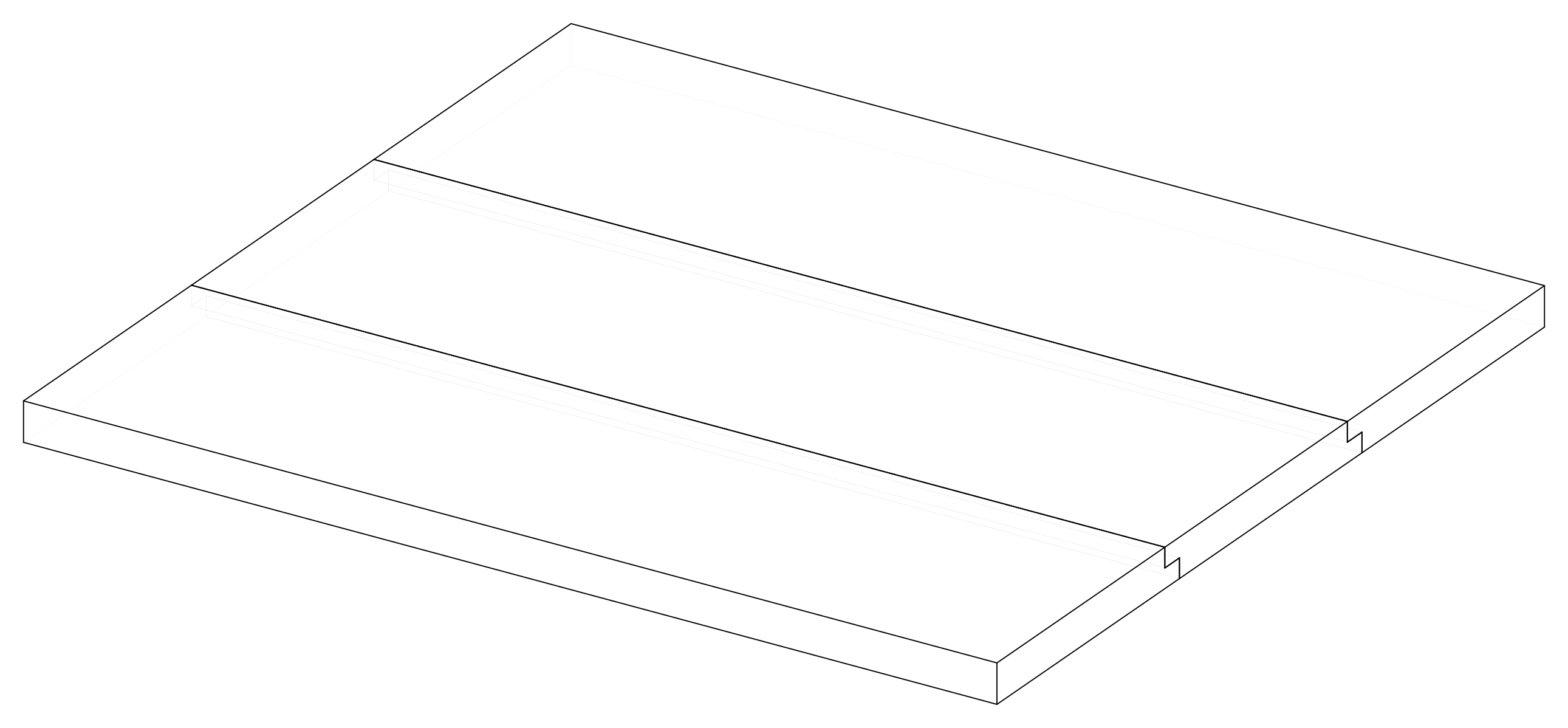
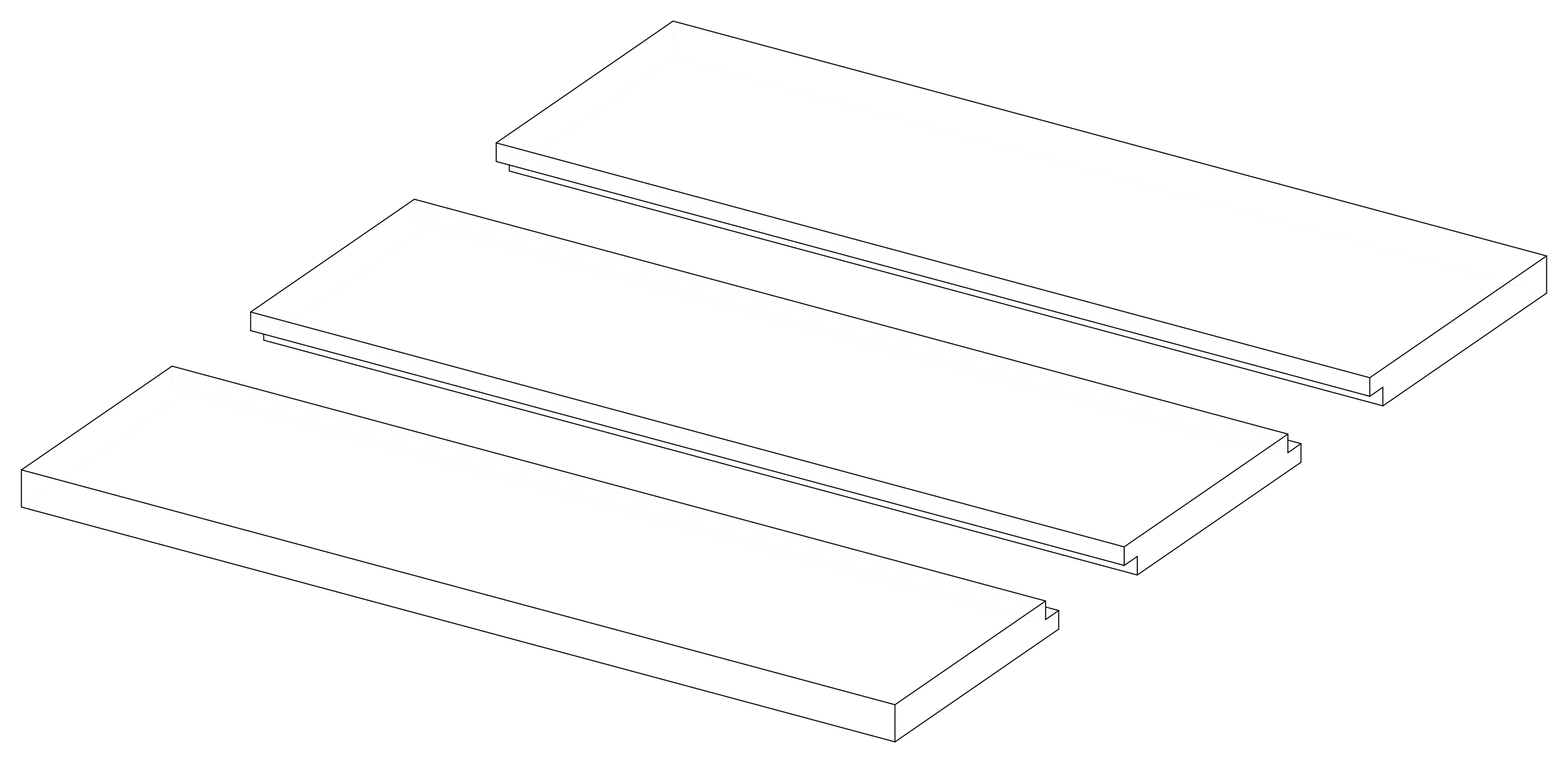
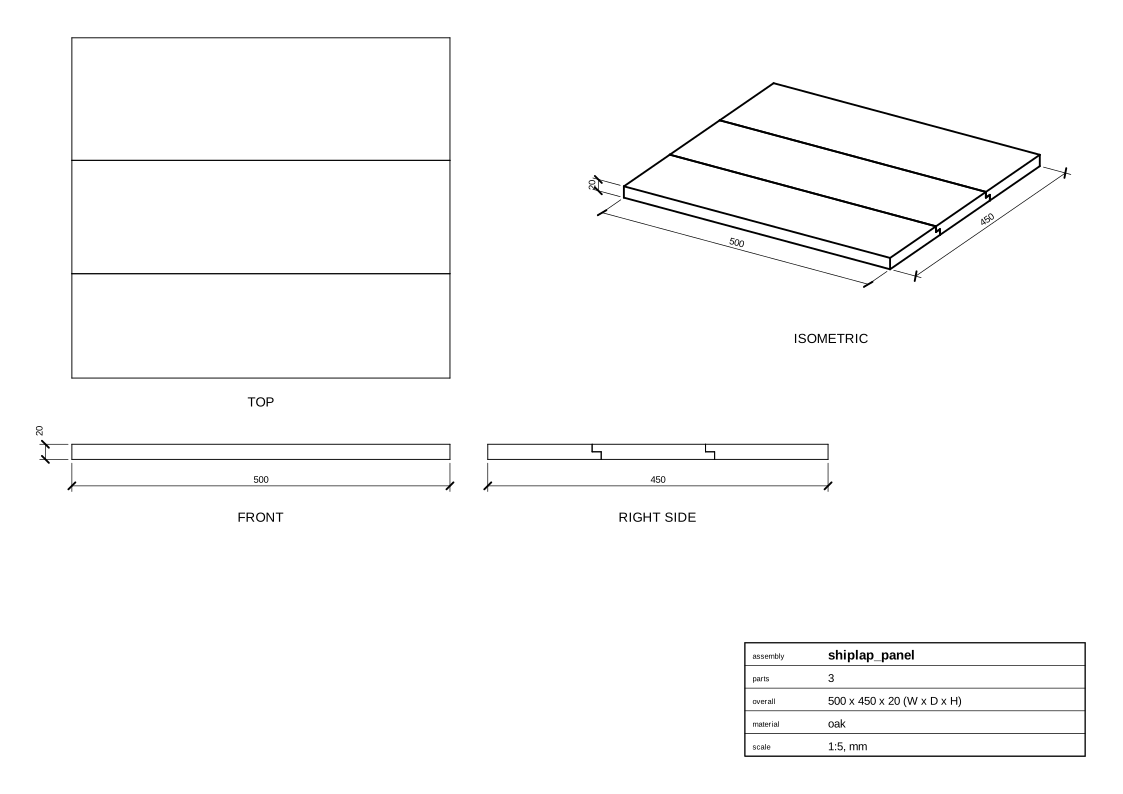
Boards edge to edge, lapped over each other in rabbets half their thickness.
Along each joint the next board's rabbet, cut from below, lies over the
previous one's, cut from above, lap wide: a "tongue" as thick as
half the board, flush with its top face. Not glued, the boards can move
and the lap covers the gap; the top shows a plain line at each joint.
Parameters
| Parameter | Default |
|---|---|
length |
500 |
width |
150 |
lap |
12 |
count |
3 |
stock |
20 mm board, oak |
Change them in a design file (see Change an example):
Drawings
The plans in one PDF: plans.pdf.
Assembly
Parts
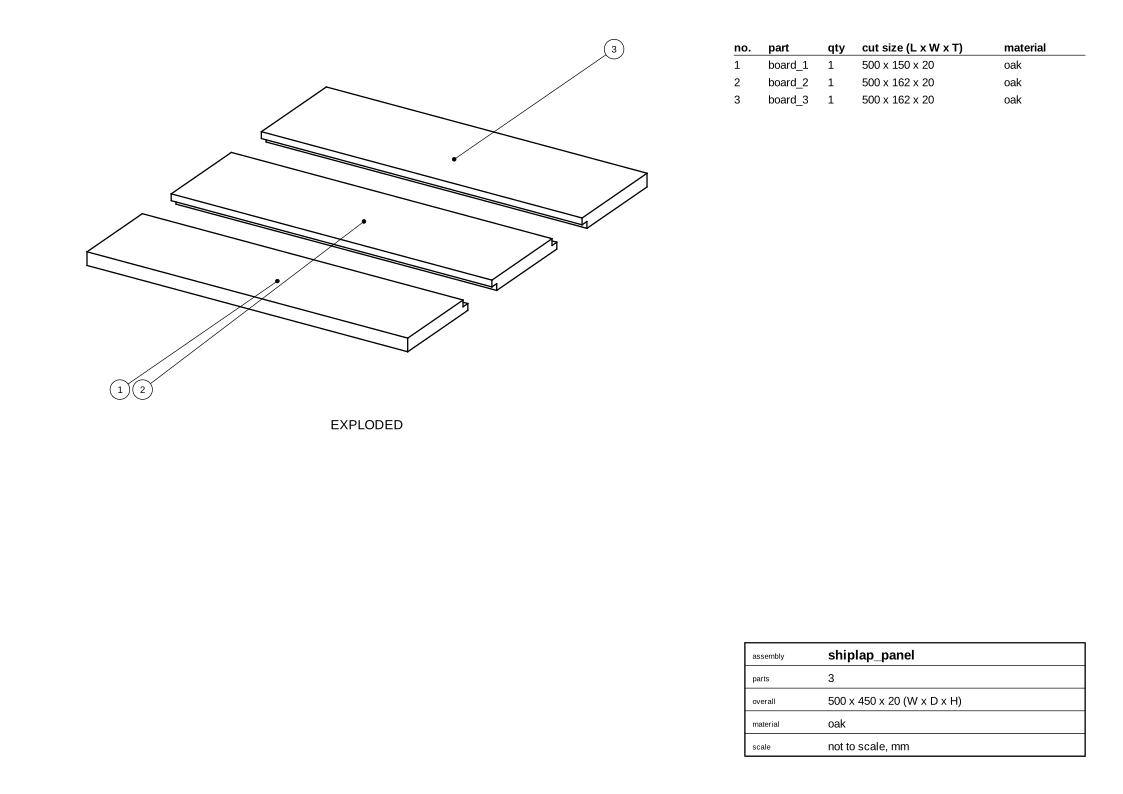
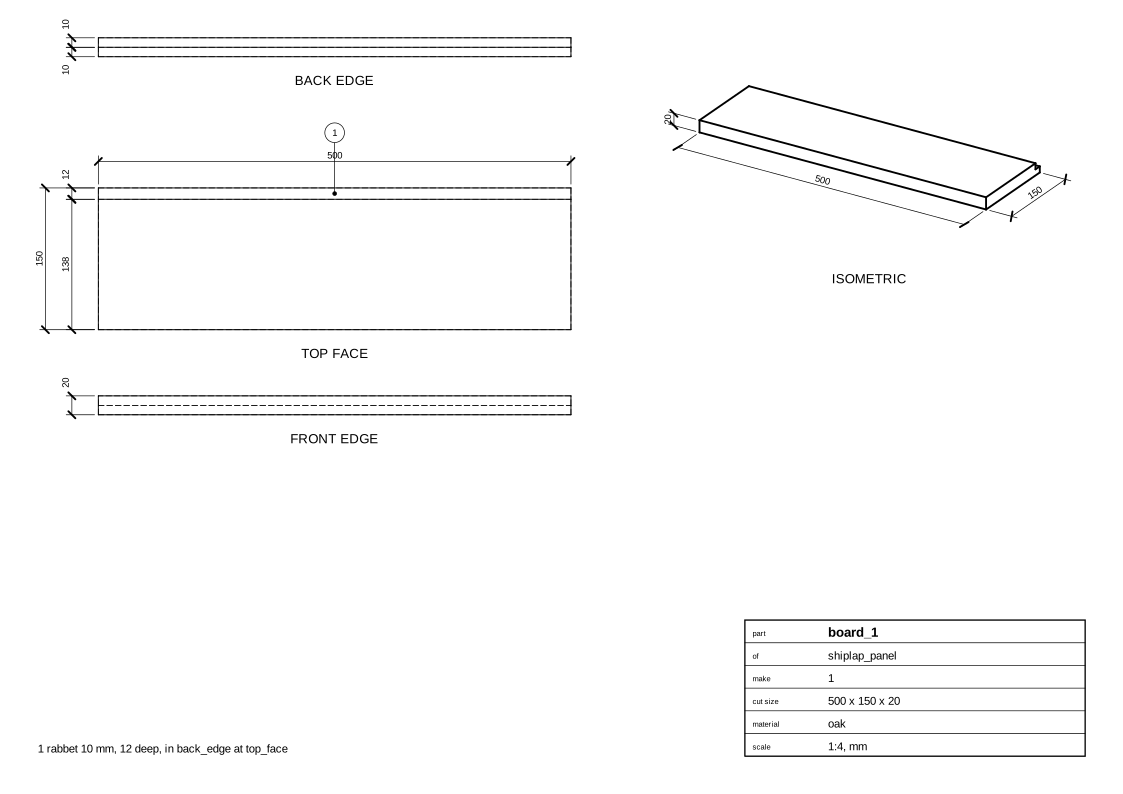
Board 1
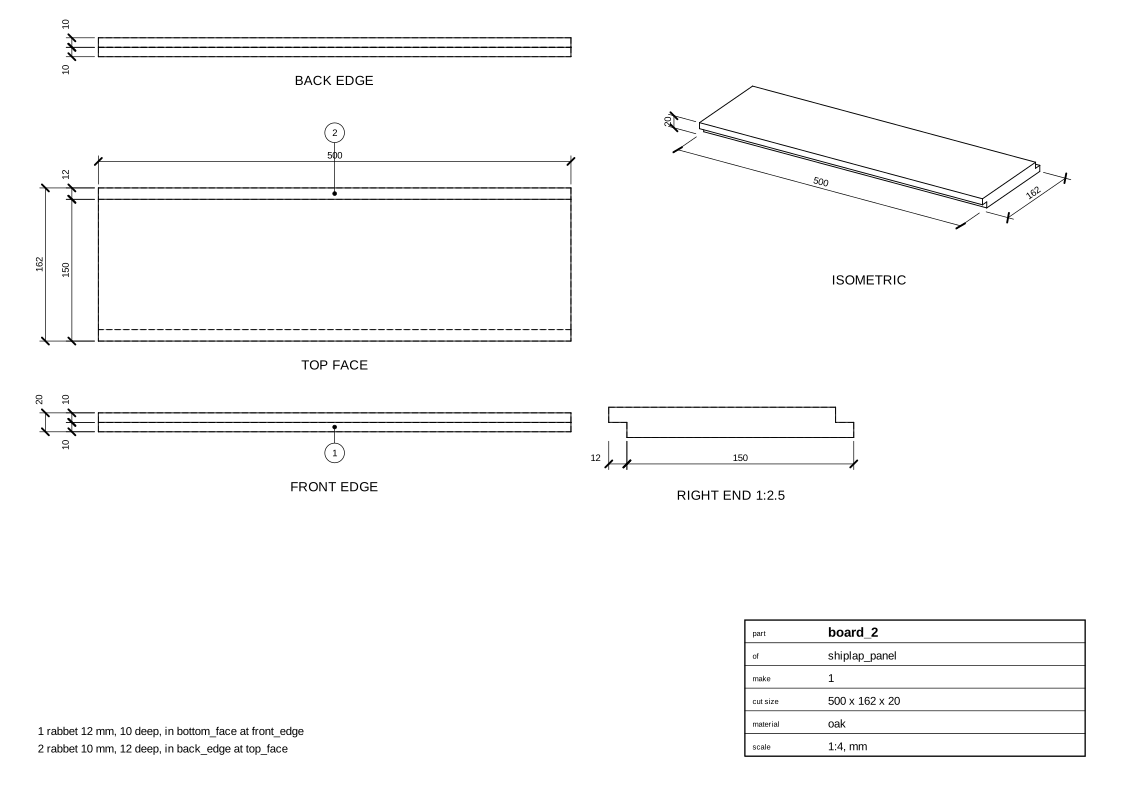
Board 2
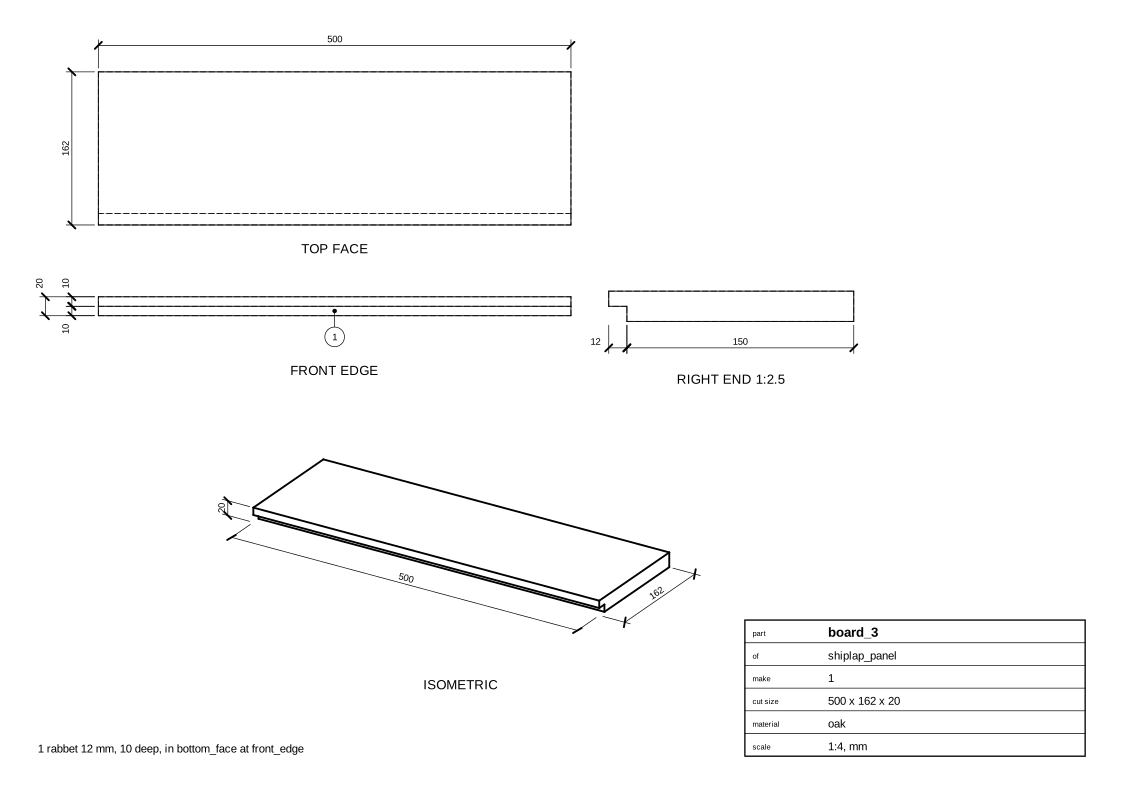
Board 3
Cut list
board_1  500 x 150 x 20 mm  oak
         - rabbet 10 mm, 12 deep, in back_edge at top_face
board_2  500 x 162 x 20 mm  oak
         - rabbet 12 mm, 10 deep, in bottom_face at front_edge
         - rabbet 10 mm, 12 deep, in back_edge at top_face
board_3  500 x 162 x 20 mm  oak
         - rabbet 12 mm, 10 deep, in bottom_face at front_edge
Code
From woodwright/examples/joints.py, which imports the names it uses (see From an example to your own design):
def shiplap_panel(
    length: float = 500, width: float = 150, lap: float = 12, count: int = 3, stock: Stock = OAK
) -> Assembly:
    """Boards edge to edge, lapped over each other in rabbets half their thickness.

    Along each joint the next board's rabbet, cut from below, lies over the
    previous one's, cut from above, `lap` wide: a "tongue" as thick as
    half the board, flush with its top face. Not glued, the boards can move
    and the lap covers the gap; the top shows a plain line at each joint.
    """
    asm = Assembly("shiplap_panel")
    boards = [
        asm.add(Board(f"board_{i + 1}", stock, length=length, width=width)) for i in range(count)
    ]
    for a, b in itertools.pairwise(boards):
        asm.join(
            TongueAndGroove(
                tongue=b.front_edge,
                groove=a.back_edge,
                tongue_thickness=rules.lap_thickness(stock.thickness),
                tongue_length=lap,
                tongue_offset=0,
            )
        )
    return asm
Exported with woodwright 0.9.0 on 2026-10-25.